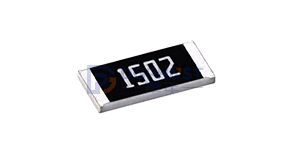
The 0402 high voltage resistor is a compact surface-mount component designed for applications requiring higher voltage withstand than standard resistors, operating up to 100V with 200V overload capability. It features key parameters like power ratings, temperature coefficients, and surge resistance, making it suitable for medical, automotive, and industrial electronics. Selection involves matching voltage, power, and precision requirements, with options from brands like Ever Ohms and Viking HVR.
Avoiding high-voltage circuit failure due to power misjudgment requires accurate understanding of resistor voltage rating standards.
Electronic friends may notice a phenomenon: when they go to the market to find high-voltage resistors, especially those that can withstand hundreds or thousands of volts, almost all of them are made of thick film technology. You may be curious, isn't precision film resistance more accurate? Isn't the noise of metal film resistance lower? How did thick film become the absolute protagonist in the high-voltage field?
The performance and reliability of high-voltage surface mount resistors fundamentally depend on their core constituent materials. The selection and combination of its materials directly determine whether the component can maintain stable operation under high voltage impact. The following will provide a detailed introduction to several main materials that make up high-voltage surface mount resistors.
High voltage patch resistors are surface mount components designed specifically to withstand high voltage working environments. Compared with conventional surface mount resistors, it can operate stably at voltages ranging from hundreds to thousands of volts while maintaining a compact packaging size, making it suitable for high-voltage circuits that require high space and reliability.