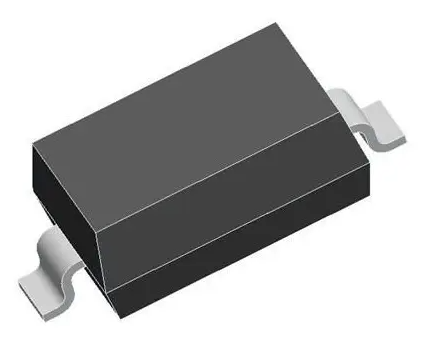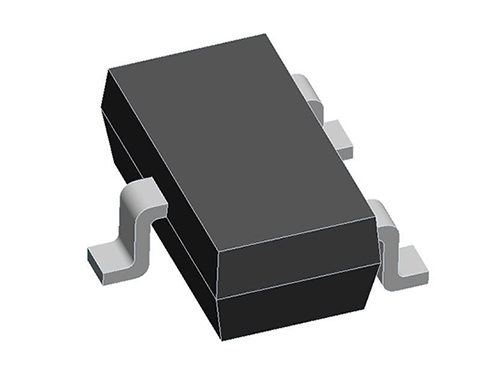
Electronic friends may notice a phenomenon: when they go to the market to find high-voltage resistors, especially those that can withstand hundreds or thousands of volts, almost all of them are made of thick film technology. You may be curious, isn't precision film resistance more accurate? Isn't the noise of metal film resistance lower? How did thick film become the absolute protagonist in the high-voltage field?
This matter needs to start with the actual requirements of high-voltage circuits.
The inherent advantages of thick film technology in voltage resistance
The primary challenge faced by high-voltage resistors is not the accuracy of their resistance values, but whether they will be broken down by voltage. Under a voltage of several hundred volts, the current may directly crawl across the surface of a regular resistor, or the internal insulation may be damaged, causing the resistor to instantly fail. The thick film process precisely solves this problem.
The manufacturing process of thick film resistors is as follows: a special resistor paste mixed with metal oxide and glass powder is screen printed onto a high-purity alumina ceramic substrate, and then fired at high temperature. After burning, this layer of resistive film is firmly integrated with the substrate, with high mechanical strength and a surface that is not easily adsorbed with moisture and impurities.
More importantly, thick film technology allows for flexible design of the geometric shape of resistors. In order to withstand high voltage, designers will make the resistance path into a winding strip shape, physically extending the distance between the two solder ends. When the voltage is distributed over a longer path, the electric field strength per unit length decreases, and the risk of breakdown is naturally greatly reduced. The degree of freedom in this serpentine wiring is difficult to achieve with thin film technology.
Shortboard of Thin Film Resistors in High Voltage Scenarios
Some people may ask, isn't it good that the precision of thin film resistors can reach 0.01%, and the temperature drift can reach 5ppm or even 2ppm? It's good, but it has a few hard flaws that are not suitable for high-pressure environments.
The film layer of thin film resistors is very thin, usually at the nanometer level. Such a thin film layer naturally limits its pressure resistance. Although voltage resistance can be improved by extending the resistance path, the patterning accuracy of thin films requires high precision, and the cost of making serpentine wiring is much higher than that of thick films. Moreover, thin film resistors are prone to voltage coefficient problems under high voltage - when the applied voltage changes, the resistance value also drifts, which is very dangerous in high-precision sampling circuits.
Another issue is the ability to resist static electricity and surges. The film layer of the thin film resistor is too thin, and applying a slightly larger pulse voltage may directly penetrate the film layer. The film layer of thick film resistors is much thicker, and their surge resistance is significantly stronger.
Maturity of thick film solutions in practical applications
From the perspective of market supply, the high-voltage product lines of mainstream resistor brands are almost dominated by thick films. Ever Ohms' HV series high-voltage thick film surface mount resistors can withstand up to 800V in the 1206 package and 3000V in the 2512 package. Fenghua High Tech's newly launched AS series automotive grade thick film resistors are specifically designed for the 800V high-voltage platform of new energy vehicles, with optimized voltage coefficients and sulfur resistance. Although ROHM has a series of high-voltage thin-film resistors, thick film solutions are still widely used in mainstream high-voltage applications.
In actual procurement, Shenzhen Shunhai Technology Co., Ltd., as the official authorized agent of Tian'er Technology, provides spot supply and technical selection support for a full range of high-voltage thick film resistors, which is an efficient choice for engineers who need to quickly verify high-voltage circuit solutions. In addition, Huanian Mall is an online authorized agent of Tian'er Technology, supporting BOM one click ordering and small batch sample procurement, facilitating small batch needs during the research and development stage.
Thick film technology is also continuously evolving
There is another reason why almost all high-voltage resistors use thick films: thick film technology has made rapid progress in recent years. Previously, the accuracy and temperature drift of thick film resistors were indeed inferior to thin films, but now precision thick film resistors can achieve an accuracy of ± 0.01% and a temperature drift of ± 5ppm/° C. Fenghua High tech's AS series even achieves TCR of ± 25ppm/° C, accuracy of ± 0.1%, and a 1000 hour double 85 test change rate controlled within ± 0.2%. Although these parameters cannot fully surpass high-end thin films, they are more than sufficient for the vast majority of high-voltage sampling and voltage divider applications.
High voltage resistors are almost always made of thick film technology. It's not that engineers have no choice, but thick films find the best balance between voltage resistance, surge resistance, cost control, and reliability. It may not be optimal in every aspect, but in the specific scenario of high voltage, its overall performance is indeed the best.