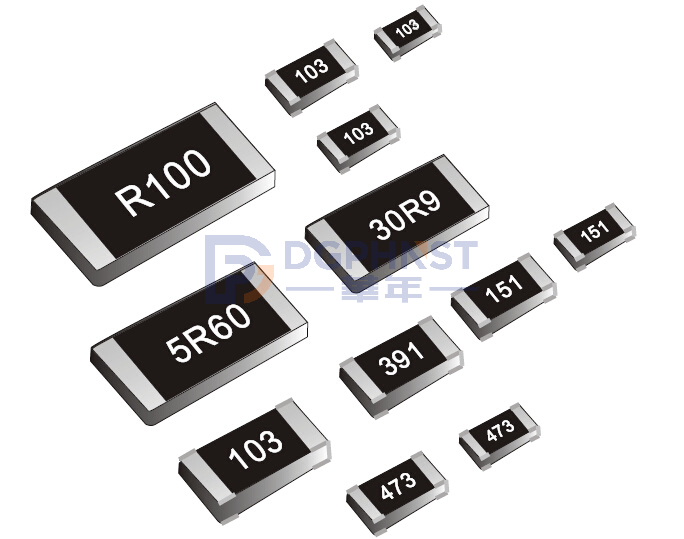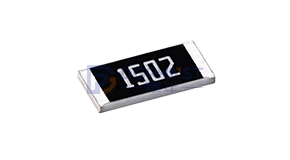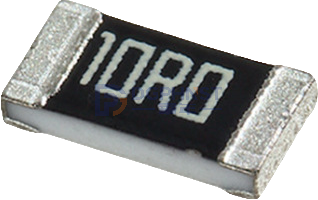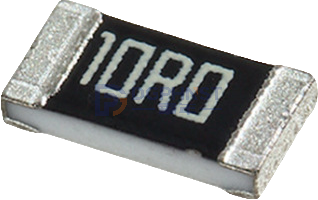
In the selection of electronic components, resistance power often directly affects the reliability and volume of circuit design. Many engineers have found in practical applications that, under the same packaging size, the power of thin film resistors is often lower than that of thick film resistors. The principle behind this phenomenon can be traced back to the manufacturing processes and material properties of both.
The thickness of the film layer determines the heat dissipation capability
The core difference between thin film resistors and thick film resistors lies in the thickness and structure of the conductive layer. The thickness of the resistive film of thick film resistors can reach thousands of times that of thin film resistors. This thicker film not only determines the physical size difference, but also directly determines the heat capacity and heat dissipation path. Thick film resistors are printed on ceramic substrates using thick film paste, and the conductive layer structure formed after high-temperature sintering is dense and thick, which can more effectively conduct heat to the substrate and PCB.
In contrast, thin film resistors form a metal film only a few micrometers thick on the substrate through vacuum sputtering technology. This layer of film is very thin and has a small heat capacity, making it more prone to resistance drift or damage when locally overheated. Therefore, thin film resistors will leave more room for power derating in design to ensure stability in high-precision applications.
Materials and structures affect thermal stability
The conductive material of thick film resistors is composed of a mixture of metal oxides and glass matrix, and this composite structure enables it to withstand higher instantaneous power shocks. The advantage of thick film resistors in power processing mainly lies in their film layer's ability to disperse heat and reduce thermal stress concentration through thicker glass phases.
Thin film resistors pursue extremely low temperature coefficients and high precision, using pure metal or alloy films with stable resistance but relatively limited thermal tolerance. When a large power is applied, the heating of the thin film resistor itself will cause a significant change in resistance value, thereby affecting its performance in high-precision circuits.
Technological progress has narrowed the power gap
In recent years, with the improvement of materials and processes, the power processing capability of thin film resistors has been enhanced. For example, new thin film resistors using high thermal conductivity substrates such as aluminum nitride have much higher heat dissipation efficiency than traditional aluminum oxide substrates. The power rating of new thin film resistors in the same package is approaching that of thick film resistors.
However, overall, thick film resistors still maintain their advantages in high-power and high reliability scenarios, while thin film resistors are more suitable for weak signal processing circuits that require high accuracy, stability, and noise.
Selection suggestions and procurement channels
After understanding the power difference between thin film and thick film resistors, engineers should choose the appropriate type based on specific application requirements: power drive and power management circuits should prioritize thick film resistors; Precision amplification, data acquisition, medical equipment, etc. are more suitable for thin film resistors.
If you need to obtain cost-effective resistor samples and selection support, you can contact Shenzhen Shunhai Technology Co., Ltd., which acts as an agent for thick film and thin film resistors from brands such as Lizhi and Tian'er, providing professional selection advice. In addition, as a one-stop electronic component procurement platform, Huanian Mall has a complete range of spot products, including alloy resistors, precision resistors, etc., making it convenient for engineers to quickly complete procurement.
In summary, the lower power of thin film resistors compared to thick film resistors is due to differences in film thickness, material structure, and heat dissipation mechanism. When selecting, it is necessary to find a balance between resistor power and accuracy in order to achieve optimal circuit performance and cost.