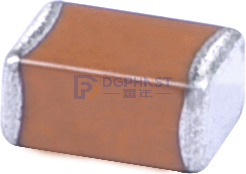
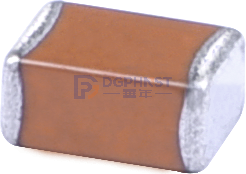
A quick reference table for SMD capacitors, inductors, ferrite beads, and diodes, helping with circuit design selection.
Surging demand, shortage of high-end capacity, upstream material bottlenecks, and leading manufacturers controlling production... The entire supply chain is facing an imbalance in supply and demand!
Recently, the Jiangcheng Laboratory in Hubei has made a major breakthrough in capacitor key technology! It independently developed a three-dimensional multi-layer on-chip capacitor with a capacitance density exceeding 1000 nF/mm², specifically designed for high-end AI/GPU and high-performance processors to support the development of high-computing power, low-power chips.
Over the past decade, the MLCC (Multi-Layer Ceramic Capacitor) sector has experienced two drastic price hike cycles spanning 2017–2018 and 2020–2021 respectively.
Circuits we encounter daily may seem abstract and hard to understand — electric current is invisible and intangible, and the functions of resistors, capacitors and inductors are even more difficult to grasp intuitively. However, we can easily make sense of them by comparing an electric circuit to a waterdriven piping system.
Temperature coefficient, in layman's terms, is an indicator that measures the fluctuation of the numerical value of electronic components (such as resistors and capacitors) with temperature changes. In the field of engineering, the most common is the temperature coefficient of resistance (TCR).
Due to the surge in upstream raw material costs, not only have our expenses climbed, but as a longstanding electronic component manufacturer, Fenghua cannot withstand the continuous increase in costs and has had to raise prices. The price increases for certain products (inductors, varistors, ceramic capacitors, and thick-film resistors) are detailed in the letter below:
In modern electronic circuits, chip capacitors are extremely important passive electronic components. Thanks to their characteristics such as small size and ease of installation, they are widely used in various electronic products, ranging from complex computer motherboards to compact mobile devices. Understanding the role of chip capacitors in circuits is crucial for electronic engineers to design efficient and stable circuits. This article will delve into the specific functions of chip capacitors in different types of circuits.
As a specialized component combining safety protection and electromagnetic compatibility, the surface-mount safety capacitor focuses on circuit isolation and interference suppression. Its application scenarios strictly comply with safety standards, serving as a critical component that ensures reliable operation of electronic devices and user safety. The functionality and standardized usage of this component directly determine the safety rating of the equipment.
As an indispensable component in electronic circuits, surface mount capacitors have a wide range of capacitance values, and different capacitance values are suitable for different circuit scenarios. From several picofarads (pF) to thousands of microfarads (μ F), there is a wide range of capacitance options for surface mount capacitors to meet diverse circuit requirements such as high-frequency filtering, power decoupling, and energy storage. Understanding the common capacitance values and application scenarios of surface mount capacitors is crucial for electronic engineers in circuit design and component selection.