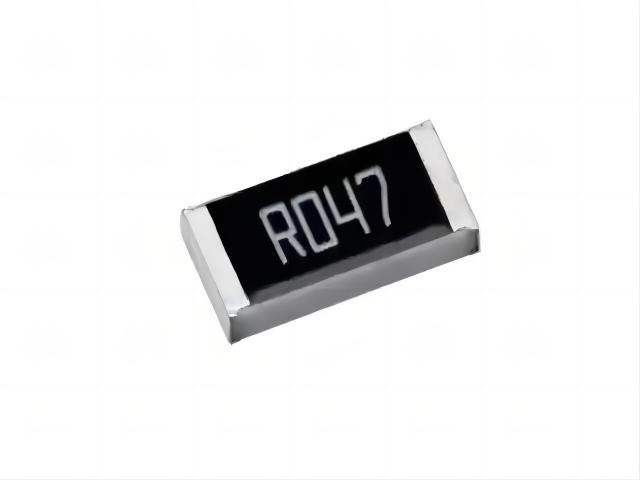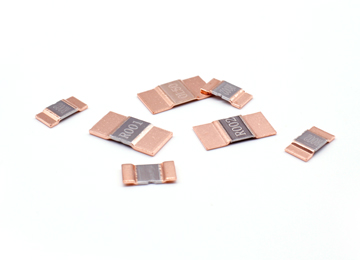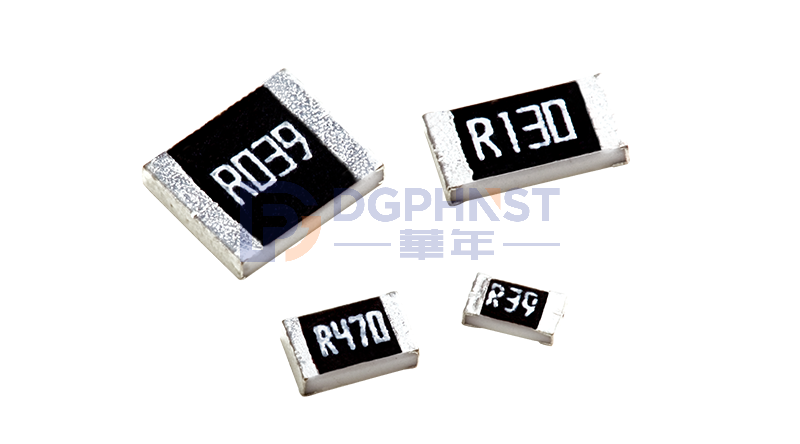
In the selection process of electronic components, engineers often encounter various components with similar appearance but different characteristics. Metal film resistors and metal foil resistors, although both have the word "metal" in their names and appear to belong to the category of precision resistors, in reality, their internal structure, performance parameters, and applicable scenarios are vastly different.
The simple and direct conclusion is that metal foil resistors are the ceiling in the field of precision resistors, while metal film resistors are a balanced approach that balances performance and cost. Understanding their differences can help you design circuits without falling into pitfalls due to insufficient selection or wasting budget due to excessive performance.
Core difference: Differences in structure and craftsmanship
The fundamental difference between the two lies in the internal "skeleton" and "flesh".
Metal film resistor is a thin metal or alloy film deposited on a high-purity ceramic substrate by vacuum evaporation or sputtering. The thickness of this film is usually in the nanometer range. Afterwards, the resistance value is fine tuned through grooving process. You can imagine it as evenly applying a layer of paint on a cylinder, and then changing its conductivity by scraping off a portion.
Metal foil resistors are completely different. It is a precision process of attaching a specially made metal foil (usually nickel chromium alloy) onto a ceramic substrate. The thickness of this layer of metal foil is much thicker than that of the metal film, but the key point is that it is not "coated", but "pasted" on the entire sheet. Through photolithography technology, resistors are etched into specific planar geometric shapes. This structure makes the flow path of current extremely controllable.
Performance Showdown: A Comprehensive Analysis from Temperature Drift to Power
Since their structures are different, their performance in actual combat is naturally vastly different.
Accuracy and Temperature Coefficient of Resistance (TCR)
Metal foil resistors have an absolute advantage in accuracy. Its accuracy can easily reach ± 0.01% or even higher, with a temperature coefficient as low as ± 0.2ppm/℃. This means that even if the ambient temperature changes dramatically, its resistance is as stable as Mount Tai. This is due to the matching of thermal expansion coefficients between metal foil and ceramic substrate, which eliminates thermal stress.
The performance of metal film resistors is also very good, with a conventional accuracy of around ± 1% and a precision level of ± 0.1%. Its temperature coefficient is usually between ± 15ppm/℃ and ± 100ppm/℃. For most consumer electronics and industrial control scenarios, this accuracy is more than sufficient.
Power capacity and heat dissipation
The focus here is on the power carrying capacity of metal resistors.
Metal film resistors are very flexible in terms of power selection. From 1/8W and 1/4W used for small signal processing, to achieving rated power of up to 1W to 2W in some MELF packages, the range of applications is extremely wide. Due to its thin film layer, it also performs quite well under pulse loading.
Although metal foil resistors have excellent performance, their metal resistance power is relatively limited. Because its physical structure focuses more on eliminating stress and ensuring stability, the heat dissipation path is not as direct as that of metal films. Therefore, when dealing with high power, metal foil resistors are often not the preferred choice.
Long term stability and noise
In high-end instruments and meters, metal foil resistors are like gods. Its aging drift is extremely small, and even after tens of thousands of hours of load life testing, the resistance change is still negligible. Meanwhile, its current noise is extremely low, almost negligible, making it very suitable for audio amplification or precision measurement front-end.
Application scenarios and selection suggestions
After understanding the performance differences, the selection becomes clear.
When choosing a metal foil resistor:
If your product involves aerospace, military, medical equipment, precision measuring instruments, or top-level audio decoders, then what you need is metal foil resistors. Its ultra-high precision and extremely low temperature drift are the cornerstone of system performance. Of course, its price is usually tens or even hundreds of times higher than that of metal film resistors.
When choosing a metal film resistor:
If you are working on industrial power supplies, automotive electronics, smart meters, home appliance control boards, or ordinary communication devices, metal film resistors are undoubtedly the king of cost-effectiveness. It provides a wider range of metal resistor power options while meeting basic accuracy and stability requirements, with a mature supply chain and convenient procurement.
Whether choosing high-performance metal foil resistors or purchasing cost-effective metal film resistors, finding a reliable supply channel can make you twice as efficient. We recommend Shenzhen Shunhai Technology Co., Ltd. and Huanian Mall here. These two companies have been deeply involved in the field of passive components in China for many years. Whether it is automotive grade high-power alloy resistors or precision thin film resistors, they not only have complete stock, but also provide professional selection and replacement support, which can help you quickly solve the problems of sample application and bulk procurement.
Conclusion
Metal film resistors and metal foil resistors are not substitutes, but rather competitors on different tracks. Metal film resistors have solved the stability requirements of the vast majority of circuits at a reasonable cost; And metal foil resistors represent the ultimate pursuit of precision. When designing a circuit, first determine where your actual bottom line is for the power and accuracy of the metal resistor, and then choose the corresponding model. Often, the optimal solution can be found.