The difference between alloy resistance and sampling resistance: in-depth analysis and application guide
In the design and manufacturing of electronic circuits, resistors are the most fundamental and indispensable components, with a wide variety of types and diverse functions. Among them, "alloy resistance" and "sampling resistance" are two commonly mentioned but easily confused concepts. Many people mistakenly believe that they are two parallel resistors, but in fact they are not. This article will deeply analyze the definitions, functions, characteristics, and applications of the two, clearly explain their differences and connections, and particularly emphasize the key role played by alloy resistors.
1、 Core definition: Classify from different dimensions
To understand their differences, it is first necessary to clarify that their classification criteria are different.
Sampling resistor (current detection resistor): based on functional definition
Sampling resistor, as the name suggests, its core function is "sampling" or "detection". In circuits, it is specifically used to accurately measure the current value flowing through the circuit. Its working principle is based on Ohm's law (V=IR). By connecting a known and highly accurate resistor in series in the circuit of the measured current, and measuring the voltage drop across the resistor, the precise current value can be converted.
Therefore, sampling resistor is a functional term. It emphasizes the role of resistors in circuits - current detection and monitoring. Any resistor that can stably and accurately achieve this function can be called a sampling resistor.
Alloy resistance: defined based on material and structure
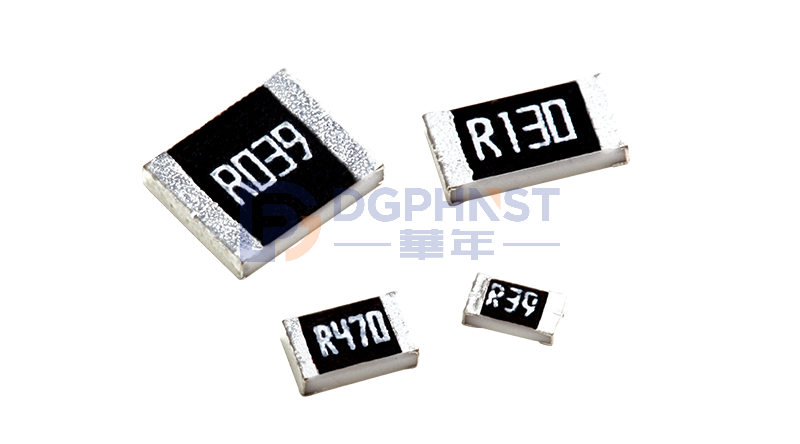
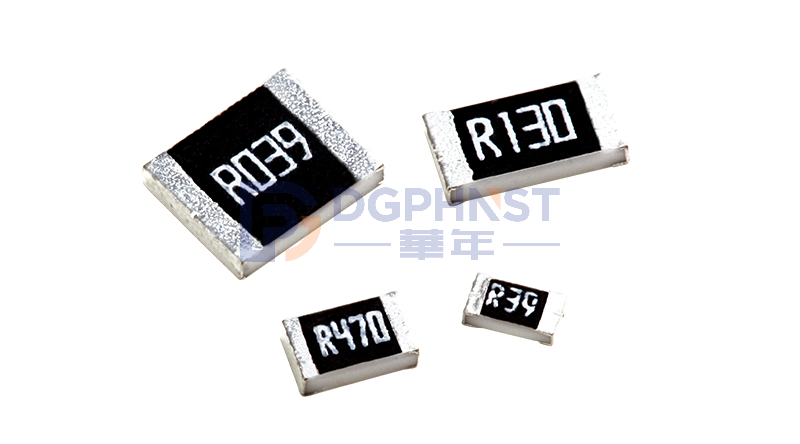
Alloy resistor refers to a resistor that uses metal alloy materials as the resistor body. Common alloy materials include manganese copper alloy, constantan, nickel chromium alloy, Kama alloy, etc. These materials are precision processed to form resistors with specific resistance values.
Therefore, alloy resistance is a material and structural term. It emphasizes the manufacturing materials of resistors and the inherent characteristics they bring, such as low temperature coefficient, high stability, low inductance, etc.
Simply put, sampling resistors are used for what purpose, while alloy resistors are used for what purpose.
2、 Deep comparison of functions and features
By understanding the different definitions, we can conduct in-depth comparisons from various dimensions.
core functionality
Sampling resistor: The core function is single and clear - high-precision current detection and monitoring. It is usually placed in power paths, motor drive circuits, and battery management systems, providing critical signals for system control, protection (such as overcurrent protection), and status feedback.
Alloy resistors: have a wider range of functions. In addition to being the main force of sampling resistors, with its excellent performance, it is also widely used in:
High power load: used as a dummy load for power aging testing.
Pulse absorption: Absorbing instantaneous high-energy pulses in a circuit.
Current limiting: acting as a safety resistor in situations where current limiting is required.
Key performance parameters
Sampling resistor (with extremely strict parameter requirements):
Resistance accuracy: It is usually required to be very high, with common values of ± 1%, ± 0.5%, and even ± 0.1%.
Temperature coefficient (TCR): This is one of the most critical parameters. Require minimal resistance variation within a wide temperature range (such as 55 ℃ to+125 ℃), with TCR typically as low as ± 50 ppm/℃, ± 25 ppm/℃, or even lower. This is fundamental to ensuring that current detection remains accurate at different environmental temperatures.
Long term stability: The resistance value should drift very little over time to ensure the reliability of the product throughout its entire lifecycle.
Low inductance design: Especially in high-frequency switch circuits, inductance can generate induced electromotive force and interfere with voltage sampling signals. Therefore, excellent sampling resistors must be designed with no inductance or low inductance.
Alloy resistance (performance determined by material):
The excellent performance of alloy resistors is due to their alloy materials. For example:
Manganese copper alloy: With extremely low TCR and low thermoelectric potential towards copper, it is an ideal material for precision sampling resistors.
Copper: High resistivity, low TCR, relatively moderate cost.
Nickel chromium alloy: high resistivity, high temperature resistance, can be used for power type resistors.
Therefore, alloy resistors naturally have advantages such as low TCR, high stability, high power density, high temperature resistance, and corrosion resistance. These characteristics perfectly match the demanding requirements of sampling resistors.
Relationship: Intersection and Union
This is precisely the core of understanding the relationship between the two:
Alloy resistors are the most ideal and mainstream technical solution and material carrier for achieving high-performance sampling resistors.
We can understand it as follows:
The sampling resistor is a 'position' (current tester).
Alloy resistors are a 'candidate' (applicants with excellent skills such as low TCR and high stability).
The vast majority of high performance "current tester" positions are filled by candidates such as "alloy resistors". Because the material properties of alloy resistors can best meet the demanding requirements of sampling resistors.
However, there are also exceptions:
Not all sampling resistors are alloy resistors. For example, in some low-cost and low precision situations, thick film resistors or wire wound resistors may be used as sampling resistors.
Not all alloy resistors are used as sampling resistors. As mentioned earlier, they can also be used as power loads, current limiting, etc., in which case they do not perform sampling functions.
3、 Application scenario analysis
Application scenarios of sampling resistors (usually implemented by alloy resistors):
Power management: Current feedback loop in switch mode power supplies and DCDC converters.
Battery management system: Monitor the charging and discharging current of the battery, achieve power metering and overcurrent protection.
Motor drive: In brushless motor drives, it is used for phase current detection to achieve precise control.
Automotive electronics: Monitor various load currents in the engine control unit and body control module.
Exclusive application scenarios for alloy resistors (non sampling function):
High power testing equipment: As an energy consuming load, it consumes a huge amount of power.
Surge protection: used at communication lines or power input terminals to absorb surge energy caused by lightning strikes or switches.
Pre charge/discharge circuit: In electric vehicles and industrial frequency converters, alloy resistors are used to achieve pre charge and discharge of capacitors.
4、 Summary
In summary, alloy resistance and sampling resistance are descriptions of resistance from different perspectives, and there is a close symbiotic relationship between them, rather than a simple parallel or opposition.
The sampling resistor is a 'function' with the goal of accurately measuring current.
Alloy resistors are the means of implementation, and with the excellent electrical properties brought by their alloy materials, they have become the preferred technology and material basis for achieving high-performance sampling resistors.
In today's electronic devices with increasingly high requirements for energy efficiency and accuracy, the importance of alloy resistors is becoming increasingly prominent. It is precisely due to the continuous advancement of alloy resistance technology that modern sampling resistors can achieve unprecedented accuracy and stability, providing a solid foundation for the intelligence, efficiency, and reliability of the entire electronic system. Therefore, when we are discussing a precise current detection scheme, we are likely talking about an alloy sampling resistor based on high-performance alloy materials.