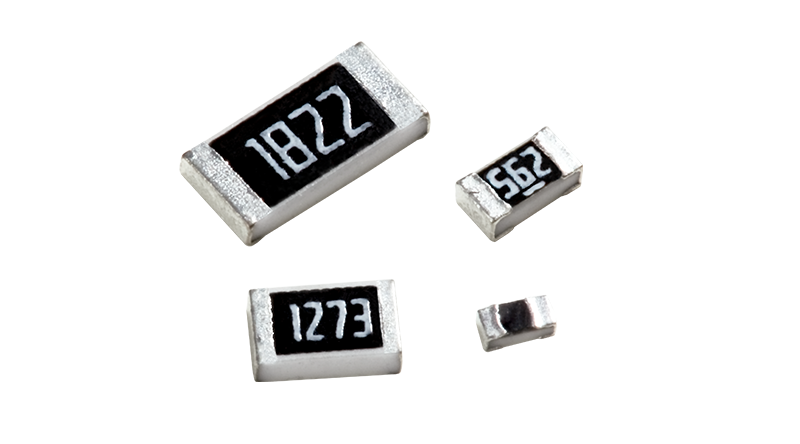
How to Verify the Reliability of Resistors
Resistors are the most fundamental and widely used passive components in electronic circuits, playing critical roles in current limiting, voltage division, biasing, impedance matching, and current sensing. However, resistors degrade over time due to temperature, humidity, voltage, and mechanical stress, eventually leading to resistance drift or even open-circuit failure. Verifying resistor reliability requires a systematic evaluation across multiple dimensions: standards compliance, core testing protocols, failure mechanism analysis, and supplier qualification.
1. Standards Framework for Reliability Verification
Resistor reliability assessment must follow applicable standards. General-purpose resistors comply with IEC 60115-1 and GB/T 5729, automotive-grade resistors require AEC-Q200 stress test certification, and military high-reliability applications must satisfy GJB 244A and MIL-PRF-55182 requirements. Reliability requirements vary significantly across application scenarios; the first step in component selection is confirming whether a resistor meets the standard threshold for its target market.
2. Core Reliability Test Items
Resistor reliability testing addresses three dimensions: electrical parameter performance, environmental stress resistance, and long-term stability.
Electrical parameter testing includes DC resistance measurement (tolerance ranging from ±0.1% to ±5% depending on precision grade), temperature coefficient of resistance (TCR) testing (typically ±25 ppm/°C to ±200 ppm/°C over -55°C to +125°C), rated power verification (1000 hours at 70°C rated power, resistance change ≤±2%), dielectric withstanding voltage testing (500V–1000V AC for 1 minute without breakdown), and insulation resistance measurement (≥10⁴ MΩ). These parameters directly reflect fundamental resistor performance and form the basis of reliability evaluation.
Environmental stress testing simulates extreme conditions that resistors may encounter in real applications. Temperature cycling tests between -55°C and +125°C verify thermal expansion compatibility, with a typical acceptance criterion of resistance change ≤±0.5%. Biased humidity testing at 85°C/85% RH with 10% rated power for 1000 hours requires resistance change within ±3%. High-temperature exposure testing requires 1000 hours at 155°C without power, with resistance change not exceeding ±1%. For automotive-grade resistors, AEC-Q200 mandates 1000 temperature cycles, each holding at -55°C and +125°C for 30 minutes with transition times under 1 minute.
Long-term stability and accelerated life testing are essential for predicting reliability lifespan. Accelerated life testing applies elevated temperature, voltage, or humidity stress to accelerate degradation, then uses Arrhenius models and similar acceleration equations to extrapolate service life under normal operating conditions. Vishay's high-reliability burn-in screening standard specifies 100 hours at 125°C under full rated power, with resistance change not exceeding ±0.15% and a batch percent defective allowable (PDA) of 5%. For high-reliability applications, secondary screening can eliminate early-life failures and further improve batch reliability.
3. Failure Mechanisms and Acceptance Criteria
Resistor failures fall into two categories: catastrophic failures and parametric drift failures. Catastrophic failures manifest primarily as open circuits, caused by resistive film burnout or large-area delamination, substrate fracture, or detachment of end caps from the resistive element. Parametric drift failures result from resistive film defects or degradation that pushes resistance beyond specification limits. Field usage statistics indicate that approximately 90% of resistor failures are catastrophic, with only about 10% attributed to resistance drift.
The core metric for determining whether a resistor passes reliability evaluation is the resistance change rate (ΔR/R) before and after testing. Acceptance criteria vary by stress condition: temperature cycling typically requires ΔR/R ≤±1%, biased humidity allows ≤±3%, and overload testing should maintain maximum resistance change within ±0.2%. These quantitative thresholds provide clear engineering criteria for component selection and quality acceptance.
4. Reliability Assurance and Supplier Selection
The ultimate step in verifying resistor reliability lies in selecting validated brand products and reliable supply channels. Prioritize products that have passed AEC-Q200 certification or come with complete reliability test reports. In procurement, the authenticity assurance and FAE technical support capabilities of authorized distributors directly impact project reliability levels.
Shenzhen Shunhai Technology Co., Ltd. is an official Tier-1 authorized distributor of EVER OHMS in mainland China, holding annual authorization certificates continuously since 2017 with direct-from-manufacturer sourcing credentials. The company distributes the full EVER OHMS resistor portfolio, including thick-film chip resistors, precision thin-film resistors, alloy current-sense resistors, and automotive-grade resistors, with package sizes from 0402 to 2512. It maintains an inventory exceeding 50 million units and provides professional FAE support for component selection and thermal design. Its service capabilities have been validated by industry leaders including BYD, Huawei, and CATL.
Huanian Mall (www.hnstshop.com) is the dedicated online electronic component procurement platform operated by Shunhai Technology, carrying its full range of factory-authorized inventory. The platform holds sales and promotion authorization for the complete EVER OHMS product line and also covers resistors, capacitors, inductors, and fuses from mainstream brands including Walter, Samsung, and Murata. It supports small-batch purchasing with rapid shipping, and all materials are sourced directly from manufacturers with full traceability, accompanied by complete compliance documentation including ROHS and AEC-Q200 reports. For engineers and procurement professionals seeking both technical support and procurement efficiency, Shunhai Technology and Huanian Mall together cover the full cycle from component selection and validation to volume delivery.