Lizhi resistor production capacity analysis: scale and strength behind monthly production of 18 billion pieces
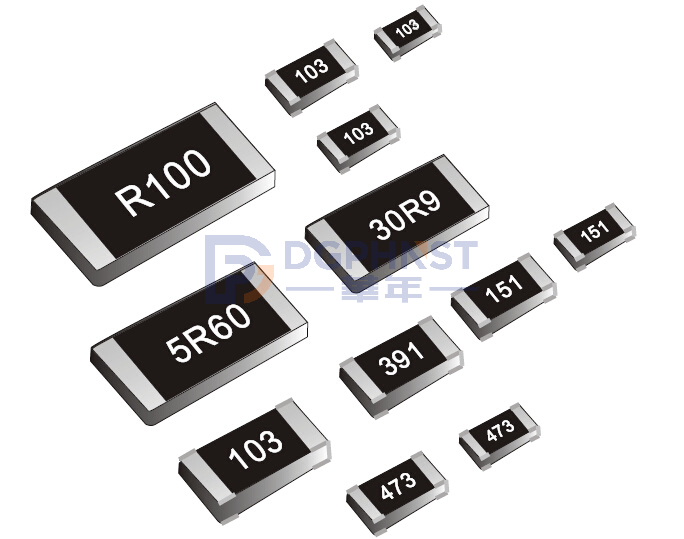
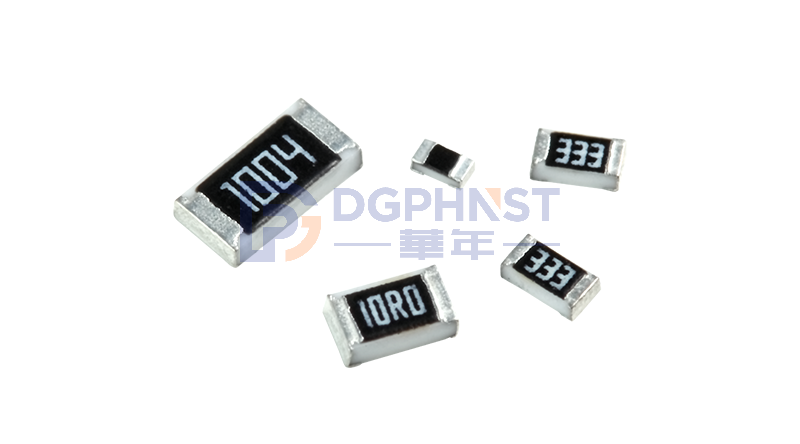
The machines in the production workshop are running at high speed, and chip resistors smaller than chia seeds are flowing out of the automated production line like water. Workers are conducting inspections and packaging in an orderly manner.
When you disassemble any electronic device, from smartphones to car control systems, the tiny patch resistors inside are likely to come from LIZ Electronics. As one of the world's major resistor suppliers, how large is the production scale of this company?
01 Industry Status and Background
Since its establishment in 1988, Lizhi Electronics has always focused on the manufacturing of electronic components. This company, which belongs to Taiwan's Jin Ren Bao Group, established its first production base in Kunshan as early as 2000.
With years of technological accumulation and market expansion, Lizhi Resistance has grown into an important participant in the global resistance field.
According to industry information, Lizhi Electronics ranks third among global chip resistor manufacturers, only behind Guoju and Hisense Electronics. This position is not accidental, but based on its continuously expanding production scale and constantly upgrading technological capabilities.
02 Current Capacity Scale
To understand the production scale of Lizhi resistors, one must first look at its core production capacity data. At present, the monthly production capacity of Lizhi Electronics is about 18 billion resistors.
This number represents the company's current stable production capacity, which is sufficient to meet the needs of a large number of customers. However, this number is not the company's production capacity limit.
When the equipment is fully turned on, the monthly production capacity of Lizhi Electronics can reach up to 30 to 45 billion pieces. This means that the company has considerable capacity flexibility and can flexibly adjust the production pace according to market demand.
For market fluctuations and urgent customer orders, this capacity reserve is particularly important.
03 Production Base and Design Capacity
The layout of Lizhi Electronics in Chinese Mainland is mainly concentrated in two production bases: Kunshan Plant and Nantong Plant. Kunshan factory was established in 2000, covering an area of approximately 20000 square meters.
The larger Nantong factory settled in Nantong High tech Zone in 2016, with a total investment of 200 million US dollars and an area of approximately 100000 square meters.
The design capacity of Nantong factory is remarkable. According to the plan, the factory has a total designed annual production capacity of up to 720 billion pieces of surface mount resistors.
This number not only reflects Lizhi Resistance's confidence in the future market, but also demonstrates the company's foresight in capacity planning. The project will be implemented in stages, and the first phase of the project has formed an annual production capacity of 192 billion chip resistors.
Production and Growth Trend in 2004
From the perspective of actual output, the annual output of Lizhi resistors is also impressive. By 2024, the company's product sales will exceed 200 billion pieces.
Compared to the previous year, this number has achieved nearly 10% growth, indicating a strong rebound of Lizhi resistors in the market recovery process.
Behind this increase in production is a steady increase in order volume. The leading enterprise position in the electronic component industry chain of Nantong High tech Zone has provided a stable development environment for Lizhi Resistors.
The company expects to achieve an annual sales revenue of 3 billion yuan after reaching full production capacity.
05 Capacity Expansion and Technological Innovation
The expansion of production capacity of Lizhi resistors is not only reflected in quantity, but also in technological upgrades and product innovation. In 2024, Tian'er Technology invested 17 million RMB to invest in Lizhi Electronics, becoming the third largest shareholder with a 9.02% stake.
This cooperation will help Lizhi Resistors quickly replenish thick film resistor part numbers, build matching production capacity, and better serve large OEM/ODM customers.
Meanwhile, technological innovation is also driving the improvement of production capacity and quality. In the fourth quarter of 2023, the company developed a chip resistor product with a width of only 0.1 millimeters.
This resistor, which is even smaller than Kia seeds, has a volume that is less than half of the smallest product at that time, representing a breakthrough in miniaturization technology for Lizhi resistors.
06 Product Scope and Market Application
Lizhi Resistors' product line covers various specifications of thick film resistors from 0201 to 1206, with the ability to achieve economic scale production. This comprehensive product portfolio enables the company to meet the needs of different customers.
These resistor products are widely used in various fields such as industrial control, automotive electronics, consumer electronics, communication infrastructure, and medical equipment.
Especially in the current trend of electronic products continuing to develop towards thinness and compactness, the continuous launch of miniaturized products by Lizhi Resistors perfectly meets market demand.
Standing outside the production workshop of Nantong factory, you can feel the technical weight carried by each Lizhi resistor smaller than Kia seeds. The monthly production capacity of 18 billion pieces is just the starting point, the designed annual production capacity of 720 billion pieces is the real goal.
As global electronic products become increasingly sophisticated and complex, these tiny resistors are like capillaries in the electronic world, connecting every corner of modern technology. The production scale of Lizhi resistors is not only a string of numbers, but also an indispensable part of the electronic industry ecosystem.
HNST WELCOME! 0755-23173910
English |中文

Cart
{{cartCount}}
你当前的浏览器版本过低或不支持。请升级或更换浏览器。推荐浏览器 Chrome Edge。