Samsung Electro-Mechanics' Q3 2026 earnings were recently disclosed. Financial data indicates that the company overall exhibits a characteristic of "profit elasticity far exceeding revenue growth," with significant divergence across its three major business segments, as AI computing power and intelligent driving have become the core engines driving performance growth.
Overall Performance: Leapfrog Improvement in Profit Margin
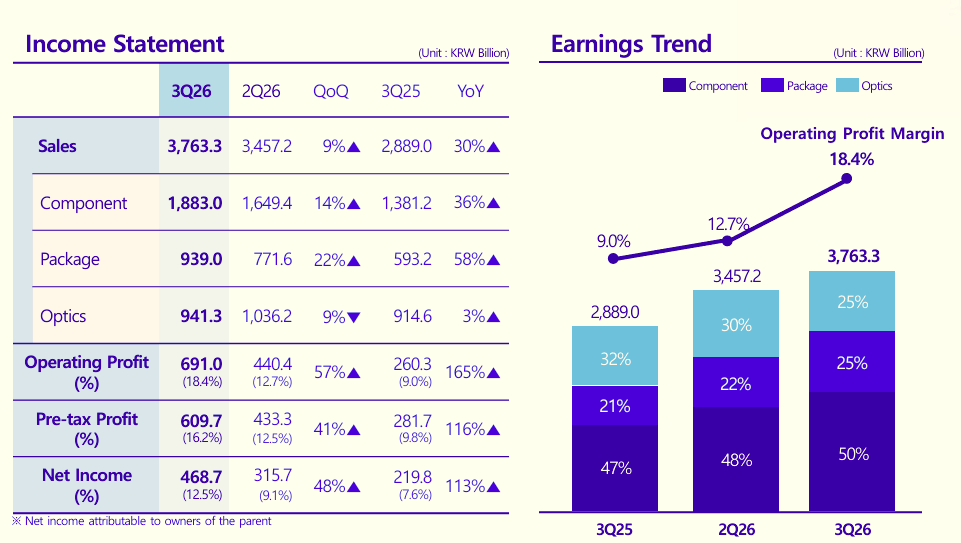
During the reporting period, Samsung Electro-Mechanics achieved total revenue of KRW 37.633 trillion (approximately RMB 19.569 billion), representing a quarter-over-quarter increase of 9% and a year-over-year increase of 30%. Operating profit was KRW 6.910 trillion (approximately RMB 3.593 billion), with an operating margin reaching 18.4%, doubling from 9.0% in the same period last year. Net profit was KRW 4.687 trillion, up 113% year-over-year, marking a new high in profitability capability during this phase.
Notably, the growth rate of operating profit significantly exceeded the revenue growth rate, reflecting that the upgrade of the company's product structure and the pass-through effect of price increases are being concentratedly released.
K-Shaped Divergence Across Three Major Business Segments
Component Segment: Passive Components Become Profit Pillar
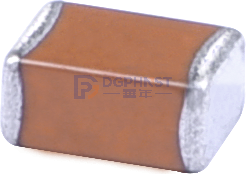
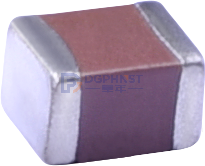
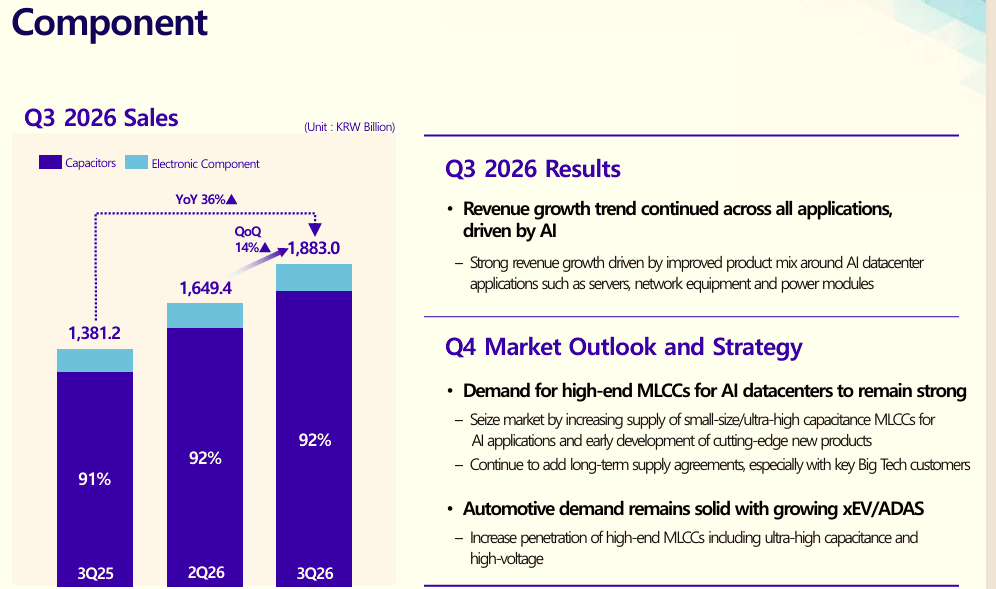
The Component segment, centered on MLCCs, generated revenue of KRW 18.830 trillion during the reporting period, up 36% year-over-year and 14% quarter-over-quarter. Growth was primarily driven by tight supply and price hikes for high-capacity MLCCs for AI servers and automotive-grade MLCCs for ADAS. In terms of profit contribution, this segment's share of the company's operating profit rose from 47% in the same period last year to 50%, officially establishing the passive components business as the core profit pillar for Samsung Electro-Mechanics.
Package Segment: Explosion in AI Computing Power Substrates
The Package segment (FCBGA substrates) recorded revenue of KRW 9.390 trillion, increasing by 58% year-over-year and 22% quarter-over-quarter, making it the fastest-growing business segment in the entire company. The surge in demand for AI computing chip substrates and the ramp-up of ADAS automotive substrates were the main drivers. The high growth of this segment confirms the pass-through effect within the AI computing industry chain from chips to substrates.
Optics Module Segment (Optics): Consumer Electronics Under Pressure
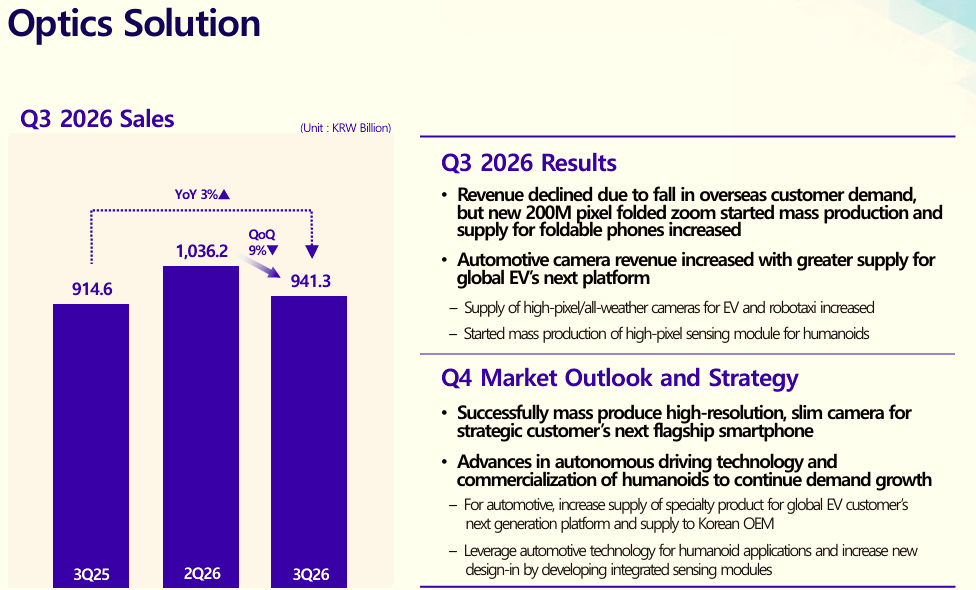
Revenue for the Optics module segment was KRW 941.3 billion, up only 3% year-on-year and down 9% quarter-on-quarter. Weak demand in the consumer electronics sector was the primary drag, while automotive optics and humanoid robot-related businesses partially offset the downward pressure.
Underlying Growth Logic: Structural Upgrading + Price Pass-through
Based on comprehensive financial data, the underlying logic behind Samsung Electro-Mechanics' strong performance growth this round can be summarized into three aspects:
Proactive Product Mix Adjustment. The company proactively reduced capacity for consumer-grade MLCCs, shifting resources toward high-capacity parts for AI servers and high-reliability automotive-grade parts. This strategy effectively avoided idle capacity and price wars amid weak consumer electronics demand.
Price Increases Successfully Passed Through.Premium pricing power for high-end MLCCs and FCBGA substrates remained robust. Under a tight supply-demand balance, price increases were smoothly passed through to downstream customers, boosting overall operating margin from 9.0% to 18.4%.
Tight Supply-Demand Balance Persists.Lead times for high-capacity MLCCs used in AI servers have extended to 52 weeks, with long-term contracts locking in supply, providing certainty for future revenue growth. By covering both server MLCCs and AI chip substrates across two industry chains, the company benefits from the wave of computing infrastructure build-out.

Key Conclusions and Industry Signals
Several judgments with reference value for the passive components and semiconductor industry chain can be distilled from Samsung Electro-Mechanics' Q3 financial report:
First, computing power and intelligent driving have become the dual engines of high growth in this round of the passive component industry. Traditional mobile consumer businesses continue to face pressure, and the industry's growth logic is shifting from the "consumer electronics cycle" to "AI + automotive electronics structural upgrades."
Second, the automotive business presents a pattern of benefits from two lines: rising ADAS penetration rates in overseas high-end vehicle models are driving demand, while domestic high-end intelligent driving supporting components also face tight supply. Manufacturers with automotive-grade certifications and capabilities to supply high-reliability part numbers will continue to benefit.
Third, the core drivers are structural upgrades and price increases, rather than simple capacity expansion. This means that key factors in industry competition
are changing: shifting from past cost and capacity competition to technological capabilities for high-value-added part numbers and depth of customer binding.
Regarding risks, the weakness in the optics business segment exposes uncertainties in consumer electronics demand; changes in overseas trade barriers and AI capital expenditure rhythms may affect the sustainability of long-term orders, requiring continuous tracking.