Energy storage cabinets, UPS systems, charging piles, industrial power supplies, and photovoltaic distribution share a common characteristic: the current flowing in the circuit is not milliampere-level signals, but power currents ranging from tens to even hundreds of amperes. A single short circuit or high-current overload could result in the loss of a board, a battery cell group, or even the scrapping of an entire cabinet.
Many people are accustomed to selecting protective components based on the "fuse" concept used in consumer electronics. However, there are significant differences between the two in terms of voltage resistance and breaking capacity: standard electronic fuses are primarily used for low-current branches on circuit boards, with lower voltage ratings and limited breaking capacity; power fuses (power fuse links) are designed for high-power electrical circuits, offering higher voltage ratings and breaking capacities, and can sustain high currents over long periods.
To determine whether a fuse is suitable, four key parameters must be verified: rated voltage, rated current, breaking capacity, and melting characteristics.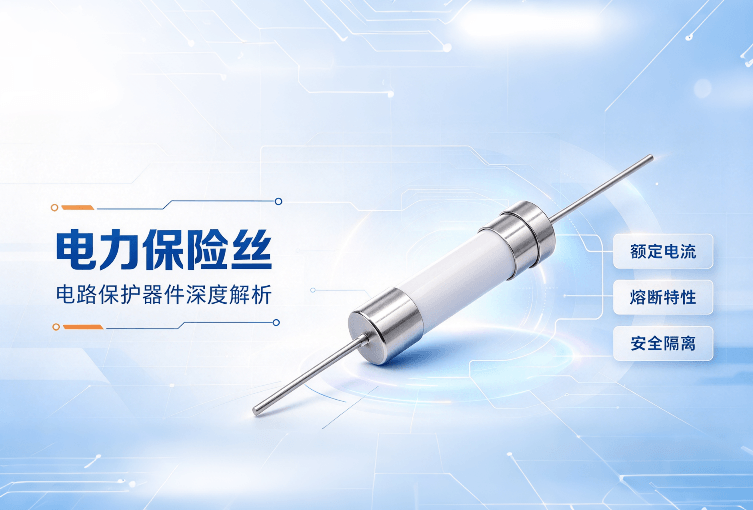
1. Power Fuse: A Conductor That "Breaks Itself"
Power fuses are connected in series within a circuit. When a short circuit or overload current occurs, the fuse element heats up and melts, disconnecting the faulty branch from the main circuit to prevent fault propagation to downstream equipment.
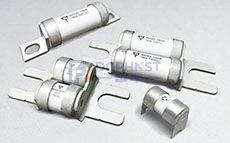
The thermal characteristics of the fuse element determine its operating speed: the higher the current, the faster the temperature rise, and the shorter the melting time. Compared with ordinary electronic fuse wires, power fuses typically use ceramic tube encapsulation to enhance heat resistance. The tube is filled with arc-quenching material to rapidly extinguish the arc during interruption, and the I²t characteristic is relatively stable, facilitating coordination calculations for upstream and downstream protection.
I²t refers to the amount of heat required to melt the fuse wire, reflecting the fuse's sensitivity to transient pulses. It is a parameter often overlooked during selection but directly impacts protection coordination.
2. Four Major Application Scenarios and Corresponding Models
Power fuses have a wide range of applications. The core principle remains: melt when current is abnormal, interrupt the circuit, and protect equipment and lines. By application field, they mainly cover four categories.
① Power Systems and Transmission/Distribution
Fuse switches on high-voltage transmission and distribution lines, as well as graded protection in distribution systems, all utilize fuses. In graded protection, it is customary for the rated current of the upper-level fuse element to be 2–3 times larger than that of the lower level to achieve selective protection.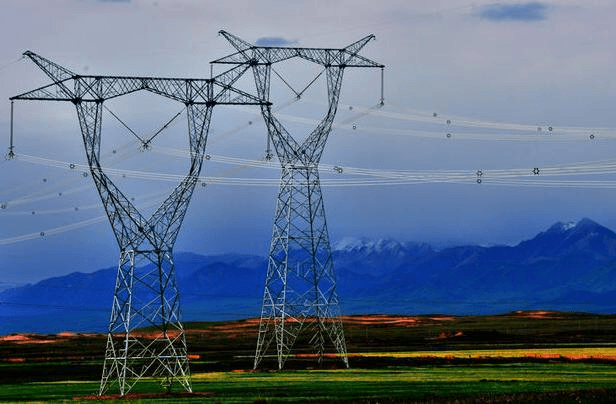
These scenarios demand high breaking capacity and voltage ratings; for branch auxiliary control circuits, the Huade WN20-4-P slow-blow power fuse (AC600V) is recommended, suitable for applications with significant inrush currents.
Slow-blow elements do not operate under short-duration surges, fusing only during sustained overloads or short circuits. The AC600V rating is appropriate for auxiliary circuits in medium-to-high voltage distribution systems; selecting low-voltage fuses for branch circuits may result in dielectric breakdown if transient overvoltages occur in the main circuit.
②Industrial and High-Power Equipment
For industrial control cabinets and the AC side of PV inverters, ceramic tube power fuses with high temperature resistance and high breaking capacity are preferred. In motor circuits, fuses primarily provide short-circuit protection, while overload protection is typically handled in conjunction with thermal relays. Power supply circuits in data centers require low-voltage, highly reliable fuses.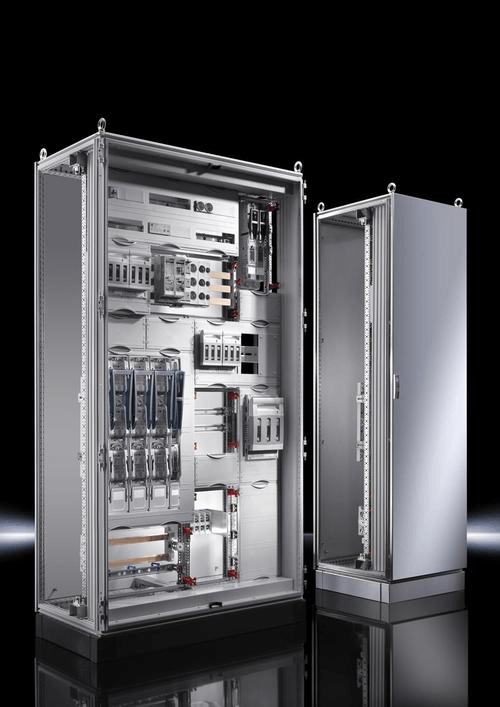
Since fault current rises rapidly on the AC side, the Huade FHP fast-acting fuse (rated current 16A) can be selected to quickly interrupt fault currents, protecting downstream boards and power devices.
The choice between fast-acting and slow-blow types depends on the surge level in the circuit: power circuits experience rapid short-circuit current rise requiring fast interruption, whereas auxiliary circuits have large startup surges where overly fast operation may cause nuisance fusing. The FHP series is rated for AC/DC 420V, covering both the inverter AC side and energy storage DC bus branches, thereby reducing the number of specifications in the BOM.
③Automotive and New Energy
Traditional automotive circuits use blade fuses to protect standard loads such as headlights, windows, and audio systems; new energy vehicles incorporate protection within battery packs and vehicle PDU distribution boxes, covering high-voltage components like OBC, DC-DC converters, electric compressors, and PTC heaters; charging stations and energy storage systems must protect AC input branches, intermediate branches between battery packs and inverters, preventing damage to cells and power modules from overloads and short circuits.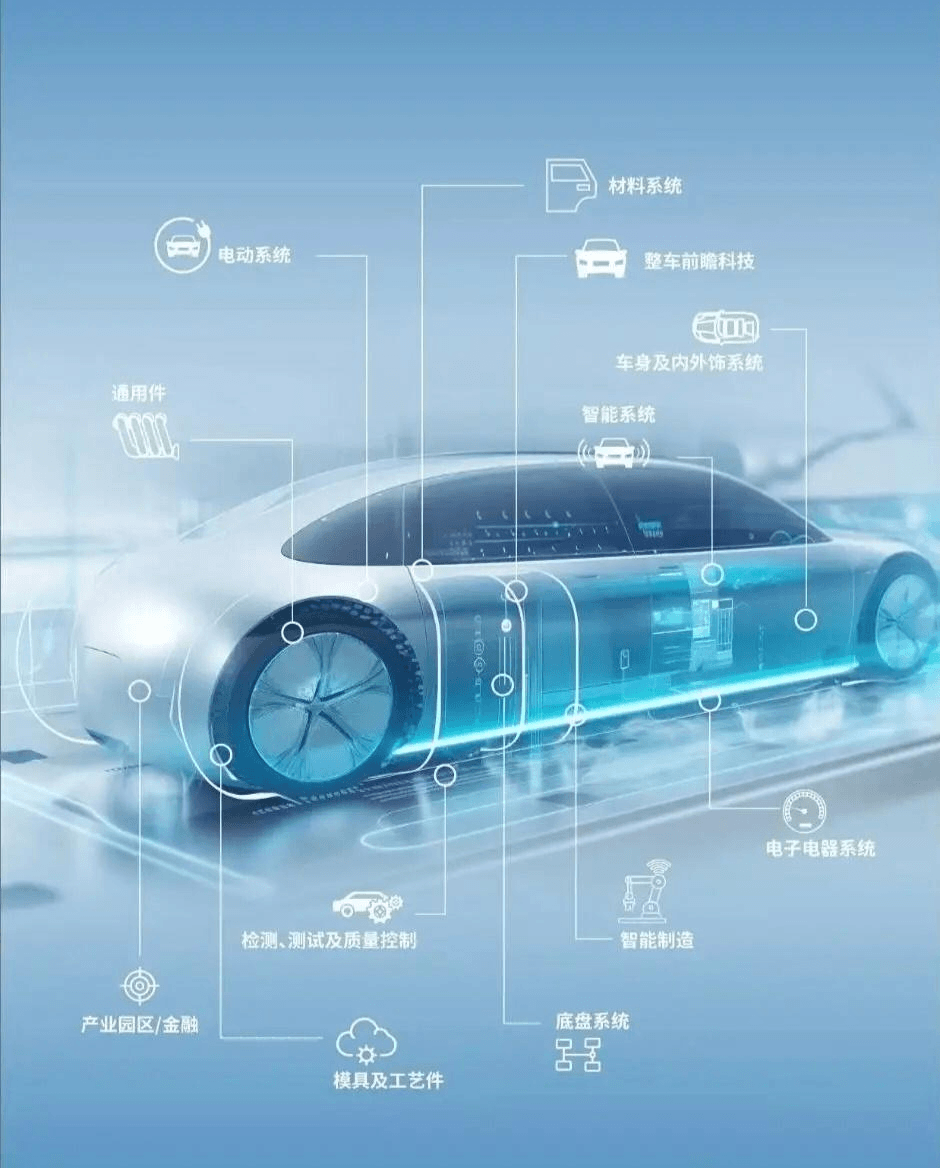
Common characteristics of these scenarios include high DC voltage, high current, and compact installation space. When selecting, verify the fuse's DC breaking capacity—since DC current lacks a natural zero crossing, arc extinction is more difficult than in AC, and fuses rated only for AC cannot be directly used in DC circuits of equivalent voltage.
④Electronics and Consumer
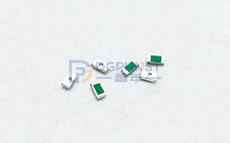
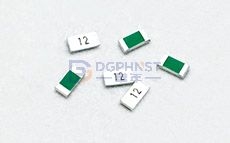
Glass tube fuses are commonly used for primary power protection in home appliances; chip fuses are employed in BMS (Battery Management Systems) as ultimate physical protection for lithium battery modules and portable energy storage; servers, switches, storage drives, and industrial control boards increasingly utilize electronic fuses (eFuse), which offer fast response and post-fault recovery, complementing tubular power fuses.
3. Selection Parameters and Common Errors
When selecting a fuse, verify five key parameters: rated voltage, rated current, breaking capacity, melting characteristic (fast-acting or slow-blow), and I²t coordination. Among these, breaking capacity and melting characteristics are the most prone to issues.
Four Common Mistakes:
- Focusing only on current while ignoring breaking capacity.If the expected maximum short-circuit current in the circuit exceeds the fuse's breaking capacity, the fuse may rupture during interruption, leading to fault escalation. Breaking capacity must be compared against the circuit's maximum short-circuit current.
- Mixing AC and DC applications.DC circuits lack a current zero-crossing point, making arc extinction more difficult than in AC circuits. Therefore, AC-rated fuses cannot be directly applied to DC circuits. When selecting, clearly check whether the rated voltage is marked as AC or AC/DC.
- Incorrect selection of melting characteristic for inrush current circuits.Using a fast-acting fuse in a circuit with high power-on inrush current can cause nuisance blowing at startup; conversely, using a slow-blow fuse in a power circuit requiring rapid interruption results in delayed breaking. The decision should be based on whether the circuit contains inrush sources such as capacitor charging or motor starting.
- Do not ignore temperature derating.Increased ambient temperature reduces the actual current-carrying capacity of fuses. It is necessary to calculate based on the derating curves provided by the manufacturer, rather than relying solely on rated current.
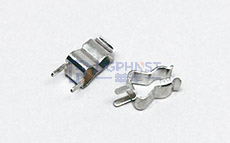
De-energize during installation or replacement, ensure the fuse holder model matches, maintain adequate heat dissipation space, and reserve derating margin for high-temperature environments.
In Conclusion
Fuse selection can be summarized in three points: distinguish between fast-blow and slow-blow types based on circuit inrush conditions; verify rated voltage (AC or AC/DC) and breaking capacity; match specifications according to specific application scenarios.
Walter has mature axial lead series in the field of low-to-medium power AC/DC protection. The slow-blow type targets auxiliary power supplies and distribution branches, while the fast-blow type targets power circuits requiring extremely rapid short-circuit protection, such as EV charging station AC inputs and PV inverters. These products are suitable for both AC and DC applications and have complete safety certifications.
For datasheets, I²t curves, or selection assistance, please contact Shunhai Technology FAE or the sales team, or send a private message for online consultation Huanian Mall.