The power rating of a resistor is not an isolated figure. It is determined jointly by the resistor’s physical construction, material system, and thermal environment, and it directly bears on the long-term reliability of a circuit. From milliwatt-level chip resistors to kilowatt-class power resistors, the rated power spans several orders of magnitude. Understanding the logic behind this distribution and the derating rules is more important than merely memorizing how many watts a given package corresponds to.
Rated power series and package constraints
The rated power of a resistor generally refers to the maximum power it can dissipate continuously under specified ambient conditions. Wirewound and non-wirewound resistors differ noticeably in their power series. Wirewound resistors cover a rated power range from 1/20 W to 500 W, with common steps including 1/8 W, 1/4 W, 1/2 W, 1 W, 2 W, 5 W, 10 W and beyond. Non-wirewound resistors top out at a comparatively lower level, typically within 1/20 W to 100 W. This gap stems from the inherent advantages of the wirewound structure in heat dissipation and thermal tolerance.
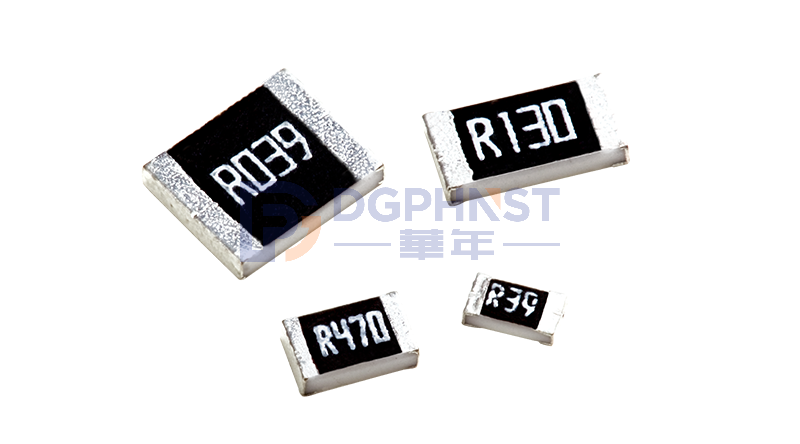
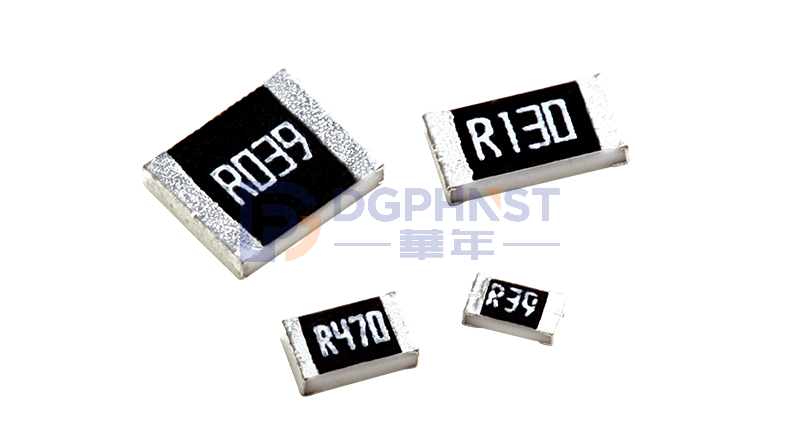
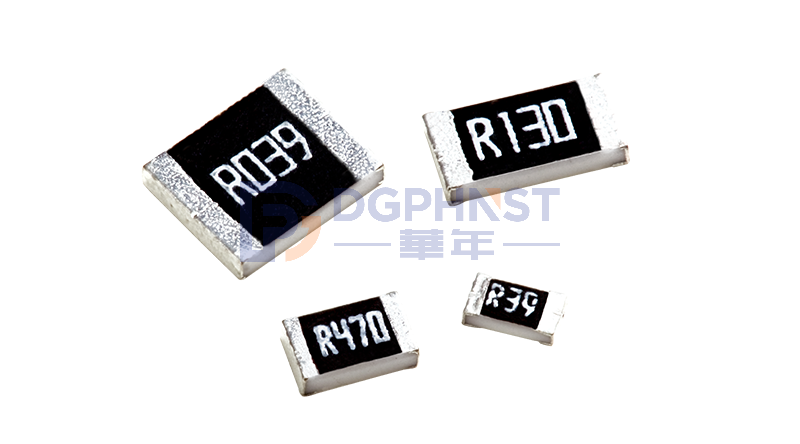
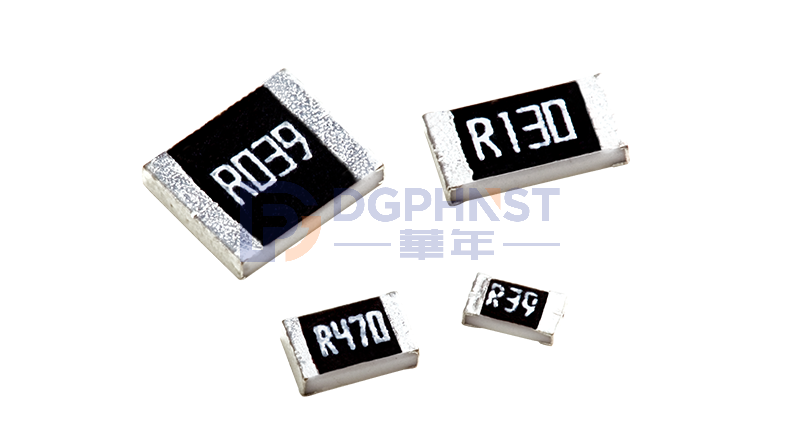
For chip resistors, power rating is tightly bound to package size. In conventional series, 0201 corresponds to 1/20 W, 0402 to 1/16 W, 0603 to 1/16 W, 0805 to 1/10 W, and 1206 to 1/8 W. Some manufacturers also offer “high-power” series that raise 0603 to 1/10 W, 0805 to 1/8 W, and 1206 to 1/4 W within the same footprint. The power rating for a given package size is therefore not absolute; the specific datasheet remains the authoritative reference.
Resistor forms for high-power scenarios
When power requirements exceed the reach of chip resistors, the form factor shifts from surface-mount to leaded or chassis-mounted construction, and the power class rises accordingly. Wirewound resistors are the central category in this range, with conventional ratings between 1 W and 300 W. Specially designed versions can reach 2500 W, and directly water-cooled series can dissipate up to 9000 W. Cement resistors, a packaged form of wirewound construction, are commonly available at 2 W, 3 W, 5 W, and 10 W, and are widely used in the power circuits of air conditioners, televisions, and other appliances in the hundred-watt class. Alloy resistors in TO-220 and TO-247 packages provide a compact, fast-dissipating option in the 20 W to 100 W+ range.
Derating: the practical rule for power selection
Rated power is typically specified at 25°C or 70°C. Once the actual operating temperature exceeds that reference, the usable power must be reduced in accordance with the derating curve. In engineering practice, continuous power dissipation is generally held to within 50% of the 25°C rated power. If the ambient temperature exceeds 70°C, further reduction based on the manufacturer’s power-temperature curve is required. For chip resistors, heat is dissipated primarily through the PCB. Proximity to heat-generating components, confined enclosures, and differences between natural convection and forced air cooling all cause the resistor’s actual temperature to deviate from ambient. Selecting a part solely on the basis of “not exceeding the rating” is often insufficient for reliability. Temperature derating curves and thermal coupling assessment should therefore proceed in parallel with the power calculation.
In practical sourcing and selection, 深圳市顺海科技有限公司 provides power-rating support across chip, leaded, and high-power resistors, while 华年商城 is suited to price comparison and in-stock lookup across multiple resistor categories, helping to match the calculated derated power to a specific part number once the thermal evaluation is complete.