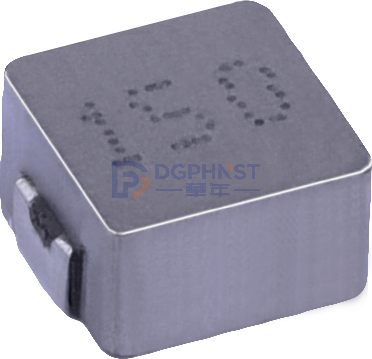
3920 0.0002R 12W 0.5% Metal Shunt Chip Resistor: Comprehensive Product Analysis of MnCu Alloy High-Performance Current Sensing Device
Against the backdrop of global electronics industry moving toward high precision, high efficiency, and high power density, current sensing resistors have become indispensable core components in circuit systems. Among numerous current sensing solutions, the 3920 0.0002R 12W 0.5% metal shunt chip resistor — featuring ultra-low resistance design, high power handling capacity, high precision tolerance, and MnCu alloy core material — has emerged as a preferred current sampling device for high-end applications including new energy, industrial control, automotive power systems, power tools, and precision current measurement. This document provides a comprehensive technical analysis of the 3920 0.0002R 12W 0.5% metal shunt chip resistor across multiple dimensions including product specifications, core material properties, key technical advantages, typical applications, and environmental compliance certifications.
1. Product Overview and Market Positioning
The 3920 0.0002R 12W 0.5% metal shunt chip resistor belongs to the metal alloy chip shunt resistor category, adopting a standard 3920 SMD package to achieve millivolt-level precision voltage signal acquisition with ultra-low milliohm resistance. Compared with traditional thick film resistors and conventional alloy resistors, this 3920 0.0002R 12W 0.5% product demonstrates significant advantages in resistance precision, power density, and temperature stability, making it suitable for demanding operating scenarios such as high-current charge-discharge cycles, high-frequency power switching, and motor drive applications where current measurement accuracy is critical.
The product achieves 12W rated power in the 3920 package size — a benchmark level among similar package offerings — reflecting advanced manufacturing processes and carefully selected materials. Combined with ±0.5% ultra-high precision tolerance, the 3920 0.0002R 12W 0.5% maintains highly consistent resistance values during long-term continuous operation, providing stable and accurate current feedback signals for high-power circuit systems.
2. In-Depth Analysis of Core Specifications
2.1 Package Dimensions and Assembly Compatibility
The 3920 package measures 10.0mm × 5.2mm, positioning it as a large surface-mount package that achieves an ideal balance among power handling capacity, heat dissipation efficiency, and assembly flexibility. This dimension scheme enables the 3920 0.0002R 12W 0.5% to seamlessly integrate with fully automated SMT assembly lines without requiring process or soldering parameter adjustments. It accommodates both conventional PCB board assembly and high-thermal-conductivity substrates such as metal-core PCBs and ceramic boards, demonstrating excellent ease of mounting and mass production adaptability.
2.2 Ultra-Low Resistance and Power Loss Optimization
The nominal resistance value of 0.0002R (i.e., 0.2 milliohm) represents an ultra-low milliohm design and stands as the product‘s most critical technical specification. According to Ohm’s Law P=I²R, lower resistance minimizes power dissipation when current passes through. For the 3920 0.0002R 12W 0.5%, the 0.0002Ω ultra-low resistance keeps self-power loss to an extremely low level in high-current sampling applications, effectively avoiding common issues such as excessive heat generation, wasted power, and sampling deviation observed in conventional power resistors.
2.3 Rated Power and Thermal Management Capability
The 3920 0.0002R 12W 0.5% features a rated stable power of 12W — a benchmark power level for the 3920 SMD package. This 12W high-power design enables the resistor to withstand high-power circuit loads over extended periods, with excellent short-term peak power tolerance. Additionally, internal thermal resistance is controlled at 3.6°C/W. Combined with the large heat-dissipating surface area of the 3920 package, the resistor maintains temperature rise within a controlled range even under high-power operation, ensuring stable performance over long-term continuous use.
2.4 Precision and Tolerance Grade
The ±0.5% high-precision tolerance means the 3920 0.0002R 12W 0.5% undergoes unit-by-unit precision resistance calibration and screening before leaving the factory, keeping batch-to-batch resistance deviation within an extremely narrow range. This effectively prevents circuit sampling imbalance and equipment regulation failures caused by excessive resistance deviation, laying a solid foundation for precision circuit regulation. The ±0.5% precision grade positions this product in the high-end tier within the current sensing resistor category, meeting demands for the vast majority of industrial-grade and high-reliability consumer electronics applications.
2.5 Operating Temperature and Reliability Indicators
The 3920 0.0002R 12W 0.5% operates across a temperature range of -55°C to +170°C, covering wide-temperature applications from extreme cold to high-temperature operating conditions. Load life stability reaches ±0.5%, indicating that the product maintains highly consistent electrical performance after extended full-load, high-temperature aging.
The self-inductance coefficient is below 3nH. This ultra-low inductance ensures stable resistance characteristics even under high-current transients and pulse signal conditions, preventing inductive interference from compromising sampling accuracy. Maximum rated current reaches 244A, fully meeting the sampling requirements of various high-power current detection scenarios.
3. Technical Advantages of MnCu Alloy Material
3.1 Composition and Basic Properties of Manganin Alloy
The 3920 0.0002R 12W 0.5% employs MnCu (manganin) alloy as its core resistive material. According to technical data published by the China Electronic Components Association, standard manganin alloy (Type 6J8) features an optimized Cu-12Mn-2Ni composition with resistivity of 0.47μΩ·m and a temperature coefficient controllable within ±20ppm/°C, making it a classic material system for precision resistor alloys. Compared with ordinary thick-film resistors and traditional constantan alloys, manganin demonstrates significant advantages in temperature stability of resistance, solderability reliability, and long-term stability.
3.2 Extremely Low Temperature Coefficient of Resistance (TCR)
The defining advantage of manganin lies in its extremely low temperature coefficient of resistance. The 3920 0.0002R 12W 0.5% achieves a TCR of approximately ±150ppm — a specification that ensures the 0.0002Ω core resistance value does not shift significantly across the wide -55°C to +170°C operating range, even when self-heating occurs due to high-current passage or when ambient temperature changes drastically. This low TCR characteristic directly guarantees the fidelity and consistency of current sampling signals under all operating conditions, avoiding sampling error accumulation caused by temperature variations.
3.3 Low Thermal EMF Characteristics and DC Sampling Accuracy
The MnCu alloy used in the 3920 0.0002R 12W 0.5%, exhibits low thermal EMF characteristics. Thermally induced voltage generated across the resistor due to temperature gradients is a major source of interference for DC current measurement accuracy. The thermal EMF of manganin is significantly lower than that of traditional constantan alloys (which can reach 43μV/°C), enabling the 3920 0.0002R 12W 0.5% to output cleaner voltage signals in DC current sampling scenarios, minimizing thermal interference with sampled data.
3.4 Excellent Surge Withstanding and Pulsed Current Capability
The 3920 0.0002R 12W 0.5% adopts an electron-beam welded structure, and the MnCu alloy material inherently possesses excellent surge resistance characteristics. Under extreme conditions that generate inrush currents — such as sudden power switching, lightning-induced surges, load changes, and motor start-stop events — the high melting point and stable lattice structure of manganin effectively absorb instantaneous high-current impacts, preventing resistance drift or device damage caused by localized overheating.
4. Manufacturing Process and Structural Design
The 3920 0.0002R 12W 0.5% employs electron-beam welding to join the alloy core with copper terminal electrodes. This welding technology creates a void-free, uniform transition layer between the alloy and electrode, reducing contact resistance while providing structural resilience against thermal cycling stress. Additionally, the 3920 0.0002R 12W 0.5% adopts a trimming-free resistance adjustment technology — distinct from conventional laser-cutting approaches — where the target resistance specification is achieved during initial formation through precise material proportioning and uniform alloy thickness. This approach eliminates stress concentration points that laser cuts could introduce under high-temperature shock, further enhancing surge tolerance and long-term reliability.
5. Environmental Compliance Certifications
5.1 RoHS Compliance
The 3920 0.0002R 12W 0.5% strictly complies with the EU‘s RoHS 2.0/3.0 directives, ensuring it contains none of the ten restricted hazardous substances — including lead, mercury, cadmium, hexavalent chromium, PBB, PBDE, and four phthalates — throughout the production process. Beyond meeting EU market access requirements as a fundamental prerequisite, this compliance demonstrates the product’s commitment to green manufacturing and clean production principles.
5.2 REACH Compliance
The 3920 0.0002R 12W 0.5% also meets REACH regulation requirements established by the European Chemicals Agency (ECHA). This means the 3920 0.0002R 12W 0.5% contains no Substances of Very High Concern (SVHC) beyond permitted limits. Any end-product incorporating this resistor can enter the EU market smoothly, minimizing financial and legal risks associated with environmental non-compliance.
5.3 Lead-Free Environmental Requirements
The 3920 0.0002R 12W 0.5% features a fully lead-free soldering system, ensuring safe soldering operations while aligning with the industry trend toward lead-free environmental compliance. As environmental awareness continues to grow across the global electronics industry, “lead-free” status has become a basic screening criterion for high-end brand supply chains. The lead-free attribute of the 3920 0.0002R 12W 0.5% thus provides downstream manufacturers with both compliance assurance and cost-efficiency benefits.
6. Typical Application Fields
6.1 New Energy Vehicles and Automotive Electronics
With AEC-Q200 automotive-grade certification, the 3920 0.0002R 12W 0.5% is widely applicable to current sampling in new energy vehicle battery management systems (BMS), motor drive controllers, on-board chargers, and DC-DC power converters. In EPS (electric power steering) motor phase current detection applications, the 3920 0.0002R 12W 0.5% leverages its ±0.5% ultra-high precision and 0.0002Ω low-resistance design to deliver clean, linear feedback signals for high-current sampling.
6.2 Industrial and Precision Power Supplies
In demanding power equipment such as telecom power supplies, server power supplies, and programmable DC power supplies, the 3920 0.0002R 12W 0.5% relies on its 12W high power handling capacity and extremely low TCR to complete current detection tasks reliably even under sustained heavy-load output conditions.
6.3 Power Tools and Variable Frequency Drives
High-speed brushless motor drives in power tools, along with industrial automation frequency converters and servo drive systems, represent ideal application scenarios for the 3920 0.0002R 12W 0.5%. With its 3920 package and robust current sampling capability, the sensing circuit can monitor motor phase current in real time, enabling precise current closed-loop control. Under harsh conditions filled with electromagnetic interference and surge impacts, the 3920 0.0002R 12W 0.5% relies on its excellent surge resistance to maintain smooth motor control system operation.
6.4 Medical Devices and Precision Instruments
In high-value medical equipment such as CT scanners, ventilators, and in-vitro diagnostic devices, fluctuations in current measurement accuracy can directly impact diagnostic and therapeutic outcomes. The 3920 0.0002R 12W 0.5%, with its ±0.5% high-precision resistance tolerance, not only outperforms ordinary consumer-grade electronics but also maintains consistent resistance over extended periods under wide-temperature and long-duration aging conditions — satisfying the stringent reliability demands of medical electronic equipment.
7. Summary
In summary, the 3920 0.0002R 12W 0.5% metal shunt chip resistor integrates ultra-low resistance, high power handling capacity, high precision tolerance, low TCR characteristics, strong surge resistance, quality MnCu alloy material, and comprehensive environmental compliance — all within a single component. Its broad application across new energy vehicles, industrial control, energy storage systems, precision power supplies, and medical equipment fully demonstrates its core value in high-end electronic systems. For design engineers pursuing ultimate current sampling accuracy and long-term system reliability, the 3920 0.0002R 12W 0.5% undoubtedly stands as a trustworthy, high-quality component choice.