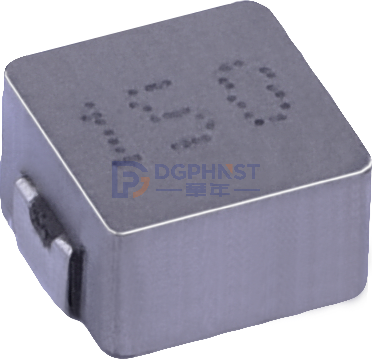
In-depth Analysis of 3920 0.00075R(0.00075 Ohm) 7W High-Precision Manganese Copper Shunt Resistor
In modern electronic circuit design, current sensing and power management are always at the heart of engineering challenges. A high-performance, stable, and reliable shunt resistor is the key to achieving accurate current measurement. The 3920 0.00075R(0.00075 Ohm) 7W metal shunt chip resistor (model: ESR39F7W0M75M02G) introduced in this article is an ideal choice for demanding current sensing applications. This product combines multiple advantages, including low temperature drift, high precision, strong surge withstand capability, and eco-friendly materials. It is widely used in power management, motor drives, battery protection, and industrial control.
1. Core Parameters and Packaging Advantages
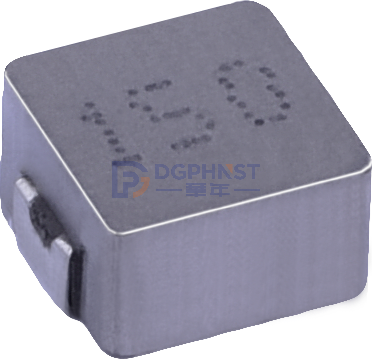
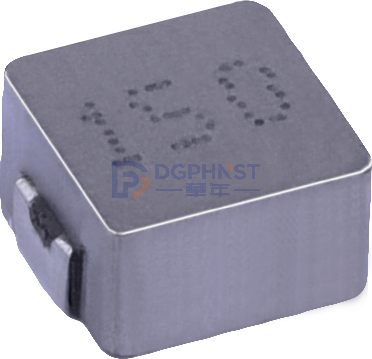
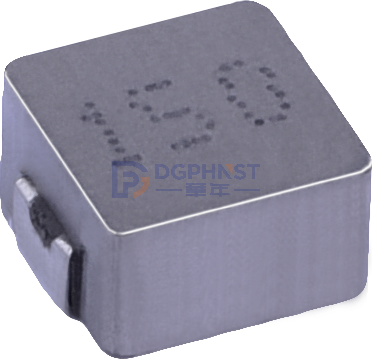
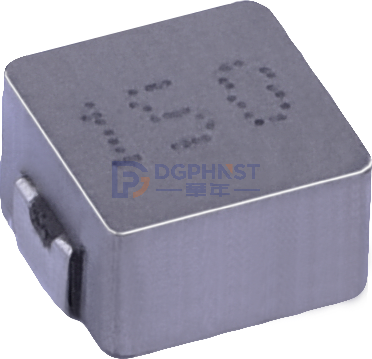
The 3920 0.00075R(0.00075 Ohm) 7W resistor adopts a standard 3920 imperial package (approx. 9.8mm×5.0mm) with a metal shunt structure. Its nominal resistance is 0.00075 ohms (0.75 milliohms), with a maximum tolerance of ±1% (high-precision grade) and a rated power of 7 watts. This means that under a continuous current of 75 amperes, the voltage drop across the resistor is only 56.25 millivolts, exactly reaching the rated power dissipation. Such an ultra-low resistance combined with high power capacity makes 3920 0.00075R(0.00075 Ohm) 7W introduce minimal additional voltage drop in high-current loops, without affecting the main circuit efficiency while providing an adequate sensing signal amplitude.
Compared to traditional thick-film or thin-film chip resistors, the metal shunt design offers lower parasitic inductance and better heat dissipation paths. The metal element of 3920 0.00075R(0.00075 Ohm) 7W forms an integrated conductive channel with the end electrodes, allowing heat to quickly conduct to the PCB copper foil, thereby reducing the impact of temperature rise on resistance stability. Moreover, the wide-body 3920 package provides ample soldering area, ensuring mechanical strength and long-term reliability under high currents.
2. MnCu Material: The Foundation of Low Temperature Drift and Surge Withstand
The core material of this resistor is manganese-copper alloy (MnCu), a classic material for precision resistors. Its most prominent characteristic is an extremely low temperature coefficient of resistance (TCR). Thanks to the MnCu material, 3920 0.00075R(0.00075 Ohm) 7W exhibits a resistance variation within ±50ppm/℃ across the entire operating temperature range (typically -55℃ to +170℃). This is what is meant by "low temperature drift" – extremely low changes with temperature. For current sensing applications, low temperature drift means that even if the ambient temperature fluctuates drastically, the sensing signal remains highly accurate, eliminating the need for complex temperature compensation circuits.
Additionally, MnCu alloy possesses excellent surge withstand capability. When transient overcurrents occur due to lightning induction, load switching, or hot-plugging, the metal shunt body of 3920 0.00075R(0.00075 Ohm) 7W can withstand short-term impacts several times the rated power without resistance drift or open-circuit failure, thanks to its uniform conductive cross-section and good thermal capacity. In contrast, ordinary thick-film resistors are prone to localized overheating and burnout under similar surge conditions. Therefore, this product is particularly suitable for applications with surge risks, such as power supply inputs, motor phase current sensing, and battery management systems (BMS).
3. Environmental Compliance: RoHS, REACH and Lead-Free Process
As environmental requirements in global electronics manufacturing continue to rise, hazardous substance control for components has become a basic necessity. 3920 0.00075R(0.00075 Ohm) 7W strictly complies with the RoHS directive, containing no lead, mercury, cadmium, hexavalent chromium, polybrominated biphenyls, or polybrominated diphenyl ethers. At the same time, the product has passed REACH (EC 1907/2006) Substance of Very High Concern (SVHC) assessment, ensuring that no candidate list substance exceeds the limit. Furthermore, its end electrodes are treated with a lead-free tin layer, fully compatible with lead-free reflow soldering processes, avoiding harm to operators and the environment caused by traditional lead-containing solders.
It is worth noting that MnCu alloy itself is a non-toxic, recyclable green material, perfectly aligned with environmental philosophy. Choosing 3920 0.00075R(0.00075 Ohm) 7W not only facilitates compliance certification for various electronic products but also reflects a company’s commitment to sustainable development.
4. Design Convenience Brought by High Precision and Low Resistance
For milliohm-level resistors, a tolerance of ±1% is considered high precision. At the rated current of 75A, the ±1% error corresponds to a sensing voltage deviation of only ±0.5625mV – this can easily be eliminated by backend ADC calibration or software compensation. In contrast, ordinary shunts with 5% or even 10% tolerance may cause significant shifts in system protection thresholds, forcing designers to leave larger margins and reducing resource utilization.
Moreover, the 0.75 milliohm resistance of 3920 0.00075R(0.00075 Ohm) 7W is a well-considered compromise for current sensing applications. If the resistance is too low (e.g., 0.2 milliohm), the sensing signal amplitude becomes too small, imposing stringent requirements on op-amp noise and offset voltage. If it is too high (e.g., 2 milliohms), the power dissipation at 75A exceeds 0.5W, easily causing self-heating issues. The 0.75 milliohm value perfectly balances signal-to-noise ratio and temperature rise, allowing most common current-sensing ICs (such as INA181, MAX4080, etc.) to work directly with it without additional signal conditioning.
5. Typical Applications and Selection Recommendations
-
Switching power supply output current sensing: In server power supplies and telecom power modules, 3920 0.00075R(0.00075 Ohm) 7W can be placed on the low-side or high-side to monitor output current in real time for overcurrent protection or current sharing control.
-
BLDC motor drives: In three-phase inverters, the low-inductance characteristic of this resistor provides clean current waveforms for field-oriented control (FOC).
-
Battery Management Systems (BMS): For battery packs in power tools and light electric vehicles (e.g., electric scooters), 3920 0.00075R(0.00075 Ohm) 7W detects charge/discharge currents, enabling accurate state-of-charge (SOC) estimation with coulomb counting.
-
PD fast chargers and adapters: In high-power USB-PD chargers, the 0.75 milliohm resistor can sense primary or secondary currents for constant current control and output overload protection.
When selecting, attention must be paid to PCB thermal design. Although 3920 0.00075R(0.00075 Ohm) 7W has a rated power of 7W, it is recommended to layout copper pours or thermal vias around the pads to ensure temperature rise does not exceed 125℃. For applications with continuous currents above 50A, consider using two resistors in parallel to further reduce temperature rise.
6. Conclusion
In summary, 3920 0.00075R(0.00075 Ohm) 7W (ESR39F7W0M75M02G) is a metal shunt chip resistor that combines low temperature drift, high precision, strong surge withstand capability, and environmental compliance. Its MnCu material provides excellent temperature stability; the 3920 package and 7W power rating meet high-current sensing requirements; and RoHS/REACH/lead-free certifications give designers peace of mind. Whether in harsh industrial environments or high-power consumer electronics, this resistor can be a trustworthy link in the current sensing chain. When your design calls for a milliohm-level, highly reliable sensing solution, this product deserves your priority consideration.