With the continuous iteration of electrification and intelligence in new energy vehicles, the on-board charger (OBC) serves as a key component of the vehicle's slow-charging system, responsible for converting AC power from the grid into DC power required by the power battery and managing the entire vehicle charging process.
At the same time as industry technological upgrades, end vehicle manufacturers and supply chains have increasingly stringent requirements for the automotive-grade quality, sampling accuracy, operational stability, and mass production compatibility of core components of the OBC. With many years of experience in the field of passive component supply, Shunhai Technology provides a complete solution of high-reliability sampling resistors for new energy OBC scenarios with a comprehensive range of automotive-grade resistor products, original factory genuine sources, and professional technical services, accurately adapting to harsh working conditions and large-scale mass production needs of vehicles.
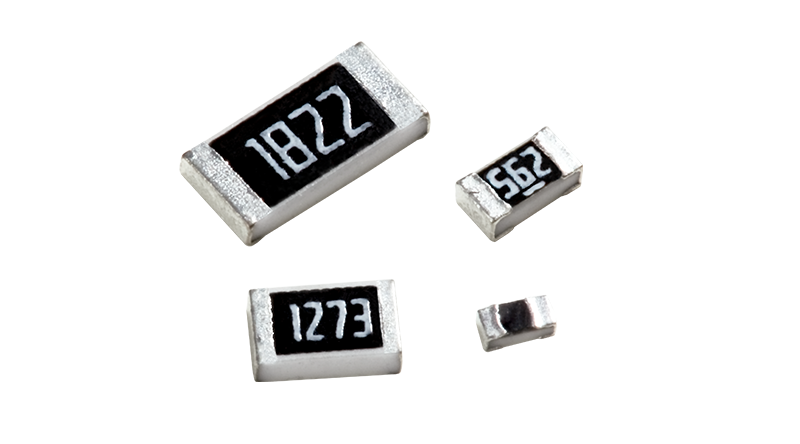
In the power control system of the OBC, although the sampling resistor is small in size, it undertakes functions such as current detection, overcurrent protection, and energy metering, serving as a fundamental component for realizing charging control in the OBC.

1. Why Can't the OBC On-Board Charger Do Without Sampling Resistors?
New energy vehicle OBC mainly adapts to home AC slow-charging scenarios. Most models are equipped with 6.6kW and 11kW charging schemes, which involve large charging currents and complex operating conditions. They are long-term in high-frequency start-stop, temperature fluctuations, and voltage fluctuations in the vehicle environment. This requires the OBC system to have real-time current monitoring, rapid fault response, and power statistics capabilities, all of which rely on sampling resistors.
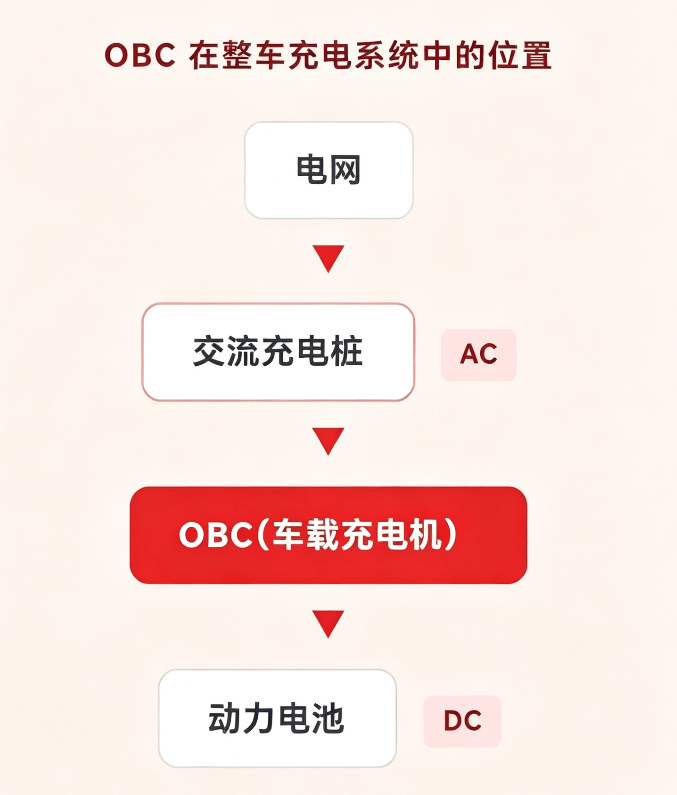
The position of OBC in the whole vehicle charging system
The working principle of sampling resistors: The sampling resistor is connected in series in the main charging circuit of the OBC. According to Ohm's law, it collects the small voltage drop across the circuit, converts the current signal into an electrical signal that can be calculated, and transmits it to the main controller chip for data processing and system control.
Its core role in the OBC system mainly includes three aspects:
1. Real-time current sampling, supporting closed-loop current control
Battery power is sensitive to charging current. Too high a current may damage the cell and shorten the battery life, while too low a current may affect charging efficiency. During the operation of the OBC, the sampling resistor continuously collects current data from the AC input and DC output circuits and feeds it back to the main control unit.
The control system dynamically adjusts the working state of the PFC topology circuit based on the sampling data, corrects the charging power, and achieves constant current and constant voltage segmented charging, meeting the charging needs of the power battery at different stages of charge. This ensures charging efficiency while reducing the damage caused by high current to the battery. Current mainstream bidirectional OBC and V2G vehicle-grid interaction topologies also demand higher sampling accuracy.
2. Overcurrent protection, ensuring charging safety
The charging environment in vehicles is complex and changeable. Voltage fluctuations in the power grid, poor line contact, aging of the vehicle circuit, and sudden load anomalies may lead to overcurrent or short-circuit failures, which could burn out the OBC module or even cause thermal runaway and fire hazards.
The sampling resistor continuously monitors the loop current. When the current exceeds the set threshold, it sends a fault signal to the control system, triggering the overcurrent protection mechanism, cutting off the charging loop, and stopping the power output. It completes the fault response within a short time, limiting the fault scope and ensuring the electrical safety of the OBC module, the power battery, and the entire vehicle.
3. Energy metering, supporting charging data management
The precise calculation of the driving range of new energy vehicles, the statistics of charging power, the analysis of the overall energy consumption of the vehicle, and the estimation of the SOC (State of Charge) of the vehicle's system all depend on the accurate energy metering function of the OBC. The sampling resistor, with its high precision and low temperature drift characteristics, continuously collects current and power data throughout the charging process, providing accurate computational basis for the system.
Based on stable sampling data, the OBC can count the power and energy consumed during a single charge, while also providing data support for the BMS (Battery Management System), making the vehicle's driving range display more accurate and meeting the needs of fine-grained energy management of the vehicle's power system.
2. The Core Advantages of 2512 SMD Sampling Resistors for OBC Automotive Scenarios
Automotive electronic components in new energy vehicles require higher performance in terms of power capacity, stability, interference resistance, and production compatibility compared to consumer electronics. Conventional small-package sampling resistors struggle to adapt to the high-power, high-load, and long-period continuous operation conditions of the OBC.
Shunhai Technology has been deeply involved in the field of automotive passive component support. It has selected AEC-Q200 automotive-grade certified 2512 SMD sampling resistors, which perfectly match the strict working conditions of new energy OBC with high power, high fluctuation, and long cycle.
The 2512 SMD package is widely used in OBC high-current sampling scenarios due to its structural and performance characteristics. Its adaptability mainly manifests in the following two aspects:
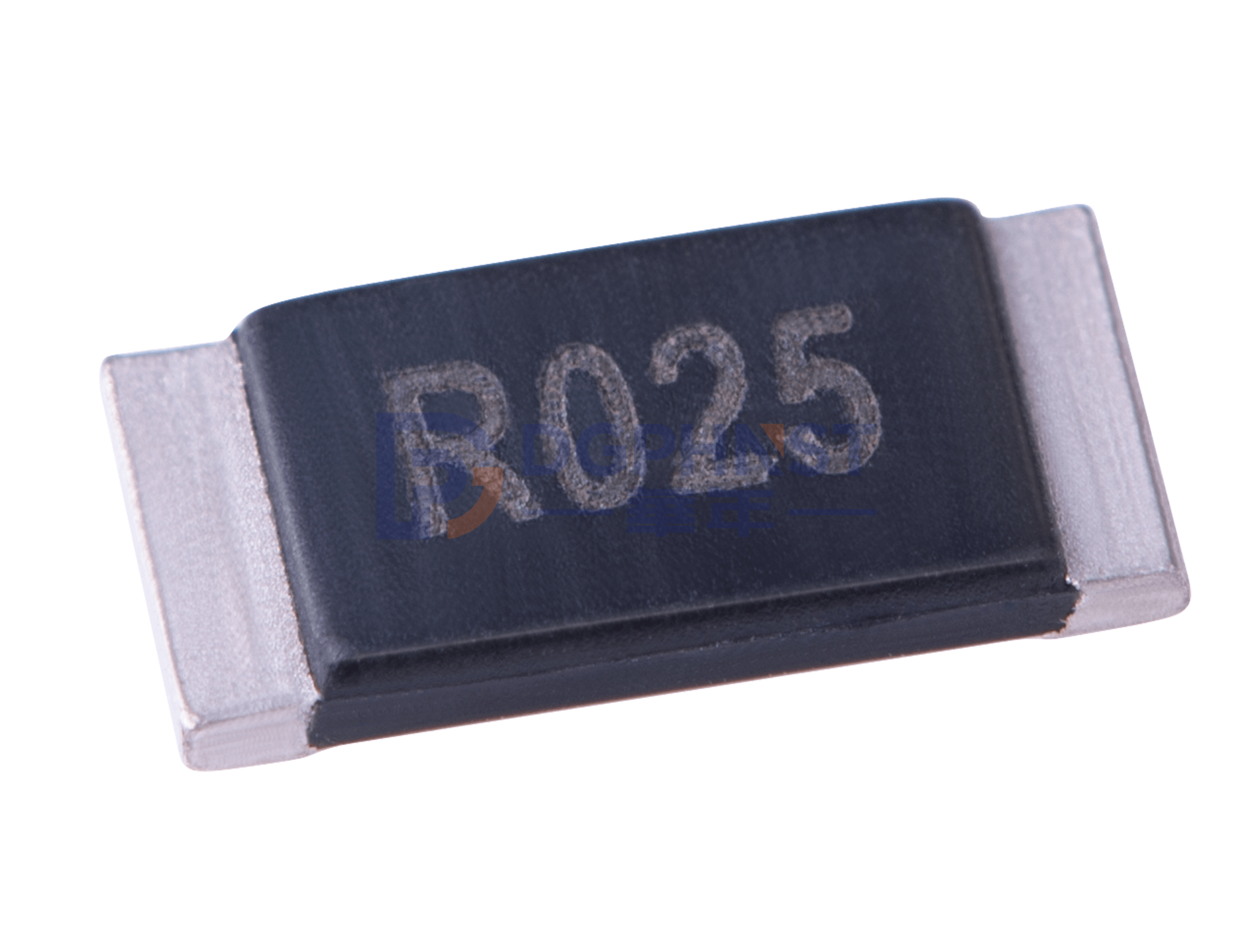
Tian Er MR251220FR004MZ alloy resistor
The 2512 SMD package is widely used in OBC high-current sampling scenarios due to its structural and performance characteristics. Its adaptability mainly manifests in the following two aspects:
1. High Power Capacity, Adapting to High-Current Detection Conditions
Compared to small packages like 0402, 0603, and 1206, the 2512 package has a larger body volume and better heat dissipation area, with the core advantage being stronger power capacity and better heat dissipation performance. The rated power of mainstream 2512 sampling resistors can reach up to 1W or 2W, which can easily meet the high-current sampling requirements of the 6.6kW and 11kW mainstream OBC high-power charging circuits.
Under the condition of long-term full-load operation of the OBC and high-temperature environments in vehicles, the working temperature rise of the 2512 SMD resistor is relatively low, helping to reduce resistance drift and sampling accuracy loss caused by overheating. At the same time, this package model features low resistance, low temperature drift, and low parasitic inductance, making it suitable for the sampling needs of the OBC totem-pole PFC topology, ensuring the stability and accuracy of current sampling and reducing the risk of charging abnormalities or false protection triggers caused by sampling deviations.
2. Standardized SMD Packaging, Adapting to Automated Mass Production Processes
OBC for new energy vehicles belongs to mass-produced automotive components, requiring high assembly efficiency, consistency, and compatibility of components. The 2512 is a standardized SMD packaging model in the industry, fully compatible with high-speed SMT automatic mounting machines, eliminating the need for manual insertion or secondary processing, significantly improving the production and assembly efficiency of OBC circuit boards, and reducing the cost and assembly errors of mass production.
At the same time, the standardized SMD structure is compact and has high pin consistency, allowing precise adaptation to the compact layout design of OBC circuit boards, aligning with the current trend of miniaturization and integration of automotive power modules.
Compared to plug-in sampling resistors, 2512 SMD models offer better shock resistance and sealing, capable of withstanding the bumps, vibrations, and alternating high and low temperatures encountered during vehicle operation, preventing virtual welding or de-soldering faults, thereby significantly enhancing the service life and operational stability of the OBC as a whole, highly matching the rigorous demands of long-term use in vehicles.
3. In Conclusion
As a core sampling component of the OBC on-board charger, the sampling resistor, though small in size, spans the entire process of charging control, safety protection, and energy measurement.
The 2512 SMD sampling resistor, with its multiple advantages such as high power capacity, strong heat dissipation, high stability, and easy mass production, precisely matches the industry's needs for high-power, high-reliability, and large-scale production of OBC, becoming the core preferred component for high-current sampling in new energy vehicle on-board chargers.
With the promotion of technologies such as 800V high-voltage platforms and V2G vehicle-grid interaction in the field of new energy vehicles, the application range of 2512 SMD sampling resistors in the automotive power sector is expected to further expand.
Shunhai Technology will continue to focus on the field of new energy vehicle electronics, relying on a complete automotive-grade product matrix, a stable supply chain, and professional technical service capabilities, continuously providing cost-effective and reliable passive component solutions for core components such as OBC, BMS, and electric control systems, and helping to promote the upgrading of new energy vehicle charging technology.