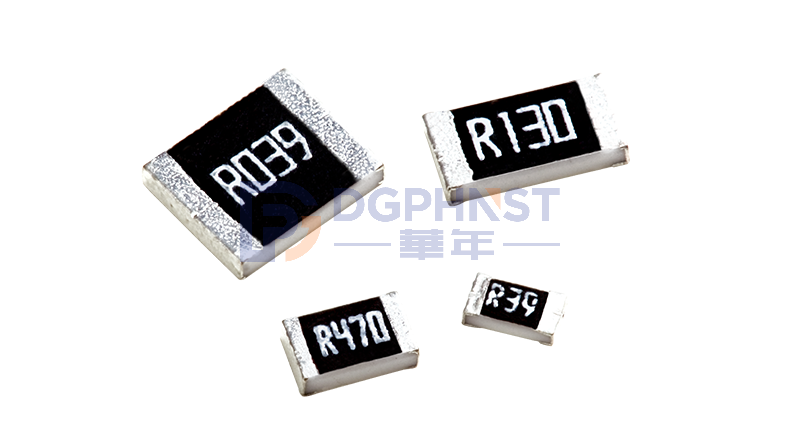
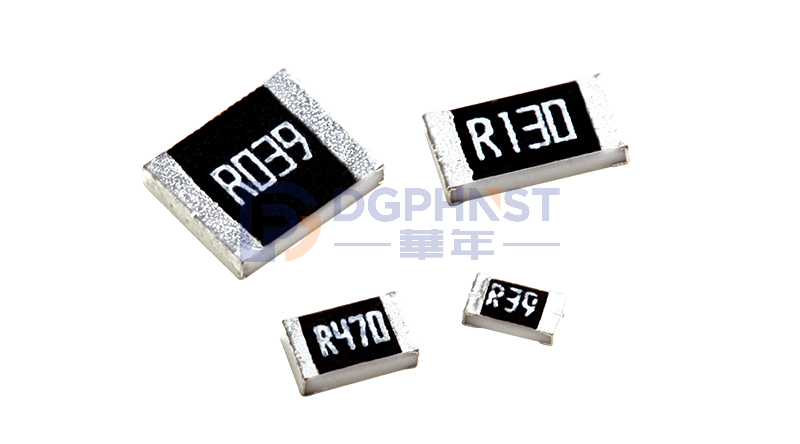
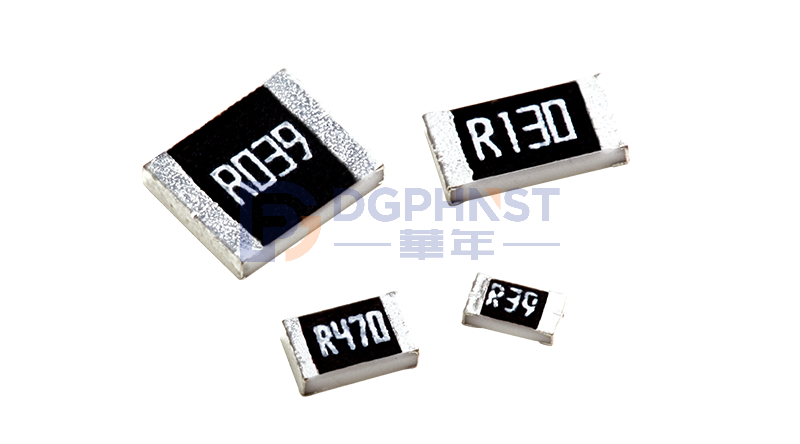
Precision resistors with the same 0.1% tolerance rating can vary in price from a few cents to tens of yuan. Even when comparing parameters such as temperature drift, noise, and inductance one by one, it is easy to get lost in a pile of specifications.
The issue often lies not in the accuracy grade. Accuracy only tells you "how large the deviation was at factory output," whereas what determines where a resistor can be used and how long it remains stable are the fundamental differences arising from materials and manufacturing processes.
1. Three Types of Resistors, Winning Through Manufacturing Processes
The performance foundation of precision resistors is built upon their manufacturing processes. Three mainstream process routes each correspond to different technical logic and performance positioning.
Thin-film precision resistors,are made by sputtering or evaporating materials such as nickel-chromium alloy into micron-level thin films under vacuum conditions, followed by laser trimming for precise resistance adjustment. Their advantages include mature processes, moderate cost, small size, and the ability to achieve good accuracy within small packages, making them the workhorse in mass-produced instruments.
Metal foil resistors, involve bonding an entire piece of alloy foil onto a ceramic or glass substrate, then etching it into a serpentine pattern. Their most distinctive feature is "compensation": through the interaction of alloy composition, bonding stress, and thermal expansion of the substrate, they suppress temperature drift to levels unattainable by ordinary processes.
Wire-wound precision resistors, are manufactured by winding metal wire around an insulating core. They offer intuitive structure and strong power handling capability, while also achieving extremely high resistance accuracy. However, the physical structure of the helical winding inherently introduces parasitic inductance, a characteristic determined by its principle, which also defines its upper limit for application frequency.

The three types of processes correspond to three clear technical positions: thin-film resistors focus on balance and cost-effectiveness for mass production; metal foil resistors specialize in extreme temperature stability and low noise; wire-wound resistors emphasize precision applications in high-power scenarios.
2. Six Dimensions,Clarifying Performance Differences Across Processes
Comparing the three types of resistors across six dimensions—temperature drift, noise, inductance, price, stability, and frequency characteristics—clearly reveals their performance differences. Behind each difference lies a reflection of the specific process characteristics.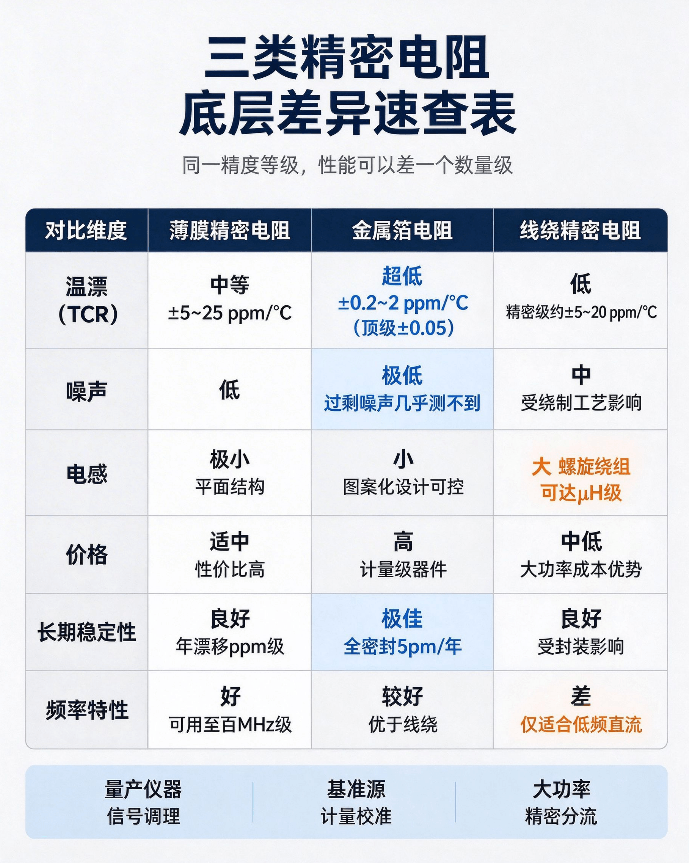
Six-Dimensional Comparison of Three Types of Precision Resistors
Resistor price and performance are not linearly correlated: Metal foil resistors excel in temperature drift, noise, and long-term stability, with prices an order of magnitude higher than the other two types; wirewound resistors offer lower cost and high power capacity but have poorer frequency characteristics; thin-film resistors meet the requirements of standard precision applications across all performance metrics, standing out for their comprehensive balance and mass-production compatibility.
Precision resistors are not about "the more expensive, the better," but rather "the better the match, the better." Understanding the physical meaning of each performance parameter and which process characteristics determine it is closer to the essence of technology than simply listing or comparing parameters.
3. Metal Foil Resistors: Ultra-Low Temperature Drift and Ultra-Low Noise
Among the three types of precision resistors, metal foil resistors represent the most typical ultra-high performance. Their low temperature drift and low noise are not results of screening and grading finished products, but inevitable outcomes of structural design.
The Temperature Coefficient of Resistance (TCR) refers to the relative change in resistance value per 1°C change in temperature, measured in ppm/°C. Standard thick-film resistors typically have a TCR of several hundred ppm/°C; thin-film precision resistors can achieve ±5~25ppm/°C; standard model numbers of metal foil resistors have a TCR of ±1~2ppm/°C, while high-end series can go as low as ±0.05~0.2ppm/°C, an order of magnitude lower than high-performance thin-film resistors.
This performance is achieved through structural design rather than component screening: the resistance of metal foil resistors increases positively with rising temperature, while thermal expansion of the substrate creates compressive stress on the foil layer, causing the resistance to decrease negatively. These two effects cancel each other out within the operating temperature range, making the temperature drift characteristic predictable and repeatable, independent of individual unit screening.
In terms of noise performance, metal foil resistors rely on bulk metal conduction mechanisms, virtually eliminating grain boundary scattering and electron tunneling effects found in thin-film materials. Low-frequency excess noise is extremely low, even below the resolution limit of standard test equipment. Meanwhile, its thermoelectric EMF can be controlled at 0.05~0.1µV/°C, and long-term stability under fully sealed structures can reach 5ppm/year. These characteristics make it a common component in scenarios such as voltage references, metrology calibration, and high-end medical signal conditioning.
4. Application Scenarios for Each Type of Resistor
Different manufacturing processes naturally suit different circuit scenarios, determined by their own performance boundaries and cost characteristics.
Thin-film precision resistors are suitable for mass-produced instrumentation and equipment. In scenarios involving signal conditioning, voltage divider feedback, and precision measurement where temperature drift and noise requirements are moderate-to-high and cost control is necessary, they offer a balanced overall performance choice, with relatively abundant options in package forms and supply channels.
Metal foil resistors are suitable for scenarios prioritizing accuracy, such as voltage references, metrology calibration equipment, and high-resolution ADC/DAC reference circuits. In these applications, resistor temperature drift and stability directly affect system-wide accuracy, while component cost is relatively secondary, making metal foil resistors a rational choice.
Wirewound precision resistors are suitable for high-power, low-frequency application scenarios, such as precision current shunts, power supply current sampling, and industrial frequency and DC high-current circuits, simultaneously meeting power handling and accuracy requirements. Under conditions of low operating frequency, the impact of parasitic inductance is limited; adopting non-inductive winding techniques like bifilar winding can further reduce inductance, but they are still not recommended for priority use in high-frequency scenarios.
Final Thoughts
Selecting precision resistors ultimately comes down to one sentence: first clarify the circuit's frequency and temperature drift requirements, then decide how much to pay for "stability." From the mass-production balance of thin-film, to the ultimate stability of metal foil, to the high-power handling of wirewound, every process path has its clear capability boundaries and value positioning.
If you are struggling with specific model numbers for a particular project—such as whether to use metal foil or precision thin-film for a reference source, or how to manage temperature drift for high-power shunting—feel free to leave a comment 【Shunhai Technology】 or send a private message for discussion, so we can review the selection parameters together.
HNST WELCOME! 0755-23173910
English |中文

Cart
{{cartCount}}
你当前的浏览器版本过低或不支持。请升级或更换浏览器。推荐浏览器 Chrome Edge。