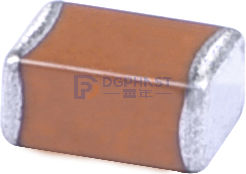
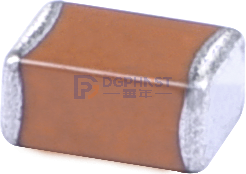
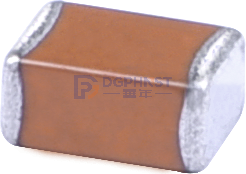
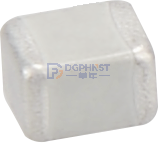
Murata is a globally renowned electronic component manufacturer, producing a wide variety of capacitors with a wide range of applications. To choose a suitable Murata capacitor, understanding its rich material system is the key first step. Different materials directly determine the temperature stability, capacity size, frequency characteristics, and applicable scenarios of capacitors.
The main material system of Murata capacitors
Murata's capacitor material is mainly related to its core product - multi-layer ceramic chip capacitors (MLCC). These materials are usually identified by a set of standard codes (such as COG, X7R), and there are corresponding internal codes (such as 5C, R7) in Murata's product models. The core of these codes is classified based on temperature characteristics according to the Electronic Industries Association (EIA) standards in the United States.
Overall, Murata's ceramic capacitor materials can be divided into two categories: Type I ceramics (temperature compensation type) and Type II ceramics (high dielectric constant type).
The following table compares the key characteristics of several mainstream ceramic capacitor materials in Murata for quick reference.
|Material Type | Common Identification (EIA Standard/Murata Code) | Operating Temperature Range | Temperature Characteristics (Capacity Change Rate) | Main Features and Applications|
|Class I ceramics (temperature compensation type) | COG/NPO (Murata code: 5C) | -55 ℃~+125 ℃ | Extremely stable (± 0 ± 30ppm/℃) | Ultra high stability, low loss. Suitable for scenarios such as resonators, oscillators, high-frequency circuits, etc. that require extremely high stability. |
|Class II ceramics (high dielectric constant type) | X7R (Murata code: R7) | -55 ℃~+125 ℃ | Relatively stable (± 15%) | Large capacity and relatively stable. Widely used in bypass, coupling, filtering, and frequency discrimination circuits that do not require high capacity stability. |
|Class II ceramics (high dielectric constant type) | X5R (Murata code: R6) | -55 ℃~+85 ℃ | General (± 15%) | High volume to capacity ratio. Commonly used in situations that require moderate capacity and certain stability, such as power filtering. |
|Class II ceramics (high dielectric constant type) | Y5V (Murata code: F5) | -30 ℃~+85 ℃ | Large variation (+22%, -82%) | Very high volume specific capacity, but significantly affected by temperature, voltage, and time. Mainly used for ordinary filtering circuits that are cost sensitive and do not require high capacity accuracy. |
The general experience for material selection is that small capacity capacitors below 100pF are usually made of stable 5C (COG/NPO) material; R7 (X7R) material is commonly used between 100pF and 1 μ F; Large capacity capacitors above 1 μ F are mostly made of R6 (X5R) material; For low-cost applications with low precision requirements, F5 (Y5V) material may be considered.
Other special materials and technologies
In addition to mainstream MLCC ceramic materials, Murata also offers capacitors based on other technologies to meet the needs of specific high-end or demanding applications.
Silicon capacitors: This is a high-performance product developed by Murata using semiconductor technology. It uses silicon as the dielectric and has extremely high temperature and voltage stability, with almost no piezoelectric effect (whistling). Its reliability is reportedly up to 10 times that of traditional MLCC, and it can achieve ultra-thin (such as 100 μ m) packaging, making it particularly suitable for demanding fields such as RF power amplification, radar, data centers, and high reliability automotive electronics.
Thin film capacitors: such as Murata's FH series high-temperature thin film capacitors, which use special high heat-resistant thin film dielectrics and can operate continuously in environments up to 125 ℃. They also have advantages such as no DC bias characteristics and high insulation resistance. This type of capacitor is mainly aimed at scenarios such as electric drive systems for electric vehicles and industrial equipment that require stability and safety in high heat environments.
How to choose materials according to needs
Choosing the material for Murata capacitors requires comprehensive consideration of the following core factors:
1. Temperature stability requirements: This is the primary consideration. If the circuit needs to maintain absolute stability of parameters (such as frequency) over a wide temperature range, COG/NPO is the only option. If the capacity is allowed to vary within a certain range, X7R or X5R is the more economical and larger capacity option.
2. Capacity and volume requirements: In limited circuit board space, large capacity is required, usually requiring the selection of Class II high dielectric constant materials such as X5R or Y5V. But it is necessary to evaluate whether the capacity attenuation with temperature and voltage is within the acceptable range of the circuit.
3. Working voltage and frequency: High frequency circuits must use low loss COG/NPO materials. High voltage applications require attention to the rated voltage specifications of Murata capacitors, and the DC bias characteristics of different materials are also different.
4. Special Environment and Reliability: For automotive electronics, aerospace, or high reliability industrial equipment, in addition to considering temperature, attention should also be paid to the long-term aging characteristics and vibration resistance of the materials. At this point, silicon capacitors or specific high-grade ceramic/film capacitors may be a more suitable choice.
In summary, Murata's wide range of material options for capacitors provides great flexibility for electronic design. From consumer electronics to core automotive components, understanding and starting from basic material systems such as COG, X7R, X5R, Y5V, combined with special technologies such as silicon capacitors and thin film capacitors, can accurately match the most reliable "heart" for your project.
HNST WELCOME! 0755-23173910
English |中文

Cart
{{cartCount}}
你当前的浏览器版本过低或不支持。请升级或更换浏览器。推荐浏览器 Chrome Edge。