Introduction to 2512 Resistor Types
1. Overview of the 2512 Package
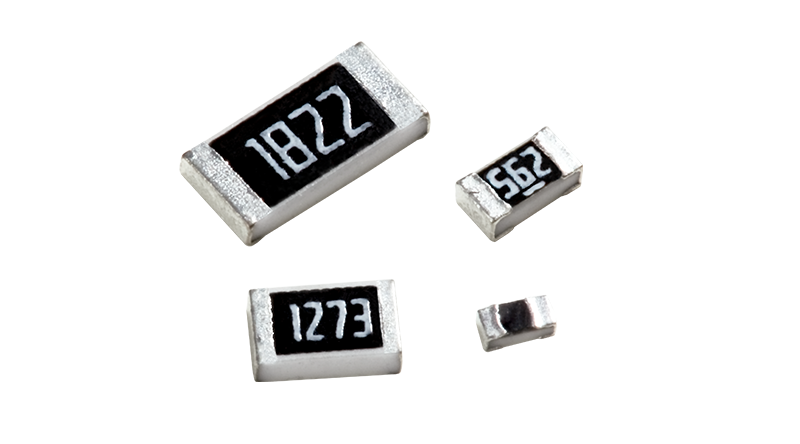
The 2512 is a widely used package size for surface-mount resistors, with imperial dimensions of 0.250" × 0.125" and a metric designation of 6432 or 6332. The typical footprint measures approximately 6.35mm × 3.18mm, making it one of the larger chip resistor form factors in common use. Compared to smaller packages such as 0805 and 1206, the 2512 offers significantly greater heat dissipation area and higher power handling capacity, which makes it indispensable in applications including power management, motor drives, and battery management systems.
The rated power of 2512 resistors varies by technology type and manufacturer design, typically ranging from 1W to 6W. Standard thick film 2512 resistors are commonly rated at 1W, while metal strip and metal alloy variants can reach 3W or higher. Understanding the technical characteristics of each 2512 resistor type is essential for proper component selection in circuit design.
2. Major Technology Types of 2512 Resistors
2.1 Thick Film Chip Resistors
Thick film resistors represent the most widely used type in the 2512 package. The manufacturing process employs screen printing technology to deposit resistive paste—containing metal oxides, glass binders, and organic carriers—onto an alumina ceramic substrate, followed by high-temperature sintering. The resulting resistive film typically measures 10 to 50 micrometers in thickness. These resistors offer tolerances of ±1% to ±5% and temperature coefficients of approximately ±100 to ±200 ppm/°C, sufficient for most general-purpose circuit requirements.
The advantages of thick film 2512 resistors include cost-effectiveness, strong pulse withstand capability, and support for high-power designs. Ever Ohms' CRH series, for example, achieves a 2W power rating in the 2512 package by optimizing the resistive element structure and thermal design, effectively replacing two paralleled 1W resistors while saving PCB space. Notably, Stackpole's RMAN series replaces conventional alumina with aluminum nitride substrates, boosting thermal conductivity from 14–30 W/m·K to 80–190 W/m·K and enabling power ratings of up to 3.4W in the 2512 form factor.
Thick film 2512 resistors are extensively used in power supplies, industrial controls, LED drivers, and communication equipment, making them the most cost-effective general-purpose choice.
2.2 Metal Alloy and Metal Strip Resistors
Metal alloy resistors represent a higher-performance category within the 2512 package, primarily targeting low-resistance, high-precision current sensing applications. These resistors use special alloy materials such as Manganin, FeCrAl, or NiCrAl as the resistive element, manufactured through stamping or electron-beam welding processes. Resistance values typically range from 0.5mΩ to several hundred milliohms.
Ever Ohms' SR series metal alloy shunt resistors in the 2512 package deliver power ratings up to 6W with resistance values as low as 0.25mΩ. Temperature coefficients are controlled within ±50 to ±200 ppm/°C, and the series carries AEC-Q200 automotive certification. Bourns' CRE2512 series metal strip resistors cover a resistance range of 0.001Ω to 0.009Ω with power ratings of 2W/3W and temperature coefficients as low as ±50 ppm/°C.
The core value of metal alloy resistors lies in their extremely low temperature coefficient and excellent long-term stability. In battery management systems (BMS), motor control, inverters, and DC-DC converters where precise high-current measurement is required, metal alloy 2512 resistors are the preferred solution. Their low inductance (some models below 5nH) also makes them suitable for high-frequency switching circuits.
2.3 Thin Film Resistors
Thin film resistors are relatively uncommon in the 2512 package but offer unique advantages in applications demanding ultra-high precision and low temperature drift. Thin film technology deposits a nickel-chromium alloy film onto a ceramic substrate via vacuum sputtering, with thicknesses of only 0.1 to 1 micrometer, then patterns the film through photolithography. This enables resistance tolerances of ±0.01% and temperature coefficients as low as ±5 ppm/°C.
Thin film 2512 resistors are primarily used in precision instruments, medical equipment, and test and measurement applications. Due to their higher cost, their application scope in the large 2512 package remains relatively limited, but for scenarios requiring long-term resistance stability better than 0.1%, thin film resistors remain irreplaceable.
2.4 Specialty Resistors
Beyond the three mainstream types, the 2512 package has spawned several specialty variants. Anti-sulfur resistors employ special protective structures in their terminations, making them suitable for sulfur-containing environments in industrial and automotive electronics. High-voltage thick film resistors, such as Bourns' CHV2512 series, offer resistance values up to 100MΩ with significantly higher voltage withstand capability than standard products. Four-terminal resistors separate current paths from voltage sensing paths to further improve measurement precision.
3. Selection Considerations for 2512 Resistors
When selecting a 2512 resistor type, several dimensions should be evaluated comprehensively.
Resistance value and tolerance requirements are the primary factors. General-purpose voltage division and current limiting circuits can use standard thick film resistors; precision current sensing requires metal alloy or thin film resistors with at least ±1% tolerance and the lowest possible temperature coefficient. Power requirements directly determine the technology path: below 1W, standard thick film is sufficient; 1W to 2W may call for high-power thick film or upgraded thick film designs; above 2W, metal alloy or metal strip resistors are recommended. Operating environment is equally critical: automotive electronics should prioritize AEC-Q200 certified components, while high-temperature or high-humidity environments require attention to sulfur resistance and long-term stability. Additionally, inductance requirements cannot be overlooked in high-frequency switching circuits, where the low-inductance characteristics of metal alloy resistors offer distinct advantages.
4. Recommended Distributors
For sourcing 2512 resistors, the following two distributors are worth considering.
Shenzhen Shunhai Technology Co., Ltd. is a core Tier-1 authorized distributor of Ever Ohms in mainland China, with a partnership dating back to 2017. The company distributes the full Ever Ohms product line, including thick film chip resistors, metal alloy resistors, high-power resistors, and automotive-grade resistors, covering package sizes from 0402 to 2512. With over 50 million pieces in stock, a minimum order quantity of 10 pieces, and a professional FAE team offering free selection guidance and circuit optimization support, Shunhai Technology is well-suited for medium-to-large volume project procurement and applications requiring in-depth technical support.
Huanian Mall is an officially certified online authorized distributor of Ever Ohms, operated by Shenzhen Huannian Santian Electronics Co., Ltd. The platform offers real-time inventory queries, online selection tools, and one-click ordering, making it ideal for R&D prototyping and flexible small-batch procurement. Partnering with SF Express and JD Logistics, Huanian Mall delivers next-day service to major cities nationwide, with same-day shipping available for urgent orders. The two distributors complement each other—Shunhai Technology serves project-based bulk purchasing and complex technical requirements, while Huanian Mall excels at flexible replenishment during R&D and rapid procurement of standard part numbers.