Detailed explanation of mainstream volume of alloy resistors: a must-have guide for selection
>In the field of electronic components, balancing volume and performance is always an art.
In electronic circuit design, alloy resistors are widely used in fields such as current detection, power management, and automotive electronics due to their low temperature coefficient, high precision, and high stability. For engineers, understanding the mainstream volume specifications of alloy resistors is a key step in selection and design.
01 Four mainstream volume specifications
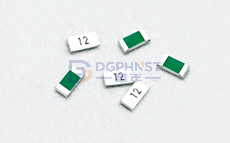
The volume standardization of alloy resistors enables electronic engineers to quickly select. There are currently four mainstream volume specifications in the market:
0201 Volume: The size is 0.6 × 0.3mm, and the rated power is generally 0.05W. This ultra small volume alloy resistor is suitable for high-density circuit boards and portable devices.
0805 volume: The size is 2.0 × 1.2mm, and the power range is between 0.125W and 0.5W. This is one of the most common specifications in universal design.
1206 volume: The size is 3.2 × 1.6mm, with a power range of 0.25W1.5W, achieving a good balance between power and size, and widely used in power circuits.
2512 volume: The size is 6.4 × 3.2mm, with a power of up to 1W3W, suitable for high-power application scenarios such as power modules and high current detection.
In addition to the standard volume, there are also special specifications for long electrode alloy resistors such as 0612 (3.2 × 1.6mm) and 1225 (6.4 × 3.2mm), which can provide higher rated power under the same volume.
02 Relationship between Volume and Performance Parameters
The volume of alloy resistors directly affects multiple key performance parameters, and engineers need to understand these relationships in order to make appropriate choices.
Relationship between volume and power: The larger the volume of the resistor, the higher the rated power is usually. For example, the power range of alloy resistors with a volume of 1206 can reach 0.25W1.5W, while the volume of 2010 has increased to 0.5W1.5W.
Volume and resistance range: Alloy resistors with smaller volumes typically provide a lower resistance range. The resistance range of RLM series 1206 volume is 0.550m Ω, which is suitable for current detection circuits.
Volume and temperature coefficient: The temperature coefficient of most alloy resistors is within the range of ± 50 ppm/° C, and is not directly related to volume. However, resistors with larger volumes have lower temperature rise when subjected to power, and their actual performance is more stable.
03 Application scenarios with different volumes
The volume selection of alloy resistors largely depends on specific application scenarios and spatial limitations.
Small portable devices such as smartphones and wearable devices typically use 0201 and 0805 volume alloy resistors to meet the requirements of compact space and low power consumption.
For power modules and high current applications such as power adapters and motor drives, alloy resistors with volumes of 1206 and 2512 are commonly used to ensure sufficient power processing capability.
In the fields of industrial control and automotive electronics, due to complex environments, alloy resistors with volumes of 2010 and 2512 are often used to provide higher reliability and stability.
In high-frequency circuits and precision instruments, special packaging such as metal foil resistors are highly favored due to their low inductance and low capacitance characteristics, making them suitable for high-frequency applications.
04 Selection Guide and Precautions
Choosing the appropriate alloy resistor volume requires comprehensive consideration of multiple factors.
Space assessment: Measure the available space on the PCB to ensure that the resistor volume is suitable for the installation position.
Power calculation: Estimate actual power consumption and leave appropriate margin. It is generally recommended to choose specifications with rated power one to two levels higher than actual power consumption.
Heat dissipation conditions: In environments with poor heat dissipation, larger volume alloy resistors or reduced power usage should be considered.
Process compatibility: Ensure that the selected resistor volume is compatible with the production line mounting equipment, and high-precision mounting equipment is required for extremely small volumes such as 0201.
Following these selection principles can effectively improve the reliability and stability of circuit design.
Under sufficient power, alloy resistors with a volume of 1206 are a safe choice for most applications; When space is extremely precious, the 0805 volume provides an ideal balance; In the face of high power demand, the 2512 volume is the best choice.
The final decision is like a precise dance, seeking the perfect balance between the power consumption of the circuit, the limitations of space, and the pressure of the environment.