Diodes and transistors are two fundamental and critical semiconductor devices in electronic circuits, with essential differences in structure, function, and application.
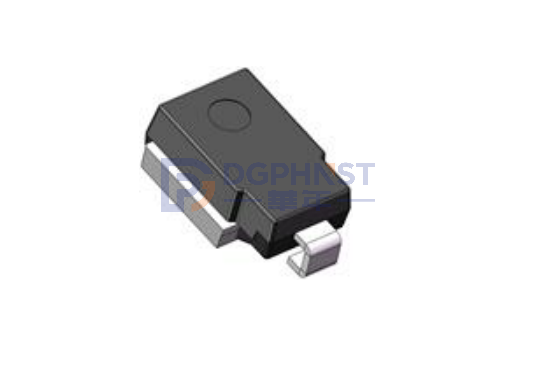
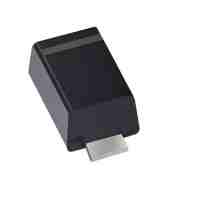
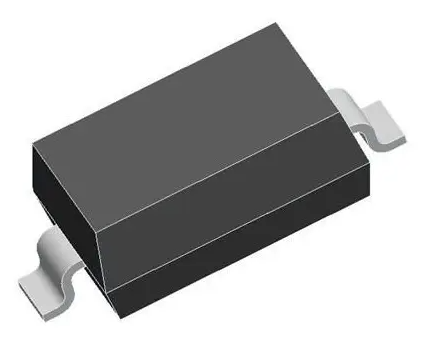
Simply put, a diode is a unidirectional "electronic switch" with only two electrodes (anode and cathode). Its main function is to allow current to pass in a single direction, commonly used in rectification, voltage regulation, signal detection, and circuit protection.
The transistor is a "current valve" with amplification and switching control functions, which has three electrodes (emitter, base, and collector). Its core lies in the ability to control the large current between the collector and emitter through a small current or voltage signal input from the base, thereby achieving signal amplification or circuit conduction and cutoff.
Detailed explanation of the use of transistors
The transistor has a wide range of applications and is the cornerstone of modern electronic circuits. Its main applications are reflected in the following aspects:
1. Signal amplification: This is the most classic use of a transistor. In circuits such as radios, audio devices, and sensor interfaces, weak input signals (such as radio waves received by antennas or sound signals from microphones) can be amplified tens to hundreds of times through transistors to drive speakers or subsequent circuits.
2. Electronic switch: In digital circuits, power control, and logic circuits, the use of transistors is manifested as efficient contactless switches. By controlling the base current, it is possible to quickly and accurately conduct or cut off the high current of loads (such as relays, motors, LED lights), with a speed much higher than mechanical switches, and without sparks, with a long lifespan.
3. Current regulation and voltage stabilization: In analog circuits and power circuits, transistors can form constant current sources, voltage regulators, etc., used to stabilize the operating point or output voltage of the circuit. Through a feedback mechanism, it can automatically adjust its own conductivity level to adapt to external changes.
4. Construct complex functional circuits: Multiple transistor combinations can be used to construct various functional modules such as oscillators, modems, logic gates, etc. These are essential core components of communication equipment, computers, and various intelligent controllers.
Summary of Core Differences
|Characteristics | Diode | Transistor|
|Number of electrodes | Two (anode, cathode) | Three (emitter, base, collector)|
|Core function | Unidirectional conductivity, no amplification capability | Current amplification and switch control|
|Work dependence | depends solely on the voltage at both ends | depends on the control signal at the base|
|Main roles | "rectifier valve" or "limiter" in circuits | "amplifier" or "controller" in circuits|
In summary, a diode is more like a "one-way channel", while a transistor is a powerful "controllable valve". Understanding the fundamental differences between the two and mastering the uses of transistors, especially their two core capabilities of amplification and control, is an important foundation for analyzing and designing electronic circuits. In practical circuits, they often work together, each performing their own duties, to jointly achieve complex electronic functions.
HNST WELCOME! 0755-23173910
English |中文

Cart
{{cartCount}}
你当前的浏览器版本过低或不支持。请升级或更换浏览器。推荐浏览器 Chrome Edge。