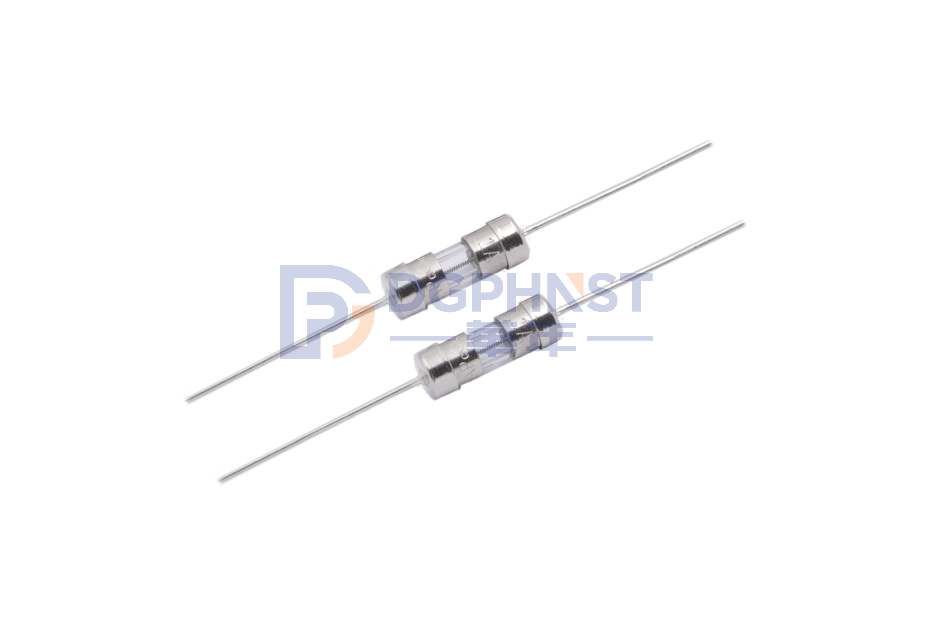
As a globally important passive component manufacturer, TA-I's alloy resistor products are widely used in multiple industries due to their excellent current detection capability, high power density, and stability. In order to meet the demanding requirements of different scenarios from consumer electronics to automotive electronics, TA-I alloy resistors have developed multiple distinctive series.
Main series and features
TA-I's alloy resistor product line mainly focuses on the RL series and its derivative variants, adapting to diverse needs through different structures, materials, and processes.
|Series/Type | Core Features | Typical Application Scenarios | Examples of Key Parameters|
|Standard alloy resistors (such as RL series) | Universal type, high power density, low resistance | Power management, motor drive, electric tools | Resistance as low as 0.3m Ω, power coverage from 1/16W to 1W|
|Four terminal structure resistors (such as RLF, RLFC series) | Kelvin connection, eliminating the influence of lead resistance, high measurement accuracy | New energy vehicle BMS, precision power supply, communication base station | Accuracy can reach ± 0.5%, resistance as low as 0.0005 Ω|
|Sulfur resistant/automotive grade resistors (such as RLH, RLHA series) | Special materials with sulfur resistance, certified by AECQ200 and other automotive standards | Automotive electronics (engine control, on-board charging), industrial harsh environments | Power up to 3W, designed for high reliability|
|Wide electrode heat dissipation resistors (such as RLN, RLPL series) | Wide electrode design, excellent heat dissipation performance, low temperature rise | High current discharge circuit, server power supply, high-power density equipment | Adopting larger packages such as 3720, 4527 to improve heat dissipation|
It should be distinguished that TA-I also has RM, RMS and other series, but they belong to thick film resistors, which are different in technology and application from the RL series using alloy materials. For example, the RMS series focuses on the anti sulfide thick film process, which is suitable for situations where sulfide corrosion prevention is required.
Why are there so many series?
The multi series layout of TA-I alloy resistors is mainly aimed at accurately addressing technical challenges in different fields:
To meet the demand for precision measurement: In situations that require extremely high measurement accuracy, such as battery management systems (BMS) for new energy vehicles, TA-I alloy resistors with four terminal structures (such as RLF series) can effectively avoid measurement errors and ensure system safety and efficiency through independent current and voltage detection paths.
Adapt to harsh working environments: Sulfides, high temperatures, and high humidity may exist in the engine compartment of automobiles or industrial sites. The anti sulfurization series (such as RLH) in TA-I alloy resistors adopts special material formulas and protective processes, and has completed AECQ200 certification, ensuring long-term stability and reliability.
Meeting diverse packaging and power requirements: from the micro 0402 package inside smartphones to the 3W and 4527 large-sized packages used for high current detection in industrial power supplies, TA-I alloy resistors cover the full range of power and size requirements through series design, helping engineers achieve optimal design in limited spaces.
How to choose a suitable TA-I alloy resistor?
Faced with numerous TA-I alloy resistor series, you can screen them by following these steps:
1. Clarify key parameters: Firstly, determine the rated current in the circuit, the range of resistance values to be tested, the acceptable accuracy (tolerance), and the allowed installation space (packaging size). This is the basis for selection.
2. Evaluate environmental and reliability requirements: Determine whether the product is intended for use in automotive electronics, outdoor equipment, or sulfur-containing chemical environments. If so, priority should be given to selecting TA-I alloy resistors that have passed AECQ200 certification and are resistant to sulfurization.
3. Judging accuracy and structural requirements: If the measurement accuracy requirement is extremely high (such as better than 1%), or even small voltage drops on the sampling line can affect the results, then the four terminal structure of TA-I alloy resistors (such as RLFC series) is the best choice.
4. Consider heat dissipation and power derating: When used in high ambient temperatures or enclosed spaces, special attention should be paid to the heat dissipation of resistors. At this time, you can refer to the power derating curve in the data manual, or directly choose the wide electrode design of RLN and other series of TA-I alloy resistors to achieve better heat dissipation performance.
In summary, TA-I alloy resistors provide a complete solution from universal to automotive grade, from standard two terminal to high-precision four terminal through multiple series such as RL, RLF, RLH, etc. When choosing, taking into account the current, accuracy, environment, and spatial conditions of the actual application, the most suitable product can be found.
HNST WELCOME! 0755-23173910
English |中文

Cart
{{cartCount}}
你当前的浏览器版本过低或不支持。请升级或更换浏览器。推荐浏览器 Chrome Edge。