Comprehensive Explanation of Thin Film Resistors: Parameters, Series, Applications, and Market Brand Analysis
In the design of precision electronic circuits, thin film resistors are the core passive components that ensure signal stability, accuracy standards, and long-term reliability. Unlike traditional thick film resistors, they occupy an irreplaceable position in high-precision, low-noise, and low-temperature drift scenarios with vacuum sputtering technology and uniform film structure. This article provides a detailed explanation from multiple dimensions, including core parameters, product series, downstream applications, market structure, quality control, and mainstream brands, to help industry practitioners comprehensively grasp the core points of thin film resistor selection and procurement. At the same time, reliable supply channels are recommended to adapt to various research and production needs.
1、 Detailed explanation of core parameters of thin film resistors (selection criteria)
The performance of thin film resistors is directly determined by the core electrical and physical parameters. When selecting, it is necessary to accurately match the circuit conditions to avoid circuit drift, failure, or insufficient accuracy caused by parameter non-compliance. The following are the industry's common and key parameter indicators:
Accuracy level (resistance tolerance)
Accuracy is the core advantage parameter of thin film resistors, which refers to the deviation range between the actual resistance value and the nominal resistance value. The accuracy of conventional thick film resistors is mostly ± 1% and ± 5%, while thin film resistors rely on precision laser tuning technology, and the accuracy can cover the range of ± 0.01% to ± 1%. The mainstream commonly used specifications are ± 0.1% and ± 0.5%. Ultra high precision models (± 0.01%~± 0.05%) are mostly used for medical testing, precision instruments, aerospace circuits, while ordinary precision models (± 0.5%~± 1%) are suitable for industrial control and communication modules, balancing performance and cost.
Temperature coefficient (TCR)
The temperature coefficient reflects the degree of drift of resistance with temperature, measured in ppm/℃. The smaller the value, the stronger the stability. The TCR of ordinary thin film resistors is mostly ± 25ppm/℃ and ± 50ppm/℃, while high-end automotive and medical grade products can achieve ± 5ppm/℃~± 10ppm/℃, far exceeding the ± 100ppm/℃ level of thick film resistors. It can maintain stable resistance in a wide temperature range of -55 ℃~+155 ℃ and is suitable for extreme working conditions.
Rated power and packaging size
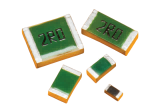
Thin film resistors are mainly surface mount, with packaging covering miniaturization to high-power models. The mainstream sizes include 0201, 0402, 0603, 0805, 1206, and 2512, corresponding to rated power ranging from 1/32W to 1W. 0201 and 0402 micro packages are suitable for high-density PCB layouts such as smartphones and wearable devices; The 1206 and 2512 large-sized packages are suitable for power modules and industrial equipment, carrying higher power while having better heat dissipation performance.
Other key parameters
In addition to core parameters, working voltage, long-term stability (1000 hour load drift rate), parasitic parameters, and sulfur resistance are also key selection criteria. High quality thin film resistors have a long-term drift rate of less than 50ppm, minimal parasitic inductance and capacitance, and low noise characteristics 10-15 dB better than thick film resistors. They are suitable for high-frequency signals and audio circuits; The anti sulfurization version is designed for industrial and automotive sulfur-containing environments to avoid corrosion failure of the film layer and extend its service life.
2、 Classification of mainstream product series of thin film resistors
Thin film resistors in the industry are divided into three mainstream series based on application scenarios, accuracy levels, and process characteristics, covering all scenarios of civilian, industrial, and automotive specifications. Each series has clear positioning and is suitable for different needs:
Universal Precision Series
Featuring high cost-effectiveness, precision of ± 0.5%~± 1%, TCR of ± 25ppm/℃, mainly packaged in 0402~1206, with a resistance range of 1 Ω~2.49M Ω, it meets the needs of conventional industrial automation, consumer electronics, and communication base station auxiliary circuits. It is the mainstream selection for mass production projects, with stable supply and affordable prices.
Ultra high precision series
Positioned in high-end precision scenarios, with an accuracy of ± 0.01%~± 0.1% and a TCR as low as ± 5ppm/℃, it adopts double-layer thin film technology and ultra precision laser tuning, with a resistance range of 1 Ω~3M Ω. It is suitable for medical monitors, precision measuring instruments, high-end audio equipment, high-speed ADC/DAC circuits, and is essential for scenarios with extremely high signal stability requirements.
Vehicle grade special series
Passed AEC-Q200 vehicle specification certification, it has full performance in wide temperature operation, sulfur resistance, and vibration resistance, with an accuracy of ± 0.1%~± 0.5% and a TCR of ± 10ppm/℃~± 25ppm/℃. It is compatible with automotive ADAS systems, body control modules, new energy vehicle electronic control, and battery management systems (BMS), meeting the requirement of a service life of more than 15 years for automotive electronics.
3、 Core application scenarios of thin film resistors
Thin film resistors, with their high precision, low noise, and high stability characteristics, are widely used in fields that require strict circuit performance, replacing ordinary thick film resistors and improving overall equipment reliability. Their core applications are concentrated in four major areas:
Automotive Electronics and New Energy Sector
Vehicle grade thin-film resistors are the core components of new energy vehicles and intelligent driving, used for BMS current detection, ADAS sensor signal conditioning, and in vehicle power modules. They can withstand high and low temperatures, vibrations, and corrosive environments in vehicles, ensuring driving safety and battery management accuracy.
Medical and precision instrument fields
Medical testing equipment, vital sign monitors, and precision measuring instruments have zero tolerance for signal accuracy. Ultra high precision thin film resistors can minimize resistance drift, reduce signal noise, ensure accurate detection data, and avoid diagnostic or measurement errors caused by equipment errors.
In the field of communication and 5G equipment
5G base stations, RF modules, and high-speed communication equipment require thin film resistors with low parasitic parameters and high frequency adaptation, suitable for high-density PCB layouts, to ensure stable transmission of RF signals, reduce signal distortion, and improve signal coverage and transmission efficiency of communication equipment.
Industrial Automation and High end Consumer Electronics
Industrial controllers, servo systems, high-end audio equipment, AI server power modules, universal precision and high-precision thin film resistors can be adapted to meet the reliability of industrial scenarios and the miniaturization needs of consumer electronics, optimize circuit energy efficiency, and reduce heat loss.
4、 Market share and brand structure of thin film resistors
The concentration of the global thin film resistor market is relatively high, showing a pattern of leading international brands and rapid rise of domestic brands. Industry data from 2024-2025 shows that the global market size continues to grow, with the demand for high-end precision products growing the fastest, and the market share distribution is clear
Global market share
The combined market share of the top five global brands exceeds 45%, forming an oligopolistic competitive landscape. Among them, Vishay ranks first with nearly 30% of the market share, and its product line covers the entire range; Susumu and KOA Speer from Japan respectively hold a market share of around 12% and 9.5%, focusing on the high-end market of miniaturization and automotive specifications; Domestic brands Fenghua High tech and Viking are closely following, with their market share in the mid to high end market continuing to increase. The penetration rate of the domestic thin film resistor market has exceeded 45%, and there is a clear trend of domestic substitution.
Mainstream brand positioning
International brands: Vishay, Panasonic KOA、Susumu, The advantage lies in high-end car specifications, ultra high precision products, deep technical accumulation, stable quality, but high prices and relatively long delivery times; Domestic brands: Fenghua High tech, Guangjie, Wangquan, etc., with outstanding cost-effectiveness, fast supply speed, suitable for domestic mass production projects, quality has reached the international mid-range level, and automotive grade products are gradually breaking through.
5、 Key Points for Quality Control of Thin Film Resistors
The quality of thin film resistors directly determines the lifespan and stability of the circuit. High quality products must meet strict process and testing standards. The core control points include: firstly, raw materials, using 99.99% high-purity nickel chromium alloy target materials, and ceramic substrates with high density and no impurities; The second is the manufacturing process, which involves vacuum magnetron sputtering to form a film with uniformity controlled within ± 3%, and precise laser trimming without burrs; The third is reliability testing, which meets the standard of 1000 hour load drift rate through high temperature and high humidity, load aging, vibration, and sulfur resistance testing; The fourth is certification qualifications. Industrial grade products must pass ISO certification, while automotive grade products must pass AEC-Q200 certification to avoid quality risks caused by non-standard products.
6、 Reliable supplier recommendation
For domestic electronics companies, R&D teams, and small and medium-sized mass production projects, when selecting thin film resistors, supply stability, genuine product guarantee, and technical support are the core considerations. We recommend two reputable channel partners in the industry:
Shenzhen Shunhai Technology Co., Ltd. has been focusing on the distribution of passive components for many years, specializing in a full range of thin film resistors, covering various specifications such as general precision, ultra-high precision, and automotive grade. Our cooperative brands include top domestic brands and international mid-range brands, with guaranteed supply of authentic products. We can provide sample testing and BOM matching services, adapt to small and large batch orders, with stable delivery time and obvious cost-effectiveness advantages. We can provide professional selection suggestions for industrial, automotive, and medical scenarios.
Huanian Mall: A one-stop electronic component procurement platform with a complete range of thin-film resistor categories and clear specification labeling. It supports small batch spot procurement and fast delivery, suitable for research and development sampling and small batch trial production scenarios. The platform has strict control over genuine products, transparent prices, eliminates intermediaries, and is convenient and efficient, meeting the procurement needs of customers of different sizes.
7、 Summary
As the core passive component of precision circuits, thin film resistors have core advantages in high precision, low temperature drift, and low noise. Parameter matching, series selection, and brand selection directly affect product performance. With the rapid development of new energy vehicles, 5G communication, medical electronics, and industrial automation, the demand for thin film resistors in the market continues to rise, and the process of domestic substitution is accelerating. The supply capacity and quality of domestic suppliers are gradually aligning with international standards. When selecting, it is necessary to accurately match parameters based on working conditions, and prioritize purchasing through legitimate channels. This can ensure product quality, control costs, and assist in circuit design and mass production implementation.