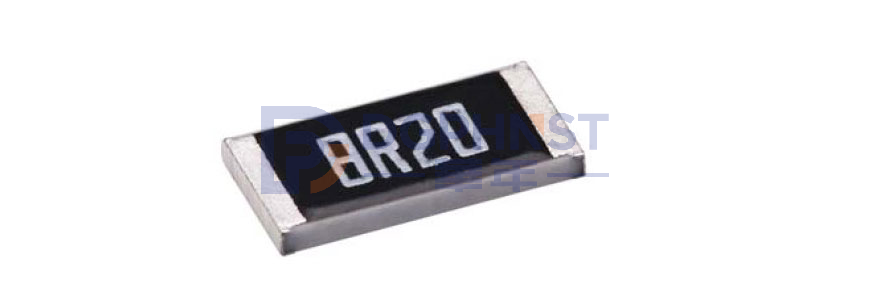
Selection Guide for Thin Film Resistors: A Comprehensive Analysis from Parameters to Brands
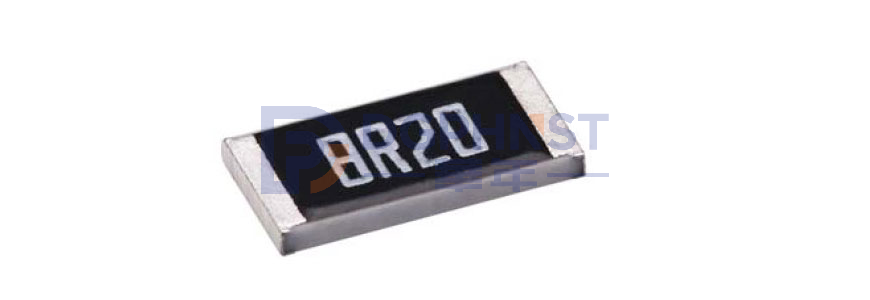
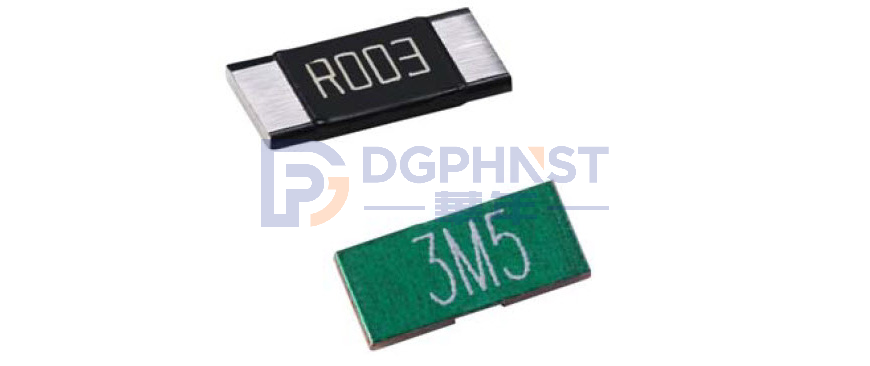
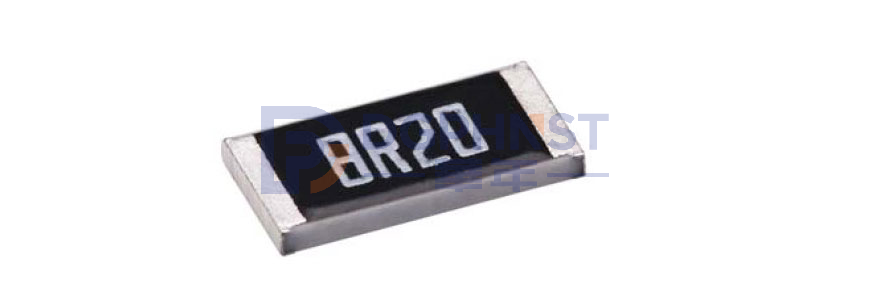
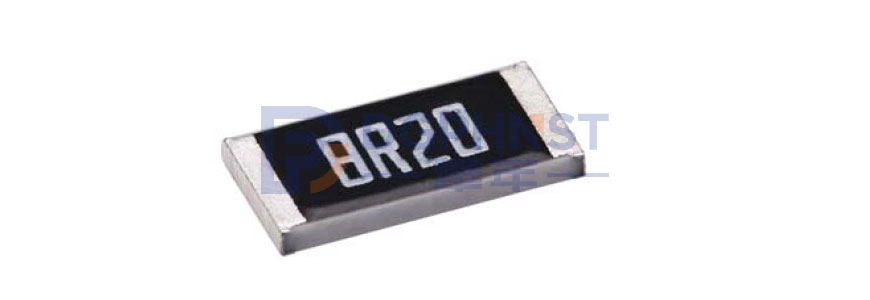
In precision electronic circuit design, thin film resistors have become the preferred component for engineers in high reliability scenarios due to their excellent high-precision characteristics, extremely low temperature coefficient, and long-term stability. Unlike thick film resistors, thin film resistors form nanoscale metal film layers on ceramic substrates through vacuum deposition technology, which endows them with excellent high-frequency performance and noise control capabilities. This article will provide a practical reference for selecting thin film resistors based on core parameters, mainstream series, typical applications, market patterns, and supply chain selection.
1、 Core parameter: Understanding the engineering logic behind numbers
The first step in selection is to convert circuit requirements into quantitative indicators. The key parameters of thin film resistors mainly include resistance and accuracy, temperature coefficient (TCR), power rating, and long-term stability.
In terms of resistance range, thin film resistors usually cover 1 Ω to 3M Ω, and the production limit is limited by the packaging size. The precision level directly determines the cost. High precision models with a precision of 0.1% or higher are suitable for medical equipment and precision instruments, while thin film resistors with a precision of 1% are sufficient to meet general industrial scenarios. There is a rule of thumb here: ADC systems with less than 12 bits using 0.5% accuracy are already over performing, while designs with more than 16 bits need to consider the 0.1% level.
The temperature coefficient (TCR) is a core indicator for measuring the degree to which thin film resistance is affected by temperature, measured in ppm/℃. The TCR of thin film resistors can be as low as ± 5ppm/℃, which means that the resistance change is only 0.05% under a temperature drift of 100 ℃. However, it should be noted that there is a clear turning point between TCR and price: laser resistance repair and aging screening are required within 10ppm/℃, and the cost is 3-4 times higher than that of ordinary models. If the temperature rise in the circuit environment is not significant, blindly pursuing too low TCR will actually result in resource waste.
The power selection should follow the principle of derating design, and the actual power consumption should not exceed 60% of the rated power. Taking the 0603 packaged film resistor as an example, its rated power at 70 ℃ is about 125mW, and it needs to be further reduced to around 80mW when applied in an environment of 85 ℃. In addition, the packaging size also limits the maximum operating voltage: the 0402 packaging film resistor has a withstand voltage of about 50V. If used in a 48V bus circuit, the surge risk needs to be evaluated.
Long term stability is often overlooked but crucial. The "1000 hour drift" in the specification sheet needs to be converted to the actual operating temperature through the Arrhenius equation. For example, the internal temperature of medical equipment is 55 ℃, with a nominal concentration of 1000ppm/ 1000h@125 The actual 10-year drift of a thin film resistor at ℃ can be controlled within 0.1%.
2、 Mainstream series and application scenario mapping
Different brands have developed specialized series for segmented markets, which can be quickly matched according to application scenarios when selecting.
In the field of high-precision measurement, Vishay's PTN series and Guangjie Technology's AR series are typical representatives. The former has a TCR as low as ± 5ppm/℃ and an accuracy of ± 0.01%, commonly used for calibrating equipment; The latter, as the main product of Taiwan Guangjie, has an accuracy of ± 0.01% and a TCR of 5ppm/℃, and is widely used in medical monitors and testing instruments. Automotive electronics require AEC-Q200 certification, and KOA Speer's RK73H series and Guangjie ARM series have sulfur resistance and can withstand high temperatures of 175 ℃.
High frequency circuits are sensitive to parasitic parameters, and Susumu's RG series uses 0201 packaging with a self resonant frequency exceeding 10GHz, making it suitable for 5G RF front-end. Due to space limitations in consumer electronics, Yageo's RT series and Vishay's CRCW0201 series offer 0201 and smaller packages, compatible with reflow soldering processes.
Industrial power supply and current detection scenarios often require balancing power and accuracy. Huade's STE series alloy thin film resistors are made of manganese copper or nickel copper materials, with a 1206 package power of up to 1W and a resistance value as low as 0.047 Ω, suitable for power module sampling. The TR series of Tian'er covers the full size range of 0402 to 2512, with a temperature coefficient of ± 15ppm/℃, balancing performance and cost.
3、 Market pattern: brand hierarchy and market share
The global thin film resistor market presents an oligopolistic competition pattern. According to research conducted by Hengzhou Chengsi, the global market size of alloy patch thin film resistors is expected to reach approximately 2.2 billion yuan in 2024, and is expected to increase to 3.39 billion yuan in 2031. Another report shows that the global market size of thin-film resistors will reach 5.1 billion yuan by 2025, with China accounting for approximately 26%.
Market participants can be divided into three tiers. The first tier is represented by Vishay, KOA, and Susumu, which are American and Japanese manufacturers who master core materials and processes and occupy a major share of the high-end market. Vishay's product line covers aerospace to industrial grade, KOA has a strong foundation in the automotive electronics field, while Susumu excels in thin film resistors for RF applications.
The second tier includes Taiwan Guangjie Technology, Guoju Corporation, Dayi Technology, and Huaxin Technology. Guangjie Technology has entered the high-precision market with thin film resistors, and its AR series has been introduced to mainland China by agents such as Shunhai Technology; Guoju has completed its thin film resistor product line by acquiring Pusi Electronics and Junyao, leading the shipment volume in the consumer electronics field.
The third tier is mainly composed of mainland manufacturers, such as Fenghua High tech and Tian'er Technology, which mainly cover the mid to low end market and have competitiveness in cost sensitive applications.
4、 Quality Identification and Reliability Assessment
The quality of thin film resistors is not only reflected in the parameter table, but also in the process details. High quality thin film resistors are made of tantalum nitride or nickel chromium alloy materials, deposited by vacuum sputtering with a film thickness controlled between 0.01-0.1 μ m. The electrodes are usually copper nickel tin plated structures. Automotive grade products also need to pass the ASTM B809 sulfur resistance test. In mining or industrial environments with high sulfur content, TaN based or encapsulated thin film resistors should be preferred.
Long term reliability can be verified through third-party testing reports. Requesting suppliers to provide data from 85 ℃/85% RH wet heat testing or HAST high-voltage accelerated life testing, comparing the resistance change rate before and after testing, which is more valuable for reference than single page data in the specification book.
5、 Supply chain selection: spot capability and technical support
In the research and development stage, the delivery speed of small batch samples is crucial; In the mass production stage, attention should be paid to channel stability and price advantages. At this point, choosing a one-stop procurement platform with original factory authorization can significantly improve efficiency.
Shenzhen Shunhai Technology Co., Ltd., as the authorized agent of Viking Technology, provides a full range of thin-film resistor products. Its core advantages include: spot warehousing located in Shenzhen, supporting small batch sample applications; The AR series thin film resistor has an accuracy of ± 0.01% and a TCR of 5ppm/℃, suitable for medical and automotive electronics needs; The ARM series has passed AEC-Q200 certification and meets the harsh environment of automotive electronic control systems. Purchasing can be done through the official website [www.uxingeroup. com]( http://www.uxingroup.com )Or online store [www.hnsts hop. com]( http://www.hnstshop.com )Obtain selection support and tiered pricing.
As an online platform of Shunhai Technology, Huanian Mall integrates resources of thin film resistors from brands such as Tian'er and Huade. Its product library provides detailed parameter filtering functions, such as TR0402F8K25Q1015Z model 0402 packaged 8.25K Ω± 1% film resistor, temperature drift ± 15ppm/℃, suitable for portable device signal conditioning. The mall supports downloading data manuals and real-time inventory queries, making it convenient for engineers to quickly compare and select.
6、 Selection and Avoidance Guide
Common selection errors in actual combat include: focusing only on accuracy and ignoring TCR, resulting in temperature drift exceeding the tolerance; Neglecting the rated voltage and causing device breakdown in surge scenarios; Blindly pursuing the ultimate resistance value, the yield of thin film resistors above 3M Ω is low and the price jumps; Using oversized packaging in precision DC circuits can introduce microvolt level drift due to the thermoelectric potential of solder pads.
Suggest establishing a checklist for selecting thin film resistors: first list the requirements for R, Tol, TCR, P, Vmax, and Δ R; Initial screening through three hard barriers of resistance, power, and voltage; Compare vulcanization grade with AEC-Q certification; Finally, sort by "performance score x unit price x risk coefficient" and select the top three for sample testing.
In short, the selection of thin film resistors is essentially the process of breaking down the system error budget into four sub items: resistance, temperature drift, noise, and lifespan, and then deducing them back to the component specifications. Mastering the above dimensions, combined with reliable supply chain partners, can effectively improve the success rate of design once.