Selection Guide for Alloy Resistance Parameters: Multi dimensional Accurate Selection, Suitable for All Scenario Applications
Alloy resistors, as the core current detection and current limiting components in electronic circuits, are widely used in consumer electronics, automotive electronics, industrial control, energy storage, new energy and other fields due to their core advantages of low resistance, low temperature drift, high power, and shock resistance. They are key passive components to ensure stable operation of circuits. Compared to ordinary thick film resistors, alloy resistors have significant advantages in accuracy, stability, and high-power carrying capacity. When selecting, it is necessary to comprehensively judge the parameters, series, application scenarios, supply chain, and brand quality to avoid problems such as circuit failures and shortened lifespan caused by parameter mismatches. This article comprehensively outlines the key points for selecting alloy resistors, helping engineers and procurement personnel quickly identify suitable models.
1、 Detailed explanation of core parameters for alloy resistors (selection criteria)
The core of selecting alloy resistors is to match the actual needs of the circuit. The six key parameters directly determine the applicability of the product and need to be checked one by one to prevent blind selection.
Resistance: Suitable for current detection requirements, following the principle of selecting low resistance for high current
Alloy resistors focus on low resistance characteristics, with a conventional resistance range covering 0.1m Ω~1 Ω, and the mainstream concentrated between 1m Ω~500m Ω. Special customized models can achieve lower or higher resistance values. When selecting, combined with circuit current calculation, for high current detection scenarios (such as BMS battery management and power modules), priority should be given to selecting small resistance values of 1m Ω~50m Ω, which can accurately collect current signals and reduce voltage drop losses; In ordinary current limiting and diversion scenarios, a resistance of 50m Ω~1 Ω can be selected, balancing cost and performance. Remember that the resistance value should not be too high, otherwise it will cause the circuit to heat up, power consumption to exceed the standard, and affect the overall efficiency.
Accuracy: Divided by scene level, with strict error control in high-end scenes
Accuracy directly affects the accuracy of current detection, and the conventional accuracy is divided into four levels: ± 1%, ± 0.5%, ± 0.25%, and ± 0.1%. For scenarios with low precision requirements such as ordinary consumer electronics and small household appliances, selecting ± 1% precision is sufficient to meet the demand; For industrial control, frequency conversion equipment, and energy storage inverters, it is recommended to use an accuracy of ± 0.5% to ± 0.25%; Automotive electronics, medical equipment, precision instruments, and high-end BMS systems must use high-precision models with a tolerance of ± 0.1% to avoid signal acquisition distortion caused by resistance errors and equipment failures.
Temperature coefficient (TCR): Low temperature drift ensures wide temperature stability
The temperature coefficient is the core indicator for measuring the resistance to temperature changes of alloys, measured in ppm/℃. The smaller the value, the smaller the change in resistance with temperature. Ordinary civilian scenarios can choose ± 50~± 100ppm/℃; Industrial and vehicle wide temperature working environments (-40 ℃~125 ℃), with priority given to ± 25~± 50ppm/℃; Extreme scenarios such as military, aerospace, and high-end new energy vehicles require the use of ± 10~± 25ppm/℃ ultra-low TCR products to ensure stable resistance throughout the entire temperature range and prevent circuit loss caused by temperature drift.
Rated power: Reserve margin to avoid overload and burnout
The rated power should be calculated based on the maximum power consumption of the circuit, with a margin of 1.5 to 2 times reserved, and full load operation is strictly prohibited. The calculation formula is P=I ² R (I is the maximum current of the circuit, R is the resistance value). For example, in high current circuits, high-power alloy resistors need to be matched. Common power specifications include 1/4W, 1/2W, 1W, 2W, 3W, and 5W, and high-power models can reach more than 10W. Considering the heat dissipation conditions, for scenarios with compact PCB layout and poor heat dissipation, it is necessary to increase the power level to prevent resistance drift and component aging caused by long-term high temperature.
Package size: Suitable for PCB space, balancing heat dissipation and installation
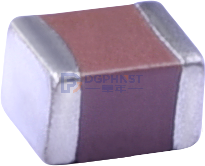
Alloy resistors are divided into two categories: surface mount and plug-in. Surface mount is the mainstream, commonly packaged in 0603, 0805, 1206, 2010, 2512, 4527. The larger the number, the larger the size and the stronger the power carrying capacity. Select 0603 and 0805 small packages for small consumer electronics; Choose 2512 and 4527 large packages for high-power and high current scenarios, with better heat dissipation effect; The plug-in version is suitable for industrial equipment with high power and high heat dissipation requirements, making installation more flexible.
Other key parameters
In addition to core parameters, attention should also be paid to impact current resistance, long-term stability, welding reliability, RoHS environmental certification, etc. Additional confirmation of AEC-Q200 automotive grade certification is required for in vehicle and industrial scenarios to ensure compliance with industry requirements and enhance product durability.
2、 Classification and Characteristics of Mainstream Alloy Resistance Series
Alloy resistors on the market are divided into three mainstream series according to material and purpose, suitable for different scene requirements. When selecting, you can first lock in the series and then refine the parameters.
Manganese copper alloy series: with the highest proportion on the market, moderate cost, stable TCR, and an accuracy of ± 0.5%, it is suitable for civilian consumer electronics, ordinary power supplies, small appliances and other scenarios. It has strong universality and is the first choice for cost-effectiveness.
Copper alloy series: Strong corrosion resistance, outstanding low-temperature drift characteristics, superior accuracy and stability compared to manganese copper series, suitable for high-end scenarios such as industrial control, variable frequency air conditioning, energy storage equipment, etc., with higher long-term reliability.
Nickel chromium/Kama alloy series: high-end series, ultra-low TCR, ultra-high precision, up to ± 0.1% accuracy and ± 10ppm/℃ temperature drift, resistant to high current impact, specially designed for extreme scenarios such as automotive electronics, medical precision instruments, new energy vehicle BMS, aerospace and military industries, with top-quality.
3、 Typical application scenarios and selection matching of alloy resistors
The parameter requirements for alloy resistors vary greatly in different application scenarios. Combining scenario selection is more efficient, avoiding parameter waste or insufficient performance.
Automotive Electronics: AEC-Q200 certification, ± 0.1%~± 0.5% accuracy, ± 25~± 50ppm/℃ TCR, high-power, wide temperature range, used for battery management, motor control, and onboard power supply;
New energy and energy storage: low resistance, high power, ultra-low TCR, compatible with inverters, charging stations, energy storage battery packs, ensuring stable high current detection;
Industrial control: high stability, impact resistance, compatible with servo drive PLC、 Variable frequency equipment with strong anti-interference ability;
Consumer electronics: small package, cost-effective, suitable for mobile phones, laptops, power adapters, meeting basic current detection needs.
4、 Comparison of market pattern, brand and quality of alloy resistors
Market share and industry landscape
The global alloy resistor market presents a pattern of "foreign led, domestic catching up", with a high concentration of top players. The international brand Guoju has a market share of about 22%, ranking first in the world, followed closely by brands such as Junwei, Dayi, and Qiankun. The top four manufacturers together occupy over 50% of the market share, focusing on high-end automotive specifications and industrial grade products. In recent years, domestic brands have made rapid technological breakthroughs, and enterprises such as Fenghua High tech and Shunhai Technology have continued to increase their market share in the mid to high end market. Domestic alloy resistors have gradually replaced imported products with their cost-effectiveness and delivery advantages, especially in consumer electronics and industrial mid-range scenarios with extremely high penetration rates.
Brand quality stratification
High end market: International brands such as Guoju, Vishay, KOA, etc., with top-quality and complete certification, suitable for high-end automotive specifications and military scenarios, with high prices and long delivery times;
Mid end market: Top domestic brands with quality close to international standards, certified by automotive regulations and industrial standards, high cost-effectiveness, stable delivery time, suitable for the vast majority of industrial and new energy scenarios;
Ordinary market: Products from small and medium-sized manufacturers, with low prices, suitable for low-end civilian scenarios, weak accuracy and stability, not recommended for circuits with high reliability requirements.
Quality judgment core: Check the material purity, production process, temperature drift stability, and reliability test reports. Legitimate brands will provide complete parameter specifications and quality inspection reports to avoid purchasing unqualified miscellaneous products.
5、 Reliable supplier recommendations to ensure selection and supply
After the selection is completed, the stability of the supply chain directly affects the production schedule. We recommend two suppliers with complete qualifications, comprehensive product coverage, and professional services to adapt to different procurement needs.
Shenzhen Shunhai Technology Co., Ltd. has been deeply involved in the field of alloy resistors for many years, focusing on the research and sales of mid to high end alloy resistors. Our products cover the full range of manganese copper, constantan, and nickel chromium, with complete parameter specifications. We support regular spot procurement and special parameter customization, and can provide professional selection and technical support. We provide precise matching solutions for automotive electronics, industrial control, and new energy scenarios. Our products have stable quality, comply with RoHS and AEC-Q200 certifications, and flexible delivery times. We are a high-quality service provider for alloy resistors in China, suitable for bulk procurement and customization needs.
Hua Nian Mall: A one-stop electronic component procurement platform with a complete range of alloy resistor categories, covering mainstream brands at home and abroad. From small resistance values, high precision to high-power models, all are in stock, supporting small batch trial production and large batch procurement. The price is transparent, the ordering is convenient, and it is suitable for engineer sample testing and small batch production needs. The platform has formal qualifications, guaranteed product quality, and saves selection and procurement time.
6、 Summary of Alloy Resistance Selection and Key Points for Avoiding Pits
Core priority: First determine the resistance, power, and accuracy, then verify TCR and packaging, and finally confirm certification and brand;
Power must be reserved with margin, and full load operation is strictly prohibited to avoid heating and aging;
Prioritize low-temperature drift models for wide temperature scenarios to prevent temperature drift from affecting circuit performance;
Identify legitimate brands and certifications in high-end scenarios, do not blindly pursue low prices, and ensure long-term reliability.
There is no absolute "best" choice for alloy resistor selection, only the model that best meets the circuit requirements. By combining scene parameters and relying on reliable brands and suppliers, we can control costs while ensuring stable operation of the circuit. Whether it is engineer R&D selection or procurement personnel stocking, they can refer to the above dimensions to quickly complete precise matching, improve overall product performance and reliability.