Comprehensive Analysis of Alternative Solutions for Walter MSH2512 Series Electron Beam Welded Alloy Resistors
I. Core Principles for Alloy Resistor Substitution
Alloy resistors serve as critical components in current detection and sampling circuits, and their replacement must adhere to rigorous technical specifications. The primary prerequisite is pin-to-pin compatibility, meaning the package dimensions and pad layouts must be identical to ensure no PCB layout modifications are required. Secondly, the resistance value must remain consistent, the tolerance grade should be equal to or better than the original part, and the power rating must be equal to or greater than the device being replaced to guarantee adequate thermal headroom. Additionally, the parasitic inductance inherent to alloy resistors represents a hidden parameter in high-frequency applications. The electron beam welding (EBW) process, with its minimal heat-affected zone characteristics, effectively controls inductance values, which is particularly important for high-frequency scenarios such as switching power supplies and inverters.
II. Walter Electronics and MSH2512 Series Positioning
Walter Electronics, a subsidiary of Jway Technology, traces its brand origins to Taiwan's Walter established in 1968, with a mainland production base built in Wujiang, Suzhou in 2000. It was among the first domestic manufacturers to achieve independent mass production of precision alloy resistors. The company operates fully automated alloy resistor stamping, sputtering, and packaging production lines, with monthly capacity exceeding 200 million units. Products are certified to ISO9001, ISO14001, and AEC-Q200 automotive standards. Walter's core R&D direction focuses on low-resistance high-power sampling, leveraging years of thermal management technology accumulated from fuse circuit protection components to form differentiated technical barriers in alloy heat dissipation structures, surge resistance, and wide-temperature stability.
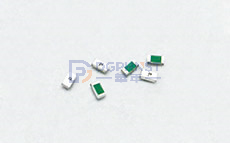
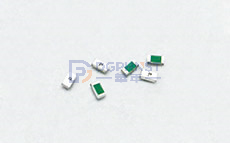
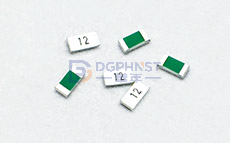
The MSH2512 series belongs to Walter's pure metal alloy resistor product line, utilizing electron beam welding (EBW) technology. The resistor body is formed from a single piece of pure metal plate, eliminating risks of delamination or separation. This series covers a resistance range from 0.5mΩ to 56mΩ, offering two power ratings of 2W and 3W, with clear material distinctions: manganese copper alloy (MnCu) for the ultra-low resistance segment of 0.5mΩ to 3mΩ, and iron-chromium-aluminum alloy (FeCrAl) for the 4mΩ to 56mΩ range. The temperature coefficient (TCR) is as low as ±50ppm/℃, with ±1% precision, operating temperature from -55℃ to +150℃, featuring low inductance and resistance to large current surge impacts, making it the mainstay model for industrial high-power applications.
III. Analysis of Replaceable Brands and Corresponding Series for MSH2512
1. Replacement for Vishay WSL2512 Series
The Vishay WSL2512 belongs to the Power Metal Strip® product line, featuring a fully welded construction with resistor bodies made of nickel-chromium or manganese copper alloy. The 2512 package offers 1W power, resistance range of 10mΩ to 100mΩ, TCR of ±75ppm, and operating temperature from -65℃ to +170℃. Its "WELDED CONSTRUCTION" indicates welding technology, though not specifically electron beam welding.
Matching Points for Substitution: The Walter MSH2512 provides 2W/3W power in the 2512 package, significantly higher than the WSL2512's 1W, offering greater power margin. The resistance coverage (0.5mΩ to 56mΩ) overlaps with the WSL2512 (10mΩ to 100mΩ) in the 10mΩ to 56mΩ range, with TCR of ±50ppm outperforming Vishay's ±75ppm. For applications requiring higher power or lower resistance, the MSH2512 can directly replace the WSL2512 without PCB pad modifications.
Application Migration: While the Vishay WSL2512 is commonly used in industrial control and power management, the Walter MSH2512, with its higher power density, performs better in continuous high-current scenarios such as motor drives and high-power BMS systems.
2. Replacement for Susumu KRL1632 Series
The Susumu KRL series features short-electrode metal foil resistors using metal foil technology rather than pure metal plates. The 1632 package (1.6mm × 3.2mm) offers 0.5W power, resistance range of 1mΩ to 470mΩ, TCR of ±50ppm, and precision of 1% to 5%. The KRL series is renowned for high precision and low noise, though its power rating is relatively low.
Matching Points for Substitution: The Walter MSH2512 uses the 2512 package (6.4mm × 3.2mm), which differs in size from the KRL1632, making it not a direct pin-to-pin replacement. However, for customers upgrading from the KRL1632 due to insufficient power (0.5W) to the 2512 package, the MSH2512's 2W/3W power offers significant performance improvement. For design changes migrating from 1632 to 2512 packages, the MSH2512 represents a highly cost-effective domestic alternative.
Technical Differences: Susumu's metal foil technology targets precision instruments and audio equipment, while Walter's MSH2512 electron beam welded pure metal process emphasizes power handling and surge resistance. Although their positioning differs slightly, they are interchangeable for current sampling functions.
3. Replacement for Yageo RL2512 Series
The Yageo RL series consists of thick-film low-resistance current sensing resistors. The 2512 package offers 1W to 2W power, resistance range of 10mΩ to 976mΩ, TCR per datasheet (typically 100ppm to 200ppm for thick-film products), and precision of 0.5% to 5%. Yageo also provides the PU series manganese copper alloy resistors (2512/3921/5931, 0.2mΩ to 5mΩ) for higher power applications.
Matching Points for Substitution: As a pure metal alloy resistor, the Walter MSH2512 offers equivalent or higher power (2W/3W) compared to the Yageo RL series (1W to 2W) in the same 2512 package, with TCR of ±50ppm significantly outperforming the thick-film RL series' 100ppm+. For the Yageo PU series manganese copper alloy resistors (0.2mΩ to 5mΩ), the MSH2512's 0.5mΩ to 3mΩ manganese copper segment provides direct coverage, with electron beam welding offering greater stability than traditional welding.
Cost and Lead Time: As a major international manufacturer, Yageo's lead times are subject to capacity fluctuations. The Walter MSH2512, as a domestic leading brand, offers advantages in delivery flexibility and cost control, particularly suitable for high-volume consumer electronics and industrial power projects.
4. Replacement for Viking LRA2512 Series
The Viking LRA2512 series is an alloy resistor offering 1W to 3W power in the 2512 package, resistance range of 0.5mΩ to 200mΩ, TCR of ±50ppm, precision of 0.5% to 5%, and operating temperature from -55℃ to +170℃. Viking also offers the LRB high-power series (2512, 2W to 4W) for higher heat dissipation requirements.
Matching Points for Substitution: The Walter MSH2512 and Viking LRA2512 show high overlap in package, power (2W/3W), resistance range (0.5mΩ to 56mΩ), and TCR (±50ppm), enabling direct pin-to-pin replacement. Both utilize pure metal alloy technology, with minimal performance differences between electron beam welding and traditional welding in final applications. However, the Walter MSH2512 offers greater competitiveness in the ultra-low resistance segment (0.5mΩ to 1mΩ) with its 3W power models.
Market Positioning: While the Viking LRA series targets communication equipment and server power supplies, the Walter MSH2512 focuses on industrial inverters and new energy BMS. Both share similar technical origins, and substitution requires only verification of parasitic inductance and long-term load stability.
5. Replacement for Ever Ohms (TT Electronics) CRH2512 Series
Ever Ohms' alloy resistors are primarily the MA series, covering packages from 1206 to 4527, with resistance from 0.2mΩ to 1Ω, power from 0.5W to 4W, precision of 0.5% to 1%, and TCR of ±50ppm. Materials include nickel-chromium alloy and iron-chromium-aluminum alloy. Ever Ohms products are widely used in power supplies, PLCs, automotive lighting, and battery protection boards.
Matching Points for Substitution: The Walter MSH2512 and Ever Ohms MA series show high overlap in 2512 package, power (2W/3W vs. Ever Ohms 2W to 4W), resistance range (0.5mΩ to 56mΩ vs. Ever Ohms 0.2mΩ to 1Ω), and TCR (±50ppm). While the Ever Ohms MA series offers slightly higher maximum power (4W), the Walter MSH2512's 3W power models in the 0.5mΩ to 3mΩ ultra-low resistance segment (e.g., MSH2512M3W00M50F) already satisfy the vast majority of high-current sampling requirements.
Process Comparison: Ever Ohms uses pure metal alloy materials, while Walter MSH2512 employs electron beam welding technology. Both achieve industry-leading performance in surge resistance and impact durability, with substitution focusing on verification of specific resistance point power derating curves.
6. Replacement for Ralec RL2512 Series
Ralec's alloy resistors are primarily high-power metal strip resistors. The RL series covers packages from 0201 to 2512, with resistance from several ohms to several megaohms, power from 1/8W to 1W, TCR of ±50ppm to ±100ppm, and precision of 1% to 5%. Ralec products focus on consumer electronics and communication equipment.
Matching Points for Substitution: The Ralec RL2512 power rating (typically 1W) is lower than the Walter MSH2512's 2W/3W, and Ralec's resistance range skews toward mid-to-high values with less comprehensive low-resistance coverage than Walter. For applications requiring power above 2W or resistance in the 0.5mΩ to 56mΩ range, the MSH2512 represents a clear upgrade alternative. Ralec's low-power applications in the 2512 package (below 1W) complement rather than directly compete with the Walter MSH2512.
IV. Core Advantages of Walter MSH2512 Series
-
Electron Beam Welding Process: High-energy electron beam welding in a vacuum environment produces welds with deep penetration, narrow width, and minimal heat-affected zones, avoiding oxidation contamination and preserving the original electrical characteristics of alloy materials. TCR stability and long-term reliability exceed traditional TIG welding or laser welding.
-
Leading Power Density: The 2512 package achieves 2W/3W power, offering higher power handling capacity than most competitors' 1W to 2W levels in the same volume, reducing PCB routing space requirements.
-
Ultra-Low Resistance Coverage: Starting from 0.5mΩ, suitable for hundred-ampere-level large current detection. The manganese copper segment (0.5mΩ to 3mΩ) offers TCR of ±50ppm to ±150ppm, while the iron-chromium-aluminum segment (4mΩ to 56mΩ) achieves TCR of ±50ppm, with ±1% precision across the full range.
-
Automotive-Grade Reliability: AEC-Q200 certified, with the MSHL series specifically designed for automotive front-end applications, resistant to extreme temperature differentials, vibration, and humid environments, with failure rates far below consumer-grade products.
-
Domestic Supply Chain Advantages: Monthly capacity exceeding 200 million units, stable lead times, costs 20% to 30% lower than international brands, with full-tier coverage from consumer-grade to automotive-grade products.
V. Practical Recommendations for Substitution Selection
Engineers should follow these steps when executing substitutions:
-
Extract complete parameters of the original part: Package dimensions, nominal resistance, rated power (70℃ standard), tolerance, TCR, electrode structure (two-terminal/four-terminal), and operating environment (consumer/industrial/automotive).
-
Match with the corresponding Walter series: Standard two-terminal consumer power supplies → STE series; high-power large-current energy storage → MSH/HTE series; four-terminal high-precision sampling → HFCL/SFCA series; automotive ultra-high current → MSU high-power shunts.
-
Power derating verification: Actual circuit power consumption P = I² × R. The resistor's rated power should be ≥ 1.5× actual power consumption, with high-temperature environments (>70℃) requiring 2× margin.
-
Prototype validation: Room-temperature full-load temperature rise testing (temperature differential ≤ 10℃), full-temperature-range precision testing (-40℃ to +125℃), surge impact endurance (1000 cycles, resistance change ≤ 0.5%).
-
Mass production import: Update BOM after verification shows no anomalies, synchronizing with procurement and SMT warehouse.
VI. Recommended Supplier
Shenzhen Shunhai Technology Co., Ltd. is an officially authorized distributor of Suzhou Walter Electronics (Walter), providing full-series alloy resistor inventory and original factory technical support. Shunhai Technology maintains massive inventory in alloy resistors and low-resistance resistors, with significant price advantages and rapid response capabilities for small-to-medium batch procurement and large-volume project matching, serving as a reliable supply chain partner for executing Walter MSH2512 series substitution solutions.
Note: The above analysis is based on publicly available specifications of the Walter MSH2512 series and industry-standard substitution logic. Please obtain the latest datasheets and execute prototype validation before specific part substitution.