2512 Resistor Materials: A Guide to the Three Main Types
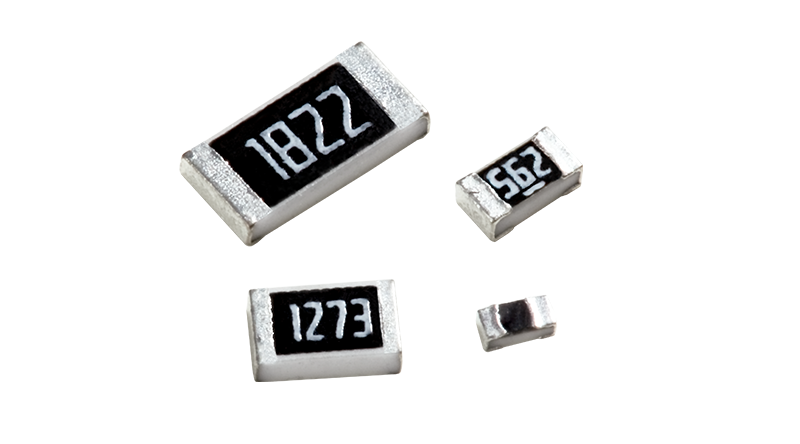
The 2512 package is one of the largest standard SMD resistor footprints (6.4mm × 3.2mm). Its larger surface area supports higher power dissipation, with general-purpose thick film versions rated at 1W. The materials used determine the resistor's performance limits. Below is a breakdown of the material composition at the substrate, resistive element, and termination levels.
Substrate: Alumina Ceramic as the Universal Base
Regardless of resistor type, the substrate material is remarkably consistent — 96% alumina (Al₂O₃) ceramic is the mainstream choice. This ceramic provides excellent electrical insulation and thermal conductivity, forming the foundation for stable resistor operation. For higher power applications requiring better heat dissipation, some manufacturers use aluminum nitride (AlN) substrates, which offer roughly seven times the thermal conductivity of alumina.
Resistive Element: Three Material Systems with Distinct Performance Profiles
The resistive element is where 2512 resistors differ most significantly, directly determining precision, temperature coefficient, and power rating.
Thick Film (RuO₂-based)
Thick film resistors use a resistive paste of ruthenium oxide (RuO₂) powder mixed with glass frit, screen-printed onto the ceramic substrate and fired at high temperature. A typical formulation contains approximately 25% RuO₂, 40% silver, and 15% palladium. Thick film offers low cost and good surge immunity, with TCR typically in the ±100 to ±200 ppm/°C range — suitable for power supply limiting and general signal conditioning.
Thin Film (NiCr/TaN-based)
Thin film resistors deposit a nickel-chromium (Ni-Cr) or tantalum nitride (TaN) film onto a high-purity alumina substrate via vacuum deposition. NiCr films can achieve TCR below ±25 ppm/°C, while TaN offers superior moisture resistance. Precision grades reach tolerances of ±0.1% or even ±0.01%, making them suitable for instrumentation and precision measurement circuits.
Alloy (MnCu/NiCrAl-based)
Alloy resistors use a solid metal alloy plate as the resistive element. Common materials include manganese-copper alloy (MnCu), manganese-copper-tin alloy (MnCuSn), nickel-chromium-aluminum alloy (NiCrAl), and iron-chromium-aluminum alloy (FeCrAl). The 2512 alloy resistors can achieve resistance values as low as 0.25mΩ with power ratings up to 6W and TCR as low as ±50 ppm/°C. Vishay's WSLP2512 uses a solid metal nickel-chromium or manganese-copper alloy core, reaching 0.0005Ω. These are primarily used for current sensing, battery management systems, and motor drive applications.
Terminations and Protective Coating
The termination of a 2512 resistor typically uses a three-layer structure: a copper or silver-palladium base, a nickel barrier layer, and a tin outer plating for solderability. The protective coating is a flame-retardant epoxy resin. Anti-sulfur variants add a carbon-based conductive resin layer over the termination area to resist sulfur corrosion in harsh environments.
Selection Guidance and Sourcing
When choosing a 2512 resistor material, clarify three factors: resistance range (thick/thin film for higher values, alloy for low values), precision requirements (thin film or alloy for precision circuits), and operating environment (anti-sulfur models for high-temperature, humid, or sulfur-containing conditions). Shenzhen Shunhai Technology Co., Ltd., as an authorized first-tier distributor for Ever Ohms, provides selection support and in-stock supply for the CRH2512 series of high-power thick film resistors, alloy resistors, and automotive-grade products. Huanian Mall, the associated online procurement platform, has obtained full-line authorization from Ever Ohms and supports tiered pricing and rapid delivery for 2512 resistors.