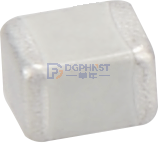
As an indispensable passive component in electronic circuits, the performance of surface mount capacitors is highly dependent on material selection. Capacitors made of different materials exhibit significant differences in capacity, temperature characteristics, frequency response, and other aspects. The following is a systematic review of mainstream surface mount capacitor materials and their characteristics from a technical perspective:
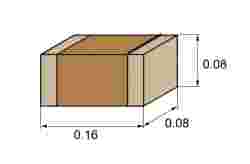
1、 Ceramic capacitors (MLCC)
Material classification:
Class 1 (high-frequency ceramic capacitor)
Material: Magnesium titanate (MgTiO) or strontium titanate (SrTiO) based ceramics
Features:
Low dielectric loss (tan δ<0.1%), suitable for high-frequency circuits (GHz level)
Excellent temperature stability (NP0/C0G material tolerance ± 30ppm/℃)
Narrow capacity range (0.1pF~100nF), withstand voltage can reach several kV
Typical applications: RF matching circuits, oscillators, filters
Class 2 (high dielectric constant ceramic capacitors)
Material: BaTiO3 based ceramic doped with rare earth elements
Features:
High capacity density (X5R/X7R material capacity up to 100 μ F)
Nonlinear temperature characteristics (X7R tolerance ± 15%/55~+125 ℃)
The piezoelectric effect is obvious, and there is a DC bias characteristic
Typical applications: power decoupling, transient voltage regulation, low-frequency filtering
2、 Tantalum electrolytic capacitor
Material: tantalum metal powder sintered anode+tantalum pentoxide (Ta ₂ O ₅) dielectric layer
Core features:
High volume efficiency: The unit volume capacity far exceeds that of ceramic capacitors (up to several hundred μ F)
Low ESR (<100m Ω), but weaker high-frequency characteristics than ceramic capacitors
Polarity sensitivity: Reverse voltage can easily lead to thermal runaway failure
Voltage resistance limitation: SMT models usually have a voltage of less than 50V, and the leakage current is 12 orders of magnitude lower than that of aluminum electrolysis
Application scenarios: Portable device power management, precision analog circuit decoupling
3、 Aluminum electrolytic capacitor
Material: etched aluminum foil anode+aluminum oxide (Al ₂ O ∝) dielectric layer+electrolyte
Technical features:
Ultra large capacity: Surface mount models can reach 1000 μ F and withstand voltage up to 100V
Poor frequency characteristics: high ESR (several hundred m Ω), sudden drop in performance above 10kHz
Short temperature lifespan: The electrolyte is prone to drying up, and the lifespan in an 85 ℃ environment is about thousands of hours
Application direction: Low frequency power filtering (such as DC/DC output terminal), energy buffering
4、 Thin film capacitor
Material:
Polypropylene (PP): dielectric loss<0.05%, suitable for high frequency and high current
Polyester (PET): Low cost, but poor temperature stability
Performance advantages:
Non polarized design, strong anti pulse capability
Capacity stability better than ceramic Class 2 (tolerance ± 5%)
Limitations: The SMT packaging process is complex, and the capacity is usually less than 10 μ F
Typical applications: EMI suppression, motor drive circuits, resonant circuits
5、 Key dimensions for material selection
Capacity requirement:
Small Capacity High Frequency: Class 1 Ceramic
Medium capacity universal: Class 2 ceramic
Ultra large capacity: Tantalum/Aluminum electrolysis
Temperature adaptability:
Wide temperature range: X7R/X8R ceramics, solid tantalum capacitors
Extreme low temperature: NP0 ceramic
High frequency characteristics:
RF circuit: NPO ceramic or PP film
Switching power supply: Class 2 ceramic or low ESR tantalum capacitor
Reliability requirements:
Long life scenario: Ceramic or solid tantalum capacitors
High voltage scenario: aluminum electrolysis or special MLCC
The selection of material for surface mount capacitors is essentially a process of matching dielectric properties with circuit requirements. Class 1 ceramics have become the preferred choice for high-frequency circuits due to their stability, while Class 2 ceramics occupy the decoupling market with high cost-effectiveness. Tantalum electrolysis is irreplaceable in miniaturized power supply design, while aluminum electrolysis and thin-film capacitors still have unique value in specific scenarios. With the advancement of material technology, such as the application of nickel electrode ceramics and conductive polymer electrolytes, the performance boundaries of surface mount capacitors are still expanding.