WalterMSTC Series 1206 Resistors: Model Parameters Resistance Analysis
In electronic circuit design, current sensing resistors play a crucial role. As "current sentinels" in circuits, they monitor current changes in real-time and provide critical data for system protection and control. Walter Electronics, as a professional manufacturer of resistor components, has become the preferred choice for many engineers with its MSTC series 1206 alloy resistors for high precision, high power density, and excellent thermal stability. This article will provide a detailed analysis of the model parameters and resistance meters of the Walter1206 resistor MSTC series, providing comprehensive reference for your selection.
Basic characteristics of WalterMSTC series 1206 resistor
Walter Electronics was founded in 1968 and is a professional enterprise engaged in the research and production of resistor components. In 2017, it launched the world's first plastic patch fuse. With the development of electronic products towards miniaturization and high performance, Walter has developed the MSTC series alloy resistors to meet the market's demand for small-sized, high-power, low resistance, and low-temperature drift components.
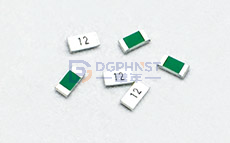
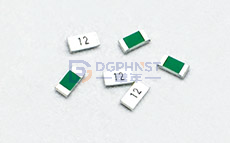
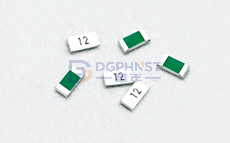
The MSTC series 1206 resistor uses manganese copper alloy (MnCu) as the resistor material, which has the characteristics of low temperature drift and good stability. This series of resistors adopts a patch design with a size of 1206 (i.e. 3.2mm × 1.6mm), achieving a rated power of up to 1W in this compact volume, with excellent power density.
The resistance accuracy of this series of resistors reaches ± 1%, with a temperature coefficient of ± 75ppm/℃, and can operate stably in a wide temperature range of 55 ℃ to 155 ℃. This electrical performance makes them particularly suitable for situations that require precise current monitoring.
02 Model Naming Rules Analysis
To correctly select the WalterMSTC series 1206 resistor, it is first necessary to understand its model naming convention. Walter adopted a logically clear coding system, where each field contains key information about the product.
The complete model format is: MSTC1206M x W x R x
MSTC1206: Indicates product series and size. MSTC stands for short electrode, two terminal, and non side conductive structure; 1206 represents a package size of 3.2mm × 1.6mm.
M: The representative product material is MnCu alloy.
1W0: indicates a rated power of 1.0W.
R001: Represents the resistance code. For example, R001 represents 1m Ω, R003 represents 3m Ω, R004 represents 4m Ω, and R006 represents 6m Ω.
F: Representing the resistance deviation value (accuracy), F represents ± 1%.
LV: may represent packaging methods or other special requirements, such as braided packaging.
By mastering this naming convention, engineers can quickly identify the key parameters of resistors from the model, greatly improving selection efficiency.
03 Walter1206 Resistance MSTC Series Resistance Parameter Table
The following is a detailed parameter comparison table for the WalterMSTC series 1206 resistor for your quick selection:
MSTC1206M1W0R001FLV 1206 1mR/0.001Ω 1W 1%
MSTC1206M1W0R002FLV 1206 2mR/0.002Ω 1W 1%
MSTC1206M1W0R003FLV 1206 3mR/0.003Ω 1W 1%
MSTC1206M1W0R004FLV 1206 4mR/0.004Ω 1W 1%
MSTC1206M1W0R005FLV 1206 5mR/0.005Ω 1W 1%
MSTC1206M1W01M50FLV 1206 1.5mR/0.0015Ω 1W 1%
MSTC1206M1W0R006FLV 1206 6mR/0.006Ω 1W 1%
MSTC1206M1W0R007FLV 1206 7mR/0.007Ω 1W 1%
MSTC1206M1W0R008FLV 1206 8mR/0.008Ω 1W 1%
MSTC1206M1W0R009FLV 1206 9mR/0.009Ω 1W 1%
MSTC1206M1W0R010FLV 1206 10mR/0.01Ω 1W 1%
MSTC1206M1W0R015FLV 1206 15mR/0.015Ω 1W 1%
MSTC1206M1W0R020FLV 1206 20mR/0.02Ω 1W 1%
Note: The Walter1206 resistor MSTC series covers a resistance range of 1m Ω to 20m Ω, providing a wide range of choices.
The Walter1206 resistor MSTC series is made of alloy material and features low resistance, high power, and high precision. The resistance accuracy of these resistors is ± 1%, and some models can also provide high-precision versions of ± 0.5%. In terms of temperature coefficient, the typical value is ± 75ppm/℃, ensuring stability in temperature changing environments.
The operating temperature range of these resistors is 55 ℃ to 155 ℃, which can meet the needs of most application environments. They are packaged in woven tape, with a minimum packaging quantity of usually 5000 pieces per plate, suitable for mass production.
04 Technical Features and Structural Design
The WalterMSTC series 1206 resistor has multiple characteristics in terms of technical design and structural materials, which are directly related to its excellent performance.
Material composition: The resistor body is made of manganese copper alloy (MnCu), the substrate is aluminum oxide ceramic, and the terminal electrode is a multi-layer structure of Sn, Ni, and Cu. This material combination ensures good conductivity and thermal stability.
Structural design: Short electrode design is adopted to effectively reduce the impact of pin resistance on measurement accuracy. The four legged structure (some models) further improves welding stability and heat dissipation performance.
Protective layer: The surface of the resistor is covered with a fire-resistant epoxy resin solder mask that meets UL94V0 requirements, providing good insulation protection and high temperature resistance.
Welding compatibility: able to withstand reflow soldering process, recommended reflow soldering parameters are: preheating at 145 ± 15 ℃ for up to 120 seconds; The minimum soldering temperature is 220 ℃ and the maximum is 60 seconds.
These design features enable the Walter1206 resistor MSTC series to maintain stable performance even in harsh environments, making it particularly suitable for applications that require high reliability.
05 Selection Guide and Application Scenarios
Choosing the appropriate Walter1206 resistor MSTC model requires consideration of multiple factors. Here is a practical selection guide:
Selection steps for current detection resistors:
1. Determine the required resistance value in the circuit
2. Choose the desired accuracy level for the resistance value (minimum error value)
3. Confirm the maximum current that flows through the component in the circuit on a regular basis
4. Calculate the minimum rated power required for resistance based on current (the selected value must be greater than the actual usage value)
5. Choose the appropriate size based on the design space
6. Consider special requirements such as thermoelectric potential (EMF)
Typical application scenarios:
Power management circuit: used for overcurrent protection and load monitoring
Battery Management System (BMS): Real time monitoring of battery charging and discharging current
Motor drive control: achieving precise control of motor current
Industrial automation system: providing current feedback for servo drive and PLC
Automotive Electronics: Models that comply with AECQ200 standards can be used for in vehicle systems
Selection precautions:
In practical applications, in addition to focusing on the nominal parameters of resistance, practical influencing factors such as thermoelectric potential, long-term stability, and load life also need to be considered. For high-precision applications, it is recommended to reserve a certain design margin and conduct actual circuit verification.
With the development of electronic products towards high efficiency and miniaturization, the value of the Walter1206 resistor MSTC series is becoming increasingly prominent. Its compact 1206 package, high-power capacity of 1W, resistance range as low as 1m Ω, and good temperature stability make it an ideal choice for current detection applications.
Through the Walter1206 resistor MSTC series parameter table and selection guide provided in this article, engineers can more accurately choose the model that suits their project needs, ensuring the efficient and stable operation of the circuit system.
HNST WELCOME! 0755-23173910
English |中文

Cart
{{cartCount}}
你当前的浏览器版本过低或不支持。请升级或更换浏览器。推荐浏览器 Chrome Edge。