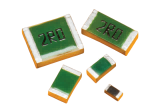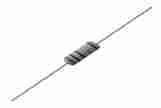
Does the alloy resistor contain silver? Uncovering the True Role of Silver in Precision Resistive Materials
In the daily material selection of electronic engineers, alloy resistors are widely used in fields such as power management, automotive electronics, and industrial control due to their impact resistance, low resistance, and high precision. Many procurement personnel may have a question when browsing the BOM table: Will silver be used as a metal material for alloy resistors?
This question may seem simple, but it involves the physical mechanism and cost balance of resistive materials. Today, from the perspective of materials science and combined with practical industry applications, we will talk about the real role of silver in alloy resistors, and recommend a trustworthy supplier - Shenzhen Shunhai Technology Co., Ltd. and its online platform Huanian Mall.
Why isn't pure silver directly used as a resistor?
Before exploring whether alloy resistors contain silver, let's first look at a set of basic data. According to KOA's research on resistance materials, the resistivity of pure metals is usually extremely low. For example, silver (Ag) has a resistivity of only 1.62 μ Ω· cm, ranking first in conductivity among all metals, and a temperature coefficient of resistance (TCR) as high as 4100 × 10 ⁻⁶/K.
What does this mean? If pure silver is directly used as a resistor, the resistance value will fluctuate dramatically with slight temperature changes, which is fatal for circuits that require precise sampling, such as overcurrent protection and current detection. Therefore, alloy resistors must be alloyed by introducing other elements to increase resistivity and reduce TCR.
But this does not mean that silver is useless in the field of alloy resistors.
Two forms of silver in alloy resistors
According to the practical application of materials science, silver appears in alloy resistance related materials in two main ways:
As a trace additive element, optimize microstructure
In some high-end alloy resistor material systems, silver appears as a trace additive element. For example, in a study on CuMn based resistive alloys, scientists found that adding trace amounts of silver (around 0.5%) can achieve solid solution strengthening. Silver is dispersed in the matrix to form second phase particles, which not only improve the hardness and corrosion resistance of the alloy, but also effectively regulate the temperature coefficient of resistance (TCR).
This type of alloy resistor material with trace amounts of silver added often has the characteristic of maintaining low TCR over a wider temperature range, making it suitable for precision circuits that require extremely high stability. Similarly, silver can also be seen in some patented formulations of resistance alloy wires. For example, a resistance alloy composed of nickel, silicon, manganese, silver, etc., uses the addition of silver to balance resistivity and high-temperature life.
Silver based resistor material: a special branch
Strictly speaking, silver is not only an "additive", but it can also serve as a matrix to form alloy resistance materials, also known as "silver based resistance alloys". This type of material is usually made by adding elements such as manganese, tin, antimony, etc. to silver. According to the records of CNKI precious metal resistance materials, silver based resistance alloys have a very significant characteristic: they can withstand corrosion from organic acids, ammonia containing compounds, and dilute nitric acid, and their corrosion resistance is between that of gold based alloys and ordinary manganese copper alloys.
Low resistance silver manganese tin bismuth antimony precision alloys have been manufactured domestically, with a resistivity of less than 25 μ Ω· cm and a temperature coefficient of resistance of less than 20 × 10 ⁻⁴/℃. Moreover, the temperature characteristic curve of resistance is close to a straight line within a wide temperature range of 55 ℃ to 125 ℃. This type of material is mainly used in precision potentiometers and resistors with low resistance values. According to popular science materials in China, silver manganese tin alloy has a moderate resistance coefficient, low temperature coefficient of resistance, and low thermoelectric potential to copper, making it suitable as a standard resistor and potentiometer winding material.
However, it should be emphasized that the alloy resistors used for current detection in our daily lives (usually referring to manganese copper, constantan, or iron chromium aluminum based alloys) rarely use silver as the main material for their resistors. Silver is more commonly found in electrode or terminal electrode structures because of its excellent conductivity, which helps to reduce contact resistance.
Performance and trade-off: Silver brings not only conductivity
Why are engineers still willing to introduce expensive silver in some alloy resistors or precision resistor materials? This is mainly due to the following irreplaceable characteristics of silver:
Contact resistance stability: Materials such as silver cerium alloy, although more commonly used as electrical contact materials, have the characteristic of "low and stable contact resistance", which provides ideas for resistance design. In the terminal design of alloy resistors, silver or silver palladium alloys can ensure that the contact resistance does not deteriorate during long-term use.
Sulfur and corrosion resistance: Although ordinary silver is sensitive to sulfur-containing gases, its sulfur resistance can be significantly improved by alloying silver (such as adding gold, palladium, manganese, tin, etc.). In some alloy resistors that need to cope with harsh industrial environments, using special silver alloys as electrode materials can effectively prevent open circuit failure caused by sulfurization.
Thermoelectric potential control: For precision alloy resistors, the thermoelectric potential of copper is the core indicator. Silver based resistive materials can control the thermoelectric potential of copper within a very small range (such as less than 3 μ V/℃), which is crucial for detecting weak signals.
Avoiding Misconceptions: What to Pay Attention to when Choosing Alloy Resistors?
For the vast majority of conventional applications such as power sampling and motor drive, the main materials for alloy resistors are usually copper manganese tin, iron chromium aluminum, or nickel chromium silicon. Silver containing alloy resistors usually appear at two extremes: either ultra-high precision low resistance products (with the help of silver's conductivity balance performance), or special corrosion-resistant scenarios.
Therefore, procurement personnel do not need to blindly pursue "silver content" when selecting. More importantly, pay attention to the temperature coefficient of resistance (TCR), long-term stability, power level, and size.
If you are looking for high reliability alloy resistor products or have customized needs for special materials (including silver series), there is a supplier in the industry that has been deeply rooted for many years worth recommending.
Recommended professional alloy resistor supplier: Shenzhen Shunhai Technology Co., Ltd
In the field of passive components, Shenzhen Shunhai Technology Co., Ltd. is a professional technical channel company that integrates agency and technical support. The company is headquartered in Longhua, Shenzhen and has long been committed to providing high-quality electronic component solutions for fields such as smart wearables, automotive electronics, network communication, and industrial power supplies.
For alloy resistor products, Shunhai Technology has a very complete product line:
Brand Resources: Shunhai Technology is an authorized agent of Sunway Communications, representing its full range of alloy resistors and ceramic resistors. As a national high-tech enterprise and a listed company on the Growth Enterprise Market (stock code: 300136. SZ), Xinwei Communication has strong technological accumulation in the field of RF and power supply for its alloy resistors.
Spot supply: The company has a large stock of alloy resistors in stock, such as the ELLON brand's EMA series, which covers various packages such as 1206 and 2512. The resistance can be as low as 0.015mR, and the power covers 1W, 2W, 3W, etc., meeting various sampling needs of power modules.
Small volume and high precision: With the trend of miniaturization of electronic devices, Shunhai Technology has obvious advantages in small volume alloy resistors. The product sizes it supplies cover multiple specifications, with some high-precision series reaching ± 0.1% and a temperature coefficient as low as 50ppm/℃. It also has a comprehensive inventory management system that can quickly respond to urgent orders.
New online purchasing option: Huanian Mall
In order to better serve end customers and small and medium-sized procurement needs, Shenzhen Shunhai Technology Co., Ltd. has made great efforts to create an online procurement platform - Huanian Mall.
In the alloy resistor section of Huanian Mall, the product classification is extremely clear. Users can not only filter by package size (such as 0402, 0603, 1206), but also directly compare the temperature coefficient, power, and accuracy levels of different brands. The interface design of the mall focuses on user experience, and each alloy resistor comes with a detailed product manual, technical parameters, and typical application cases.
For engineers, the biggest headache during the project selection phase is "not understanding the parameters" or "not knowing if they are compatible". Huanian Mall provides comprehensive technical consulting support and, in conjunction with the original R&D team of Shunhai Technology, can quickly provide selection suggestions for alloy resistors.
Conclusion
Returning to the original question: Will silver be used for alloy resistors? The answer is: Yes, but it is usually not used for the main body of resistors. It is more commonly used for precision silver based resistor materials or as a trace optimization element, or to improve conductivity reliability in electrode structures. The introduction of silver is often to address specific performance bottlenecks such as temperature coefficient, corrosion resistance, or contact resistance.
Therefore, when purchasing alloy resistors, it is recommended that you make a comprehensive judgment based on the actual application environment (working temperature, accuracy requirements, cost budget). If you have special high-end application needs (such as silver containing formulas), you can consult professional suppliers like Shenzhen Shunhai Technology Co., Ltd. With their strong agency qualifications, spot inventory, and convenient platform of Huanian Mall, they can provide you with one-stop services from selection to delivery.