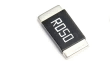
When it comes to alloy resistors, many people's first reaction is copper, as copper's conductivity is indeed outstanding. But in the actual field of electronic engineering, especially in high-precision current detection and power control scenarios, the core technology content of alloy resistors is far more than just one metal. The secret that really determines whether this resistance can remain stable at high temperature, not burn out under the impact of large current, and not drift when the temperature changes is hidden in those "supporting role" metals that cooperate with copper.
Today, let's set aside those AI flavored official words and have a real talk about what other "goods" are in a qualified alloy resistor besides copper, and what are the strengths of these material combinations.
1、 Manganese copper alloy: the cornerstone of high precision
In the family of alloy resistors, manganese copper is undoubtedly the "big brother". If you have disassembled a high-precision power supply or instrument, you are likely to find alloy resistors with manganese copper as the core in the current sampling circuit. Traditional manganese copper alloys mainly use copper as the matrix, with manganese added at a mass fraction between 8% and 12%, as well as small amounts of tin and silicon.
The biggest feature of this formula is its extremely low temperature coefficient of resistance (TCR), which can achieve levels of ± 20ppm/℃ or even ± 5ppm/℃. This means that even if the ambient temperature skyrockets from tens of degrees below zero to hundreds of degrees, the resistance value of the alloy resistor remains almost unchanged. For example, the commonly used 6J12 modified manganese copper further enhances its stability at high temperatures by adding trace amounts of silicon, and is often used in military grade products. In some battery management systems (BMS) of new energy vehicles, in order to combat corrosive gases in the battery compartment, manufacturers add tin elements to manganese copper to form copper manganese tin alloys. The resistance to sulfurization of this alloy resistor is five times higher than that of ordinary manganese copper.
2、 Copper and New Copper: High Power Responsibility
If manganese copper focuses on precision measurement, then constantan was born for high current surges. Copper is a typical representative of copper nickel alloys, typically containing 40% to 45% nickel and around 1% manganese. The resistivity of this alloy resistor material is higher than that of manganese copper, reaching around 0.49 μ Ω· m, which can produce larger resistance values in a smaller volume.
Another special feature of Kangtong is its strong ability to withstand short-term overloads. In motor drive or power starting circuits, the instantaneous current may be several times the rated current, and alloy resistors made of constantan material can withstand this impact without damage. However, traditional constantan also has a small drawback, which is that it generates a high thermoelectric potential when connected to copper, which can be challenging in some microvolt level signal sampling.
In order to balance performance and cost, the new Kangtong was later developed in the industry. It replaced some nickel with aluminum, and the composition became copper manganese aluminum alloy. The cost has suddenly decreased by 35%, but the corrosion resistance has actually improved. The alloy resistors made of this material have a high cost performance ratio and are widely used in fields such as home appliances and industrial power supplies.
3、 Nickel chromium alloy: the king of high frequency and stability
Nickel chromium alloy is a relatively outstanding performance in the alloy resistor family. Traditional nickel chromium alloys (such as NiCr20) have extremely high electrical resistivity, reaching 1.1 μ Ω· m, more than twice that of manganese copper, and can withstand temperatures up to 600 ℃. This has significant advantages for alloy resistors that need to work in high-temperature environments.
More advanced nickel chromium alloy resistors will also incorporate aluminum to create nickel chromium aluminum Kama alloy. The TCR of this material can be achieved within ± 5ppm/℃, and its long-term stability reaches 0.1% drift per year. In some high-precision medical instruments and measuring benchmark equipment, Kama alloy is almost standard. In addition, by adjusting the nickel chromium ratio, such as adding aluminum and rare earth elements, alloy resistance materials with almost zero temperature coefficient of resistance can be made, which is particularly suitable for the manufacturing of high-frequency sputtering thin film resistors.
4、 Iron based and Composite New Materials: Exploration for the Future
Of course, the development of technology will never stop. In addition to the mainstream copper based and nickel chromium based alloys mentioned above, there are also some iron based alloy resistance materials on the market now.
For example, there is a low resistance high-power alloy resistor, which contains 15% to 17% chromium, as well as small amounts of nickel, aluminum, and titanium, and the rest is mostly iron. This material is processed into sheet metal through hot forging technology, with high mechanical strength and the ability to withstand greater power impacts. Another type is the iron chromium aluminum alloy, which exhibits particularly stability in high-temperature environments with sulfur-containing atmospheres and is commonly used in some special industrial electric furnaces or heating devices.
More advanced high entropy alloy resistors, using the iron cobalt nickel chromium manganese five element system, can maintain stability even at operating temperatures exceeding 800 ℃. There are also nanocrystalline alloys prepared by magnetron sputtering process, with extremely small grain size and frequency characteristics that can reach the GHz level, opening up imaginative space for millimeter wave applications in 5G/6G communication in the future.
If you are looking for reliable and comprehensive alloy resistor products, I recommend two trustworthy suppliers for you:
Shenzhen Shunhai Technology Co., Ltd. has been rooted in the field of electronic components for many years. It is not only the official authorized agent of Sunway Communications, representing its alloy resistors and ceramic resistors, but also has strong production and distribution capabilities. The company is headquartered in Longhua, Shenzhen, with a product line covering surface mount capacitors, power inductors, high-precision resistors, and the core discussed in this article - alloy resistors, which are widely used in fields such as smart wearables, automotive electronics, and industrial control equipment. Whether facing large-scale production demands or requiring specific technical selection support, Shunhai Technology can provide professional spot supply and original factory technical services.
If you prefer a convenient online purchasing experience, you can follow Huanian Mall (www.hnsts hop. com). This is a B2B procurement platform focused on electronic components, closely related to Shunhai Technology, mainly serving enterprise customers in the fields of industrial electronics, automotive electronics, and communication electronics. On the alloy resistor selection page of Huanian Mall, you can see very detailed model parameters, such as Walter wide electrode current detection resistors made of manganese copper (MnCu) or nickel copper (NiCu) materials, packaged from 0603 to 2512, with power ranging from 0.5W to 3W, and resistance values covering various specifications as low as 0.001 ohms. They are very suitable for sample procurement or small batch trial production in the research and development stage. The platform also provides parameter selection guidance and original product guarantee, making your procurement work more worry free.
Next time you pick up an alloy resistor, perhaps you can take a closer look at its specification sheet. Under that inconspicuous black block lies a microscopic world composed of elements such as manganese, nickel, chromium, and aluminum, which provide the most basic analog signal guarantee for our digital life through precise ratios and processes.