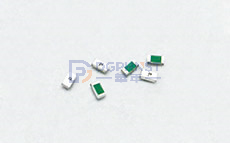
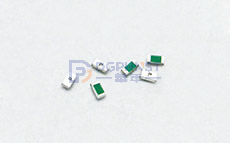
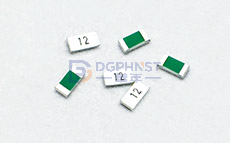
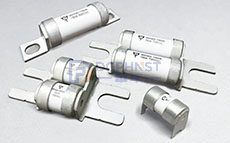
Huade alloy resistors play a key role in precision current detection and power management circuits, and their core advantages are closely related to the selected resistor material. To help you quickly understand, the following table summarizes the main materials and core characteristics of Wald alloy resistors.
|Material category | Main characteristics | Typical series/model identification | Common packaging and power|
|MnCu alloy | Low temperature coefficient, high stability, good long-term reliability | HTE series (such as HTE2512M3W...), STE series | 0402, 2512, 3921, etc., with power coverage ranging from 0.33W to 3W|
|Metal ceramics | High temperature resistance, corrosion resistance, excellent stability | STE series | 0805, 2512, etc|
|Iron chromium aluminum (FeCrAl) | High temperature resistance, strong oxidation resistance | MSH series | 2512, etc|
|Copper alloy | Good conductivity, commonly used in resistor bodies or terminal electrodes | Multiple series (as structural materials) | Commonly used in various packaging sizes|
Material characteristics and selection application
Understanding the characteristics of different materials can help you make accurate selections for Huade alloy resistors in practical projects.
Manganese copper alloy is one of the most common materials in Ward alloy resistors. Its biggest advantage is its extremely low temperature coefficient (which can be as low as ± 50PPM/℃), which means that the fluctuation of resistance value with changes in ambient temperature is very small. Therefore, it is highly suitable for applications in fields that require extremely high measurement accuracy and long-term stability, such as battery management systems (BMS) for new energy vehicles, industrial servo drives, and high-precision power modules.
Metal ceramic materials combine the conductivity of metals with the stability of ceramics, and have good high-temperature and corrosion resistance characteristics. Huade alloy resistors made of this type of material can operate stably within a harsh temperature range of 55 ℃ to 170 ℃ or even wider, and are often used in reliability oriented scenarios such as automotive electronics and industrial control.
Iron chromium aluminum material is known for its excellent high temperature resistance and oxidation resistance. This type of resistor is suitable for working in high temperature, high load, or environments with oxidation risks, providing stable performance.
In addition, copper alloy is often used as a part of the resistor body or terminal electrode material, utilizing its excellent conductivity to reduce the parasitic inductance and impedance of the resistor as a whole and optimize high-frequency performance.
Selection Guide
When choosing the material of Wald alloy resistors, you can refer to the following points:
Pursuing high precision and stability: Prioritize models made of manganese copper alloy (MnCu), especially HTE, STEM and other series.
High temperature or harsh working environment: Resistors made of metal ceramics or iron chromium aluminum (FeCrAl) materials can be considered.
High frequency or high current scenarios: Pay attention to selecting models with copper containing end electrodes, wide electrodes, or low parasitic inductance designs.
I hope the above introduction to the Huade alloy resistor material can be helpful to you. If you can provide specific application scenarios such as power supply, detection current, or working environment, I can offer you more specific model references.
HNST WELCOME! 0755-23173910
English |中文

Cart
{{cartCount}}
你当前的浏览器版本过低或不支持。请升级或更换浏览器。推荐浏览器 Chrome Edge。