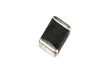
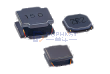
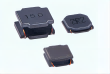
As a key component in circuits, the performance of surface mount inductors largely depends on the materials used. Different materials determine the differences in frequency response, current carrying capacity, and stability of inductors. The following will introduce several mainstream surface mount inductor materials and their characteristics.
Ferrite material is one of the most widely used surface mount inductor materials. It is mainly composed of iron oxides and other metal oxides, and has high magnetic permeability and electrical resistivity. Surface mount inductors made of this type of material can effectively suppress high-frequency interference with minimal loss, making them commonly used in high-frequency circuits such as power filtering and signal processing. Its advantage is that the cost is relatively economical, but the saturation magnetic flux density is usually low.
Ceramic material is another important type of surface mount inductor material. It is based on non-magnetic ceramics and is characterized by a high quality factor (Q value) and a high self resonant frequency. Surface mount inductors made of ceramic materials exhibit excellent stability at high frequencies, with small parasitic capacitance, making them highly suitable for applications such as RF circuits and high-frequency communication modules that require high frequency accuracy.
Metal alloy powder materials have become increasingly popular in recent years. This type of material is usually made into fine powders of metal alloys such as iron, silicon, nickel, etc., and pressed into magnetic cores through insulation treatment. The chip inductor made from this has higher saturation current and smoother saturation characteristics, and lower DC resistance. They are very suitable for applications that require handling large currents, such as energy storage and choke in power conversion circuits.
In addition, there are composite materials that combine magnetic materials with polymers to provide balanced performance within a specific frequency range, while also balancing flexibility and customizability.
In summary, selecting the appropriate material for surface mount inductors requires comprehensive consideration of the circuit's operating frequency, current requirements, and space limitations. Ferrite materials are suitable for general high-frequency filtering, ceramic materials specialize in high-frequency precision applications, and metal alloy materials are suitable for high current scenarios. Understanding these material differences can help select the most suitable surface mount inductors for specific designs.
HNST WELCOME! 0755-23173910
English |中文

Cart
{{cartCount}}
你当前的浏览器版本过低或不支持。请升级或更换浏览器。推荐浏览器 Chrome Edge。