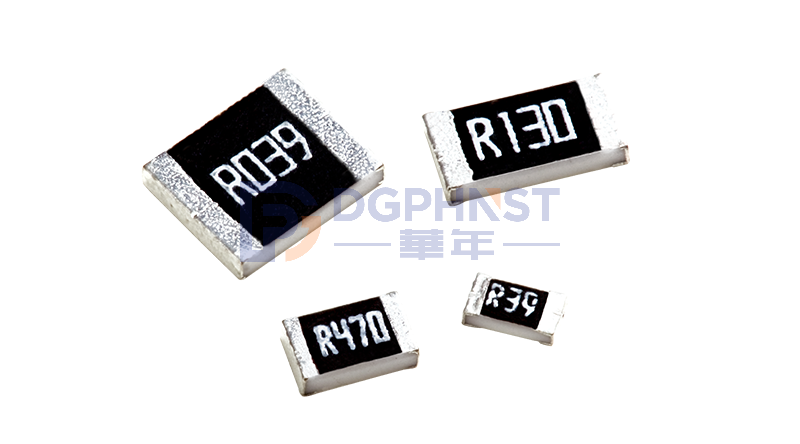
When many engineers first start designing PCBs, they often consider chip resistors as the simplest components, thinking that as long as the resistance value is correct and the packaging is selected, it can be simply pasted onto the board. However, in the actual process of product development and mass production, the problems that arise around surface mount resistors are often the most headache inducing: either inaccurate signals are found during on-board debugging, or the product inexplicably fails after working for a period of time, and even a large number of virtual soldering occurs during mass production.
At this point, you will realize that surface mount resistors are not isolated standard components, and their selection, use, and troubleshooting require a lot of technical support. This support not only comes from the technical documentation of the original factory, but also from the professional services provided by the supply chain.
Technical support intervention is needed during the selection stage
Many engineers usually only focus on resistance and packaging when selecting surface mount resistors. But in practical applications, these core parameters often determine the success or failure of the product:
Matching power and withstand voltage. The same 0805 packaged chip resistor has a conventional power of 1/8W, but some manufacturers offer power boosting models that can reach 1/4W. If there is a current surge in your circuit, selecting the wrong one can cause the resistor to overload and heat up. The role of technical support in this stage is to help you calculate the actual power consumption and recommend the appropriate rated power (usually with a margin of 1.52 times).
The trade-off between accuracy and temperature drift. In precision measurement circuits or power feedback loops, ordinary ± 5% precision chip resistors may cause excessive output voltage deviation. At this point, technical support is needed to intervene and help you screen out models with ± 0.1% accuracy or low-temperature drift (TCR<± 25ppm/℃) from a massive product line.
Mechanical and thermal effects of packaging. Surface mount resistors with different packaging not only have different sizes, but also have different resistance to soldering thermal shock. If the PCB board thickness is large or requires multiple reflow soldering, technical support will recommend that you choose a model with stronger resistance to electrode peeling.
The threshold of invisible technology in production and manufacturing
The chip resistor has been put on the production line, and the real test has just begun. At this point, the value of technical support is reflected in solving various process problems:
Solder pad design and monument phenomenon. If the PCB pad design is asymmetric and the surface mount resistor is unevenly heated during reflow soldering, one end will melt first and pull the component up, forming a monument. Technical support can provide accurate pad size recommendations, such as pad length, width, and spacing for 0402 packaging.
Sulfurization and corrosive environment. If your product is used in environments with poor air quality (such as industrial areas or near hot springs), sulfides in the air will react with the silver electrode inside the chip resistor, generating non-conductive silver sulfide and causing the resistor to open circuit. At this point, technical support will recommend using sulfur resistant surface mount resistors, or suggest applying three proof paint.
Mechanical stress and cracking. PCB will bend during the assembly process, and if the surface mount resistor is installed at the stress point, the ceramic substrate is prone to cracking. The technical support engineer will conduct a mechanical analysis and suggest that you adjust the layout to avoid placing sensitive resistors near the panel connections or screw fixing holes.
Common failure analysis cannot be separated from technical support
When a product malfunctions, conducting a failure analysis of the surface mount resistor is the key to identifying the problem. Technical support in this area usually requires professional equipment and experience:
Electrical overload (EOS) damage. If the surface mount resistor is subjected to instantaneous high voltage or high current impact, the resistor will be damaged or even melted. By observing the damage morphology under a microscope, technical support can determine whether it is caused by lightning strikes, static electricity, or continuous circuit overload.
Welding cracks. Repeated temperature changes (thermal cycling) can cause solder joints to crack due to mismatched coefficients of thermal expansion. Technical support can determine whether the crack starts from the solder or the resistor body through slice analysis, thereby improving the welding process or material.
Migration and corrosion. When working with electricity in a humid environment, the electrode metal may undergo ionization migration, leading to leakage or short circuit. This kind of failure at the microscopic level can only be accurately characterized by technical support using scanning electron microscopy and energy spectrum analysis.
A reliable source of technical support: the value of suppliers
Since surface mount resistors involve so many technical details, where can we obtain these professional supports? In addition to the original factory, professional component suppliers play a key role.
In Shenzhen, Shenzhen Shunhai Technology Co., Ltd. is a noteworthy spot supplier. They have been deeply involved in the field of passive components such as surface mount resistors for many years. Not only can they provide a stable source of goods, but more importantly, their technical team can assist customers in selection matching and problem troubleshooting. When you face BOM optimization, discontinuation replacement, or unknown chip resistor failure issues, they can provide recommendations based on practical application cases to help R&D engineers avoid detours.
Huanian Mall is an efficient online platform for sample requests and small batch purchases during the research and development phase. It is associated with Shunhai Technology and focuses on meeting the immediate needs of engineers. On this platform, you can quickly retrieve various specifications of chip resistor technology parameters, package sizes, and view real-time inventory and prices. For engineers who urgently need to verify their designs, Huanian Mall simplifies the procurement process and makes the front-end of technical support - obtaining samples and information - smoother.
Conclusion
Overall, using surface mount resistors is not just about soldering components onto them. From the initial selection calculation, to the process adaptation in production, to the later failure analysis, every step may require professional technical support intervention.
Choosing a reliable supplier is not just about buying components, but also about buying a technical guarantee. Whether it's the in-depth technical services provided by Shenzhen Shunhai Technology Co., Ltd. or the convenient online support brought by Huanian Mall, they are both strong backing to ensure that the surface mount resistors in your hands can work stably and reliably.