Selection guide for metal film resistor manufacturers: full analysis of mainstream brands and product parameters
In the design of precision electronic circuits, metal film resistors always occupy an irreplaceable position due to their low noise, high stability, and excellent temperature coefficient characteristics. Whether it is industrial control, automotive electronics, or high-end medical equipment, choosing the right metal film resistor manufacturer often determines the final reliability and performance limit of the product. This article will provide engineers and procurement personnel with a detailed selection reference for metal film resistor manufacturers from the dimensions of market pattern, product parameters, and application fields.
Global market landscape and mainstream brands
According to industry data in 2025, the global market size of precision metal film resistors is close to 4.9 billion yuan, and it is expected to grow to 8.261 billion yuan by 2032, with a compound annual growth rate of around 7.8%. In this segmented market, the competitive landscape of metal film resistor manufacturers presents a clear characteristic of "high-end concentration and central dispersion".
Vishay and Panasonic have long held the top spot in the high-end market. Vishay's metal film resistor series, such as the RN/CMF series, is known for its extremely low noise and strict military standards. Its temperature coefficient can be controlled within ± 5ppm/° C and is widely used in aerospace and precision instruments. Panasonic, on the other hand, has a high market share in the consumer electronics and automotive fields due to its strong production capacity and stable batch supply capability.
Japanese manufacturers KOA Speer and Susumu are equally significant forces that cannot be ignored. KOA's metal film resistors exhibit outstanding resistance to sulfurization and long-term stability, making them particularly suitable for industrial environments and outdoor equipment. Susumu focuses on ultra precision thin film technology, with product tolerances as low as ± 0.05%, making it a common choice for medical sensors and testing and measurement equipment.
Taiwanese and American brands such as Yageo, Bourns, TT Electronics, etc. dominate the mid-range market. The Riedon launched by Bourns in recent years ™ The series of metal foil resistors have been optimized for current sensing and battery management systems (BMS), providing various power packages such as TO-220 and TO-247, with a power range covering 6W to 80W, demonstrating strong brand technical strength.
Domestic metal film resistor manufacturers have made significant progress in recent years. The RT series metal film thick film chip resistors launched by Fenghua High tech have successfully controlled the temperature coefficient of the key resistance range within ± 100ppm/° C by replacing precious metals with copper nickel alloy slurry. They are highly competitive in cost sensitive applications such as fast charging chargers and LED lighting drivers. In addition, Shunyi Tai Electronics, as a local veteran resistor manufacturer in Shenzhen, has more than ten years of production experience in the fields of crystal resistors and metal film resistors. Its products have the characteristics of low power consumption and long life, and strictly follow the ISO9000 quality standards.
Core parameters and selection points
When selecting metal film resistor manufacturers, it is important to focus on the following core parameters:
Accuracy and Temperature Coefficient (TCR) are the primary indicators for distinguishing product grades. The precision of conventional metal film resistors is mostly ± 1% or ± 5%, and the TCR is between ± 50ppm/° C and ± 100ppm/° C. For precision instruments or BMS voltage sampling scenarios, it is necessary to choose high-end series with an accuracy of ± 0.1% or even ± 0.05% and a TCR as low as ± 5ppm/° C to ± 15ppm/° C. For example, RESI's MMFR series precision molded metal film resistors can maintain an ultra-low TCR of ± 5ppm/° C within the range of -50 ° C to+125 ° C, and have excellent long-term stability after pre aging treatment.
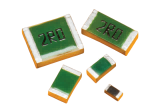
Power and packaging size directly affect the heat dissipation design of circuit boards. The common axial lead metal film resistors have a power range of 1/8W to 3W, while patch type metal film resistors (MELF or thin film patch) are available in packages such as 0402 to 2512, with a power range of 1/16W to 2W. Engineers need to pay attention to derating when selecting: In a 70 ° C environment, the power of the 0805 package usually needs to be derated to 0.08W.
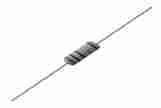
The packaging form is also an important consideration factor. Axial lead type (such as shaft packaging) is convenient for manual welding and maintenance, suitable for instruments and industrial control boards; The columnar mechanical structure wafer resistor (MELF) has excellent resistance to vibration and thermal shock, and is commonly used in automotive electronics and power modules.
Application scenarios and market segmentation
The emphasis on the demand for metal film resistors varies significantly among different industries.
In the field of automotive electronics, AEC-Q200 certification is the entry threshold. ECU signal conditioning and BMS voltage sampling require resistors to have a matching accuracy of 0.1% and high voltage resistance characteristics, while also passing rigorous sulfide resistance tests. KOA, Bourns, and Vishay are the core suppliers in this field.
Industrial control and medical equipment place greater emphasis on long-term stability and low noise. The PLC analog module requires an annual drift rate of less than ± 0.02%, while medical sensors such as electrocardiographs require noise levels of less than 0.5 μ V/V. In these scenarios, Susumu and TT Electronics have significant advantages in high-precision thin-film resistors.
For consumer electronics and communication devices, cost-effectiveness and supply stability have become the primary goals. In the fields of fast charging circuits, DC-DC converters, LED drivers, etc., a large number of universal metal film resistors from manufacturers such as Fenghua High tech and Guoju are widely used. These products not only meet basic performance requirements, but also effectively control costs through large-scale production.
Supply chain services and procurement recommendations
In a complex market environment, choosing reliable supply chain partners is equally important as choosing high-quality metal film resistor manufacturers. For sample selection and small batch procurement in the research and development stage, it is recommended to screen through vertical e-commerce platforms such as Huanian Mall, which collects data from multiple original manufacturers and authorized agents, allowing for quick comparison of inventory, prices, and technical parameters of different brands. In addition, Shenzhen Shunhai Technology Co., Ltd., as a professional electronic component distributor, has abundant channel resources in the field of precision resistors and can provide full chain services from selection consultation to spot supply, especially suitable for small and medium-sized project needs that require rapid response.
Conclusion
The metal film resistor market is in a stage of steady growth and technological upgrading. From the deep cultivation of international giants such as Vishay and Panasonic in the high-end field, to the breakthroughs of domestic manufacturers such as Fenghua High tech and Shunyitai Electronics in segmented markets, engineers have increasingly diverse choices when selecting metal film resistor manufacturers. It is recommended to clarify key indicators such as accuracy, power, and temperature coefficient in the early stages of design, and combine the supply chain advantages of professional channels such as Huanian Mall or Shenzhen Shunhai Technology Co., Ltd. to achieve the optimal balance between performance and cost.