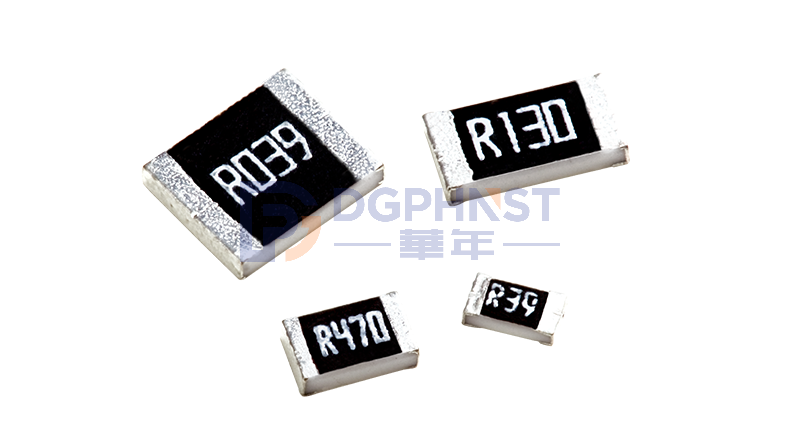
In-depth Analysis of 3920 0.00025R(2.5m Ohm) 12W High-Precision, Surge-Tolerant Manganin Shunt Chip Resistor
In modern electronic circuit design, the accuracy and reliability of current sensing and power management directly determine the overall system performance. The 3920 0.00025R(2.5m Ohm) 12W metal shunt chip resistor stands out as an ideal choice for demanding applications thanks to its outstanding electrical characteristics and material technology. The full part number ESR39F12W0M25M02G defines the package, resistance value, power rating, and tolerance, while the core parameter combination 3920 0.00025R(2.5m Ohm) 12W embodies a perfect balance of ultra-low resistance, high power handling capability, and minimal temperature drift. The following sections provide a detailed introduction from the perspectives of product parameters, material advantages, environmental compliance, and typical applications.
1. Core Parameters and Technical Advantages
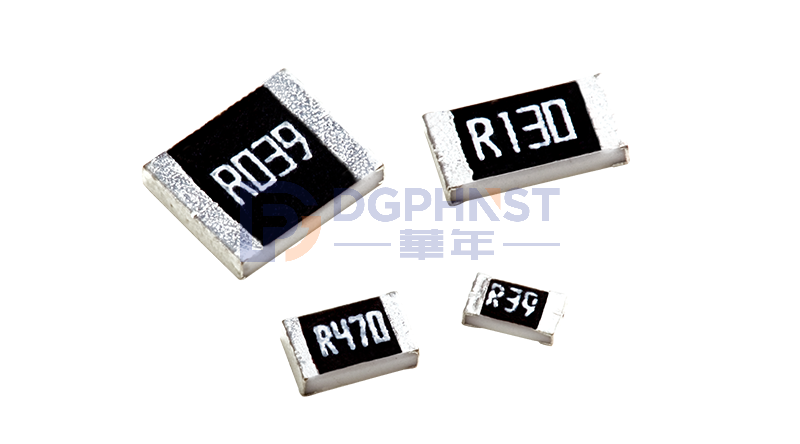
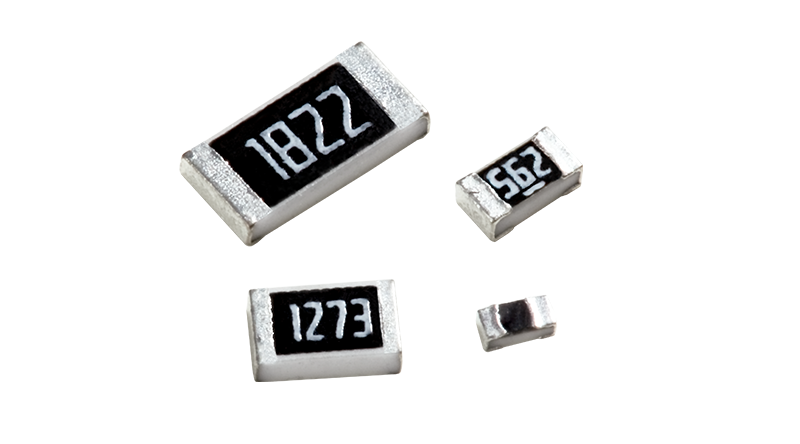
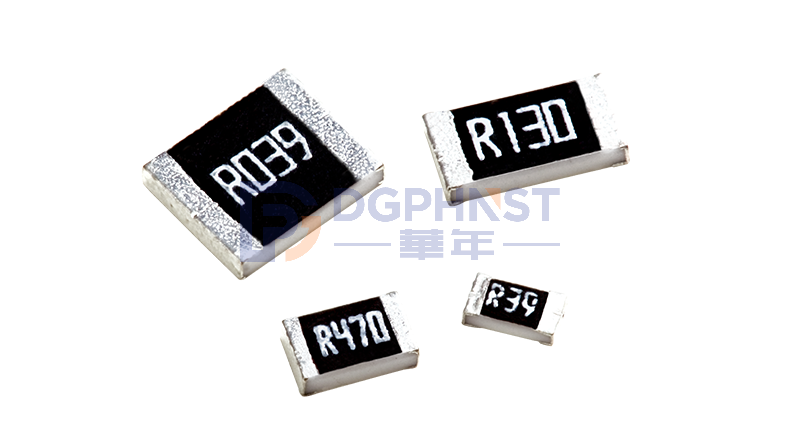
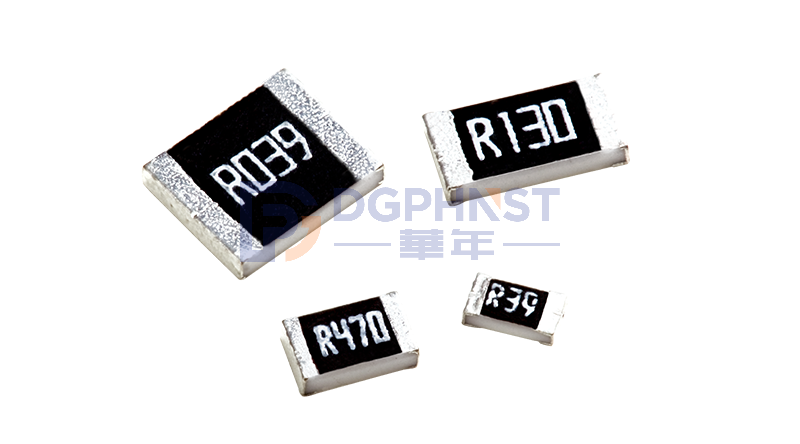
The 3920 0.00025R(2.5m Ohm) 12W adopts the standard 3920 imperial package (10.0mm × 5.0mm × ~2.5mm), achieving 12W rated power dissipation within a compact footprint. Its nominal resistance is 0.00025Ω (i.e., 2.5mΩ) with a tolerance of ±1%, meeting the stringent error requirements for precision current sampling. The operating temperature range typically spans from -55℃ to +170℃, with excellent stability across the entire range.
One of the most prominent features is its low temperature coefficient (low TCR). Conventional thick‑film or metal‑film resistors exhibit significant resistance variations with temperature, whereas the 3920 0.00025R(2.5m Ohm) 12W leverages the low TCR of manganin (MnCu) alloy (typically ≤50ppm/℃), making resistance changes extremely small with temperature. This means that in heat‑generating environments such as motor drives or power modules, the sampling signal remains highly linear, eliminating the need for additional compensation circuits to achieve high‑precision current detection.
“High precision” is not only reflected in the ±1% initial tolerance but also in long‑term load stability. Through optimized electrode structures and internal soldering processes, the resistance drift after thousands of hours of aging at rated power is kept very low. Furthermore, its “strong surge tolerance” originates from the good thermal conductivity of manganin and uniform current distribution, allowing it to withstand instantaneous high‑current surges (e.g., inductive load switching, capacitor charging transients) without local overheating that could lead to open circuits or abrupt resistance changes.
2. Manganin (MnCu) Material and Structural Design
The core conductive material of this product is manganin (MnCu) alloy, a copper‑manganese‑nickel precision resistance alloy. Compared to constantan, manganin has an extremely low thermal EMF against copper, and its temperature coefficient of resistance can be adjusted to near zero over a wide temperature range. The 3920 0.00025R(2.5m Ohm) 12W is manufactured by etching or stamping a metal plate, forming a flat rectangular current path, and then laser‑trimmed to the target resistance value. The entire resistor body consists of a manganin alloy sheet welded to copper electrodes on both sides, covered with a protective coating against moisture and contamination.
As a metal shunt chip resistor, its structure inherently supports a four‑terminal Kelvin sensing approach – high current flows through the two main end electrodes, while voltage can be sensed from the inner side of the manganin strip (with appropriate PCB layout). With a resistance of only 2.5mΩ, the rated current at 12W is I = √(P/R) = √(12/0.0025) ≈ 69.3A, and short‑term overload capability can be several times higher. Such high current demands wide copper traces, and the low resistance of 3920 0.00025R(2.5m Ohm) 12W helps minimise its own conduction losses, directing most of the energy to the load.
3. Environmental Compliance: RoHS, REACH, Lead‑Free
Modern electronics manufacturing imposes increasingly strict environmental requirements. The 3920 0.00025R(2.5m Ohm) 12W fully complies with the RoHS directive (2011/65/EU and its amendments), with contents of lead, mercury, cadmium, hexavalent chromium, PBB, and PBDE all below the limits. It also meets the REACH regulation (EC 1907/2006) regarding Substances of Very High Concern (SVHC), containing no candidate list substances above 0.1% concentration.
“Lead‑free and environmentally friendly” is reflected in the electrode finish, which uses lead‑free coatings such as tin (Sn) or silver (Ag), ensuring no lead contamination during reflow soldering and complying with IEC 61760-1. Moreover, no halogenated flame retardants are added during production, making waste disposal safer. For companies exporting to markets with strict environmental regulations (EU, USA, Japan, etc.), selecting this resistor facilitates whole‑product environmental certification and avoids regulatory risks.
4. Practical Significance of Low TCR and High Precision
Low TCR (low temperature coefficient) is a key indicator of resistance accuracy. Taking the 3920 0.00025R(2.5m Ohm) 12W as an example, with a TCR of 50ppm/℃ and a temperature rise from 25℃ to 125℃ (ΔT=100℃), the resistance change is only 0.005%, i.e., 2.5mΩ × 0.005% = 0.125μΩ – virtually negligible. For systems monitoring tens of amperes, such drift introduces measurement errors far smaller than the ±1% tolerance itself. Thus, this resistor is particularly suitable for high‑side or low‑side current sensing in battery management systems (BMS), inverters, and DC‑DC converters.
High precision also guarantees excellent consistency in mass production. Each 3920 0.00025R(2.5m Ohm) 12W undergoes 100% automated testing before shipment, screening out units whose resistance deviates more than ±1% from the centre value. Users do not need to calibrate each resistor after assembly, greatly improving production efficiency.
5. Surge Tolerance and Reliability
Surge currents often originate from capacitor charging at power‑up, load transients, or electrostatic discharge. Conventional thick‑film resistors concentrate heat in small spots and can be destroyed within microseconds by a surge. In contrast, the monolithic manganin structure of the 3920 0.00025R(2.5m Ohm) 12W offers a larger heat capacity and extremely low bulk resistivity, allowing surge energy to be uniformly absorbed and quickly conducted to the solder pads and PCB copper foil. Verified by IEC 61000-4-5 surge testing (8/20μs waveform, 500A peak current), the resistance change is less than 0.5% with no physical damage.
This surge tolerance is critical for high‑reliability applications such as automotive electronics (e.g., DC motor drives), industrial equipment (e.g., servo drives), and telecom base station power supplies. Furthermore, its excellent sulfur resistance (verified by ASTM B809) ensures long‑term stable operation in harsh environments like coal mines or chemical plants.
6. Typical Applications and Selection Advice
The 3920 0.00025R(2.5m Ohm) 12W is primarily used in:
-
Lithium‑ion battery protection boards (BMS): monitoring charge/discharge currents, collaborating with analog front‑ends for overcurrent and short‑circuit protection.
-
Server power modules (VRM): accurately measuring CPU/GPU core supply currents for dynamic load balancing.
-
Power tools and drones: real‑time motor phase current sensing to prevent stall overheating.
-
New energy vehicle auxiliary systems: input/output current sampling in DC‑DC converters and on‑board chargers (OBC).
Regarding PCB layout, Kelvin connection is strongly recommended: wide traces for the current path from the outer sides of the pads, and narrow sense traces from the inner sides to avoid introducing parasitic resistance. To ensure 12W heat dissipation, the PCB should provide sufficient copper area and thermal vias; derating is required when the ambient temperature exceeds 70℃.
7. Conclusion
In summary, the 3920 0.00025R(2.5m Ohm) 12W metal shunt chip resistor (ESR39F12W0M25M02G), with its manganin‑based low TCR, high precision, strong surge tolerance, and 12W high power density, is a preferred component for modern current sensing solutions. It fully meets RoHS, REACH, and lead‑free environmental requirements, supporting global green manufacturing trends. Whether in consumer electronics, industrial control, or automotive electronics, this product enables engineers to design more compact, efficient, and reliable circuits with stable performance. If you are looking for a precision current‑sensing resistor combining a small package, ultra‑low resistance, and high power rating, the 3920 0.00025R(2.5m Ohm) 12W is a trustworthy choice.