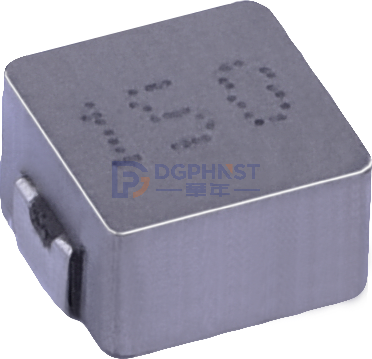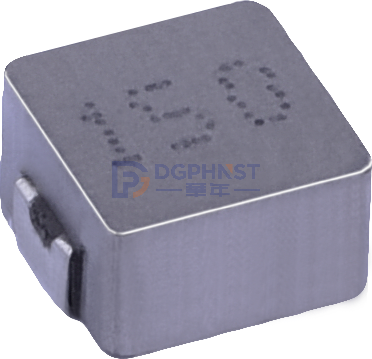
Product Introduction: 2512 0.0015R (1.5m Ohm) 6W 1% ESR25F6W1M50M04G Metal Shunt Chip Resistor
In the fields of precision current sensing and power management, the performance of a resistor directly determines system stability and reliability. This article provides a detailed introduction to the 2512 0.0015R (1.5m Ohm) 6W metal shunt chip resistor (model: ESR25F6W1M50M04G), a professional-grade product designed for high-power, high-accuracy applications. Utilizing advanced manganese‑copper (MnCu) alloy material combined with a 2512 large‑package process, it achieves extremely low resistance, high power handling, and excellent temperature stability. The following sections comprehensively analyze its technical parameters, material characteristics, environmental compliance, performance advantages, and application scenarios.
1. Model and Package Decoding
The model ESR25F6W1M50M04G follows industry naming conventions. “ESR” denotes the product series; “25” indicates the 2512 package (imperial size, metric 6432: 6.4mm × 3.2mm); “F” means tolerance of ±1%; “6W” explicitly specifies a rated power of 6 watts; “1M50” represents a resistance of 1.50 milliohms (“M” acts as a decimal substitute, i.e., 1.50mΩ); “M04G” likely refers to internal manufacturing or packaging codes. This 2512 0.0015R (1.5m Ohm) 6W resistor adopts a metal shunt structure, offering significantly improved current‑carrying capacity and heat dissipation compared to conventional thick‑film or thin‑film resistors.
2. Detailed Electrical Parameters
2.1 Resistance and Power Rating
The 2512 0.0015R (1.5m Ohm) 6W has a nominal resistance of 0.0015Ω (1.5 milliohms), falling into the ultra‑low resistance category. At 6W rated power, according to P = I² × R, the maximum continuous current is I = √(6W / 0.0015Ω) ≈ 63.2 amperes. Such high current capability makes it ideal for current sensing in power modules, battery management systems (BMS), and motor drives. Moreover, the large 2512 package pads and metal shunt structure effectively reduce thermal resistance, ensuring that temperature rise at 6W remains within safe limits.
2.2 Tolerance and Accuracy
The product achieves ±1% accuracy, which is considered high precision for milliohm‑range resistors. Low‑value resistors are susceptible to parasitic lead and solder contact resistances; however, the 2512 0.0015R (1.5m Ohm) 6W can further eliminate measurement errors when used with a four‑wire Kelvin connection (if the application design supports it). The 1% tolerance ensures consistent current‑sensing performance across mass production, meeting the stringent requirements of industrial and automotive applications.
2.3 Temperature Coefficient and Low Temperature Drift
Thanks to the low resistance temperature coefficient (TCR) of manganese‑copper (MnCu) alloy, the typical temperature drift of this resistor can be as low as ±50 ppm/°C or even lower. This means that over an ambient temperature range of -40°C to +125°C, the resistance change is less than 0.5%. For equipment that requires stable operation over a wide temperature range (e.g., EV charging stations, outdoor telecom power supplies), the low drift property of the 2512 0.0015R (1.5m Ohm) 6W is critical to maintaining current‑measurement accuracy.
3. Material and Structural Advantages
3.1 Manganese‑Copper (MnCu) Alloy
MnCu is a precision resistance alloy based on copper with additions of manganese and nickel. It features moderate resistivity, extremely low TCR, and low thermal EMF against copper. Compared to common constantan, MnCu offers superior long‑term stability over a wide temperature range. The 2512 0.0015R (1.5m Ohm) 6W uses high‑purity MnCu alloy as the main shunt body, and precise rolling and etching processes define the exact resistance value. This material also exhibits excellent corrosion resistance, maintaining stable resistance even in humid or sulfur‑containing environments.
3.2 Metal Shunt Structure
Unlike the thick‑film printing process of chip resistors, a metal shunt resistor uses a solid alloy plate as the resistive element. This eliminates thermal expansion mismatch between a ceramic substrate and the resistive layer, while significantly increasing thermal capacitance and heat‑dissipation area. The metal plate of the 2512 0.0015R (1.5m Ohm) 6W is connected to the end electrodes via laser welding or high‑temperature fusion, resulting in extremely low contact resistance. When subjected to transient surge currents, the entire metal plate heats uniformly, preventing localized hot spots that could lead to failure.
3.3 Surge Handling Capability
Due to the uniform bulk resistance and high thermal inertia of the MnCu plate, this resistor exhibits excellent surge handling capability. During abnormal events such as short circuits, lightning strikes, or inductive load switching, transient currents can reach hundreds of amperes. The 2512 0.0015R (1.5m Ohm) 6W can withstand energy pulses far exceeding its rated value for microseconds without open‑circuit failure or resistance drift. This is enabled by the very low inductance (typically <5 nH) and thermal capacity design of the metal shunt.
4. Environmental Compliance and Certifications
This product fully complies with RoHS (Restriction of Hazardous Substances) and REACH (Registration, Evaluation, Authorization and Restriction of Chemicals) requirements, and is explicitly marked as “lead‑free and environmentally friendly.” Specifically:
-
RoHS: No use of lead, mercury, cadmium, hexavalent chromium, PBBs, PBDEs, or other ten hazardous substances. The termination plating uses pure tin or nickel‑tin alloy, with a mature lead‑free process.
-
REACH: The content of Substances of Very High Concern (SVHC) is below 0.1% by mass, and a complete SVHC declaration is available.
-
Lead‑free: The entire production process uses lead‑free solders and materials, aligning with the green electronics trend. Reflow soldering peak temperature is compatible with 260°C (per J‑STD‑020).
For markets with strict environmental regulations (EU, USA, Japan, etc.), the 2512 0.0015R (1.5m Ohm) 6W can be supplied with RoHS test reports, REACH declarations, and material composition sheets to simplify customer compliance verification.
5. Value of High Accuracy and Low Drift in Applications
5.1 Battery Management Systems (BMS)
In EV or energy storage BMS, real‑time monitoring of charge/discharge current is required to calculate state of charge (SOC) and protect the battery pack. The 1% accuracy and low drift of the 2512 0.0015R (1.5m Ohm) 6W keep sampling errors under control even at -20°C or 60°C. Its 6W power rating supports continuous measurement of tens of amperes, while the shunt structure ensures reliable connections under long‑term vibration.
5.2 Power Modules and DC‑DC Converters
Modern switching power supplies require current‑sense resistors with minimal parasitic inductance to avoid destabilizing the current control loop. The metal shunt structure of the 2512 0.0015R (1.5m Ohm) 6W provides very low inductance (typically <2 nH), making it well‑suited for high‑frequency operation. Its surge immunity also protects against in‑rush currents during power‑up.
5.3 Motor Drives and Inverters
In industrial VFDs or servo drives, phase current sensing often involves high common‑mode voltages and sharp noise spikes. The low resistance of the 2512 0.0015R (1.5m Ohm) 6W reduces power loss and heating, while the MnCu material’s low susceptibility to electromagnetic fields improves the signal‑to‑noise ratio. Additionally, the 6W heat dissipation allows the resistor to be placed on compact power boards without extra heatsinks.
6. Packaging and Soldering Considerations
This resistor comes in a standard 2512 SMD package. Pad dimensions should follow IPC‑7351 recommendations. Because the 2512 0.0015R (1.5m Ohm) 6W has an extremely low resistance, a four‑wire Kelvin connection is the best practice to eliminate lead resistance errors. PCB layout should ensure that sense traces (Kelvin traces) originate directly from the inner side of the resistor pads, avoiding shared copper foil with the high‑current path. For reflow soldering, a peak temperature of 240–260°C for 10–30 seconds is recommended. Hand soldering should use a temperature‑controlled iron (≤350°C) and be completed within 3 seconds to avoid excessive heating that could stress the metal plate.
7. Summary
In summary, the 2512 0.0015R (1.5m Ohm) 6W metal shunt chip resistor (ESR25F6W1M50M04G), leveraging the low drift of MnCu material, high accuracy, and 6W high‑power design, demonstrates outstanding overall performance in current‑sensing applications. Its strong surge handling capability, lead‑free and RoHS/REACH compliance make it widely applicable in EV, industrial power, battery management, and motor drive fields. For design engineers seeking a stable, reliable, and cost‑effective current‑sensing solution, this 2512 0.0015R (1.5m Ohm) 6W resistor is a trustworthy choice—whether for new project selection or upgrading existing designs.