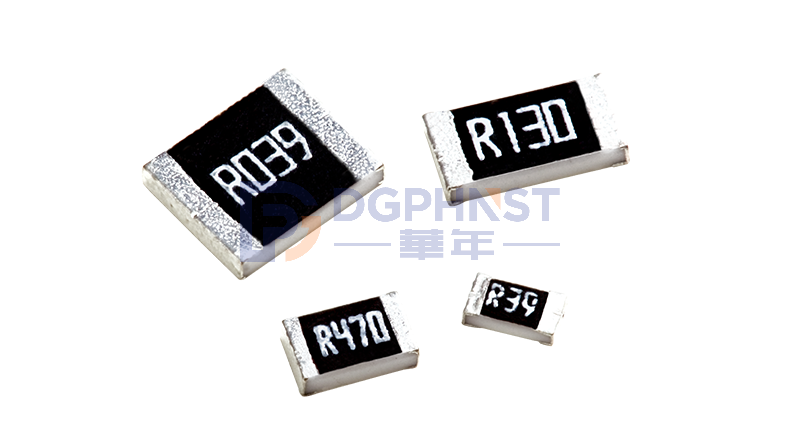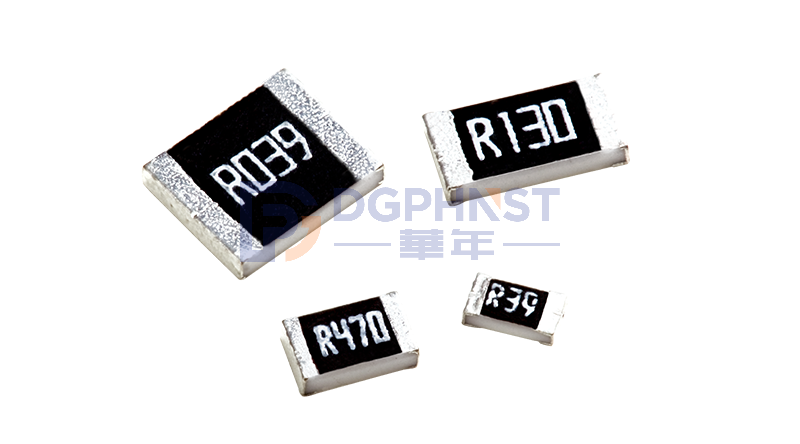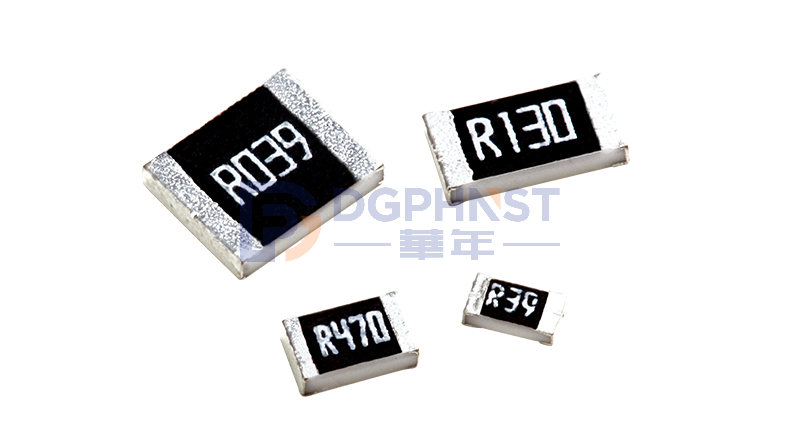
Four Common Structural Types of Alloy Resistors
- Thick-film Chip Type: Cost-effective with excellent versatility, the most mainstream conventional resistor on the market.
- Thin-film Chip Type: Higher precision and lower temperature drift, ideal for precision low-voltage electronic circuits.
- Solid Metal Plate Type: Constructed entirely from metallic material, featuring superior overload capacity and higher power dissipation.
- Kelvin Structure (Shunt Type): Specially designed with four terminals for accurate current sensing to eliminate measurement errors.
Thick-film Chip Resistors
1. Structural Features
The resistive layer of thick-film resistors can reach a thickness of 100 μm. Compared with thin-film counterparts, the thicker resistive film delivers superior shock resistance and overload tolerance, effectively preventing damage caused by instantaneous current surges.
Instead of pure metal, the core resistive element is made of specialized paste blended with metal oxides such as ruthenium dioxide and glass glaze. This composite material balances resistance stability and insulating protection to fit most civil and general industrial circuits.
2. Manufacturing Process
It adopts mature screen printing and high-temperature sintering: the prepared resistor paste is evenly printed onto the substrate via screen printing, followed by high-temperature sintering to tightly bond the film layer with the substrate. The finished product features robust structure and tight parameter consistency, suitable for mass manufacturing.
3. Disassembly of Five-layer Internal Structure
The internal layered structure follows standardized design with exclusive functionality for each layer:
① Sn Solder Plating (Electrode Layer): The outermost soldering terminal, securing the resistor firmly on PCB to avoid cold solder joint and detachment.
② Marking Layer: Printed characters and codes on component surface indicating resistance values for convenient model selection and circuit maintenance.
③ Cu Plating Layer (Inner Electrode / Current Spreading Layer): Connects solder layer and resistive body to conduct and disperse current, preventing local overheating from concentrated current and improving operational stability.
④ Alloy Plate (Core Resistive Body): The core functional layer implementing current limiting and voltage division, determining nominal resistance and power specifications.
⑤ Protective Coating: Envelops the core resistive body for insulation, moisture proofing, anti-oxidation and abrasion prevention, shielding the resistor from ambient interference and extending service life.
Kelvin-structure Alloy Resistors
1. Core Structure
Its most prominent distinction from standard resistors lies in four independent split terminals arranged in two pairs at both ends of the resistive body:
- Current terminals: exclusively for passing working current
- Voltage sense terminals: dedicated to collecting voltage signals
This separation design completely eliminates measurement errors induced by lead resistance and contact resistance, greatly improving current sampling precision, making Kelvin resistors indispensable core components for precision sensing circuits.
2. Core Resistive Material
To satisfy high-precision sampling requirements, Kelvin resistors abandon conventional paste and adopt high-grade precision resistance alloys like Manganin for core resistive bodies. Such materials deliver ultra-low temperature drift, outstanding resistance stability and superior linearity without resistance drift under long-duration operation.
3. Manufacturing Process
Based on proven solid metal plate resistor production, the terminal layout is optimized with precisely separated four-terminal design to fully isolate current path and sensing path, achieving enhanced structural accuracy and consistent electrical performance.
Closing Remarks
Despite compact dimensions, resistors form the backbone of stable circuit operation. Mastering the internal structures and working principles of different alloy resistors helps avoid improper component selection and boosts the stability and precision of end equipment.