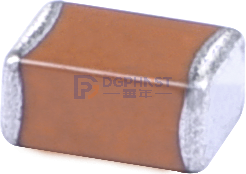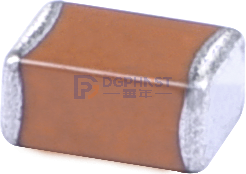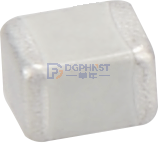
Over the past decade, the MLCC (Multi-Layer Ceramic Capacitor) sector has experienced two drastic price hike cycles spanning 2017–2018 and 2020–2021 respectively. The new industry boom cycle starting in 2026 differs fundamentally from the prior two in pricing drivers, supply-demand balance, market rhythm and industrial landscape. The MLCC industry has bid farewell to the extensive era marked by across-the-board price hikes for all specifications, entering a new phase of structural divergence where high-end products face supply shortages while prices for civil-grade items remain stable.
2017–2018: Universal Price Surge Across All Product Grades
This was the most dramatic upcycle in MLCC history, featuring widespread stock shortages, uniform price inflation and inventory hoarding across the entire industrial chain.
- Price Rise Triggers: Japanese manufacturers including Murata and TDK slashed low-end MLCC production capacity; rocketing demand for consumer electronics triggered bulk inventory stocking by distributors and depleted spot inventories.
- Shortage & Price Movement: General-purpose MLCC such as 0402/0603 form factors and standard thick-film resistors were in acute shortage. Spot prices jumped 200%~500%, with forward contract prices rising 20%~100%. Taiwanese and mainland Chinese manufacturers could not ramp up production rapidly to fill supply gaps; the Book-to-Bill (B/B) ratio topped 2.0, and overbooking & frantic stock chasing prevailed along the supply chain.
- Cycle Timeline & Profit Distribution: Prices started climbing in H2 2017, peaked in Q3 2018 before a downward correction, followed by industry-wide destocking in 2019. Distributors reaped substantial profits via speculative inventory flipping.
2020–2021: Pandemic Disruption + Emerging New Demand
Driven by pandemic impacts and emerging downstream demand, this round saw mild, structural price increases, with demand shifting from conventional consumer electronics toward 5G equipment and new energy vehicles (NEVs).
- Driving Factors: Overseas factory shutdowns and logistics bottlenecks amid global COVID outbreaks; work-from-home economy boosted demand for laptops and tablets alongside rising uptake of 5G and NEVs, leading to temporary supply-demand imbalance.
- Shortage & Pricing Performance: General-purpose MLCC saw limited tightness whereas automotive-grade and high-capacitance MLCC fell short of supply. Contract prices rose 10%~40%, and spot prices for scarce automotive-spec components doubled. Production capacity in Southeast Asia was constrained, with peak B/B ratio hitting 1.1~1.3; speculative bulk hoarding was absent in this cycle.
- Cycle Profit Allocation: The upturn ran from Q3 2020 to Q3 2021, followed by price declines in Q4 2021 on fading demand. Profit flows shifted from middleman traders to component makers and authorized distributors.
2026 Brand-New Cycle: Dual Growth Engines of AI & Automotive-Grade Applications
The MLCC industry embarks on a fresh prosperity cycle in 2026, breaking free from heavy reliance on consumer electronics as the core demand driver. Propelled by AI computing power and automotive electronics, the market features tight supply and rising prices for high-end products alongside steady supply & pricing for conventional civil-use MLCC.
- Demand Side Shift: Growth momentum concentrates on high-growth tracks. AI server deployment fuels explosive demand for high-capacitance MLCC; the rollout of 800V high-voltage NEV platforms spurs incremental consumption of automotive electronic parts. Additional demand expansion from photovoltaic energy storage, high-end industrial control and commercial aerospace, coupled with climbing prices of precious metal raw materials, further underpins high-end component pricing, while traditional consumer electronics no longer dominate market demand.
- Polarized Supply & Demand: AEC-Q200 automotive-certified products, large-capacitance high-end MLCC and power inductors face constrained availability. Leading suppliers including Murata lifted prices of premium products by 15%~35%. Abundant supply keeps regular civil MLCC prices edging up merely 5%~10%, with most part numbers holding flat quotations.
- Capacity Polarization: Japanese and Korean high-end production lines operate at 90%–95% utilization, with most output locked under long-term framework agreements with core customers. Long lead times for new fab construction hinder near-term capacity expansion, pushing the B/B ratio of high-end materials to 1.2~1.3. Oversupply persists for low-end products as manufacturers implement output adjustment based on real orders, resulting in an overall industry B/B ratio of 0.95~1.0 and balanced aggregate supply and demand.
The current tight supply for high-end components is projected to last through late 2026 into 2027. Speculative trading gradually fades out of the industry as inventory speculation ceases to be a viable profit model. Component manufacturers and professional distributors holding original factory authorization plus automotive and AI supply chain qualifications emerge as primary beneficiaries.
Closing Remarks
Reviewing the three pricing cycles over the past decade, the MLCC industry has undergone comprehensive transformation mainly reflected in three dimensions:
- Demand Evolution: Market demand has migrated from stock-centric mature markets of smartphones and home appliances, progressed to early-stage 5G and entry-level NEVs, and ultimately upgraded toward high-growth premium sectors of AI computing and high-voltage new energy vehicles.
- Pricing Pattern Transition: From indiscriminate sharp hikes across all specs in early cycles, to moderate structural uplifts in the middle stage, and finally to extreme market segmentation featuring robust high-end price growth and stable civil-grade pricing. Price volatility has evolved from speculative swings driven by supply-demand mismatches to value re-pricing rooted in scarce high-end manufacturing capacity.
- Profit Logic Upgrade: The profit model has transformed from windfall gains via distributor inventory speculation, to steady earnings for authorized manufacturer agents, and further advanced into a value-driven mode centered on high-end supply chain access and technical moat building. Speculation has been largely eliminated industry-wide, with technical competence, formal supply chain certification and core upstream resources becoming core competitive advantages.
Moving forward, sustained expansion of the AI computing industry and rising penetration of new energy vehicles will sustain the long-term high-end development logic of the MLCC sector. Overall cyclical volatility will keep weakening, and structural market segmentation will become the standard industry landscape in the coming years.