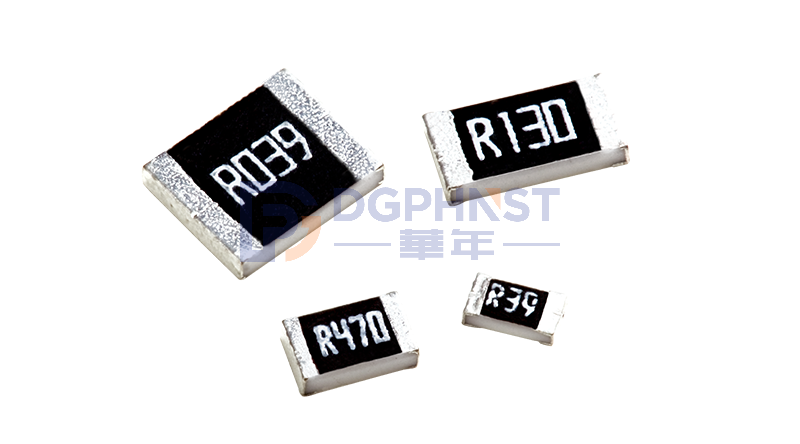
The Importance of Resistor Selection and Precision Control
In various electronic circuit designs such as precision instruments, industrial control equipment, sampling detection, and high-voltage circuits, resistor selection and precision control are core factors determining circuit performance.
Difference Between Ordinary Resistors and Precision Resistors
Ordinary surface-mount resistors with 5% accuracy commonly used in conventional circuits have simple digital codes and high recognizability. However, in high-precision circuit scenarios like precision sampling and instrument panels, they must be replaced with precision resistors with 1% or higher accuracy. These precision resistors follow specific IEC coding rules, which differ significantly from ordinary resistors in terms of coding logic.
To solve the challenges of component selection, Shunhai Technology has compiled a resistor value and precision quick reference table according to IEC standards, making it easy for users to quickly compare and find common values.
What is a Precision Resistor?
The core difference between precision resistors and ordinary resistors lies in their three key indicators: resistance tolerance, temperature coefficient, and parasitic parameters, all of which meet industry high-precision standards. They offer better thermal stability and smaller parasitic parameters, suitable for high-precision circuit conditions.
There are clear classification standards for resistance values: resistors with values above 1Ω, with a tolerance ≤±0.5%, are considered precision resistors, with top-tier accuracy reaching ±0.01% (ten-thousandth precision). For resistors below 1Ω, due to their small base value, the impact of tolerance is lower, and a tolerance ≤±1% can be classified as precision resistors, with ultra-high precision versions achieving within ±0.5%.
Common ±5% precision resistors in electronic products do not fall into the category of precision resistors.
Precision SMD Resistors VS Ordinary SMD Resistors
The most confusing point between the two is the marking code rules. The core differences lie in precision, marking format, and application scenarios:
1. Ordinary SMD Resistors (E24 Series, ±5% Accuracy)
- Precision Level: ±5%
- Marking Code: Three-digit pure numbers (the first two digits represent the effective resistance value, and the third digit represents the multiplier)
- Product Characteristics: Large standard resistance value intervals and high resistance deviation
- Applicable Scenarios: Basic current limiting, power filtering, and auxiliary voltage division in general circuits where precision is not required
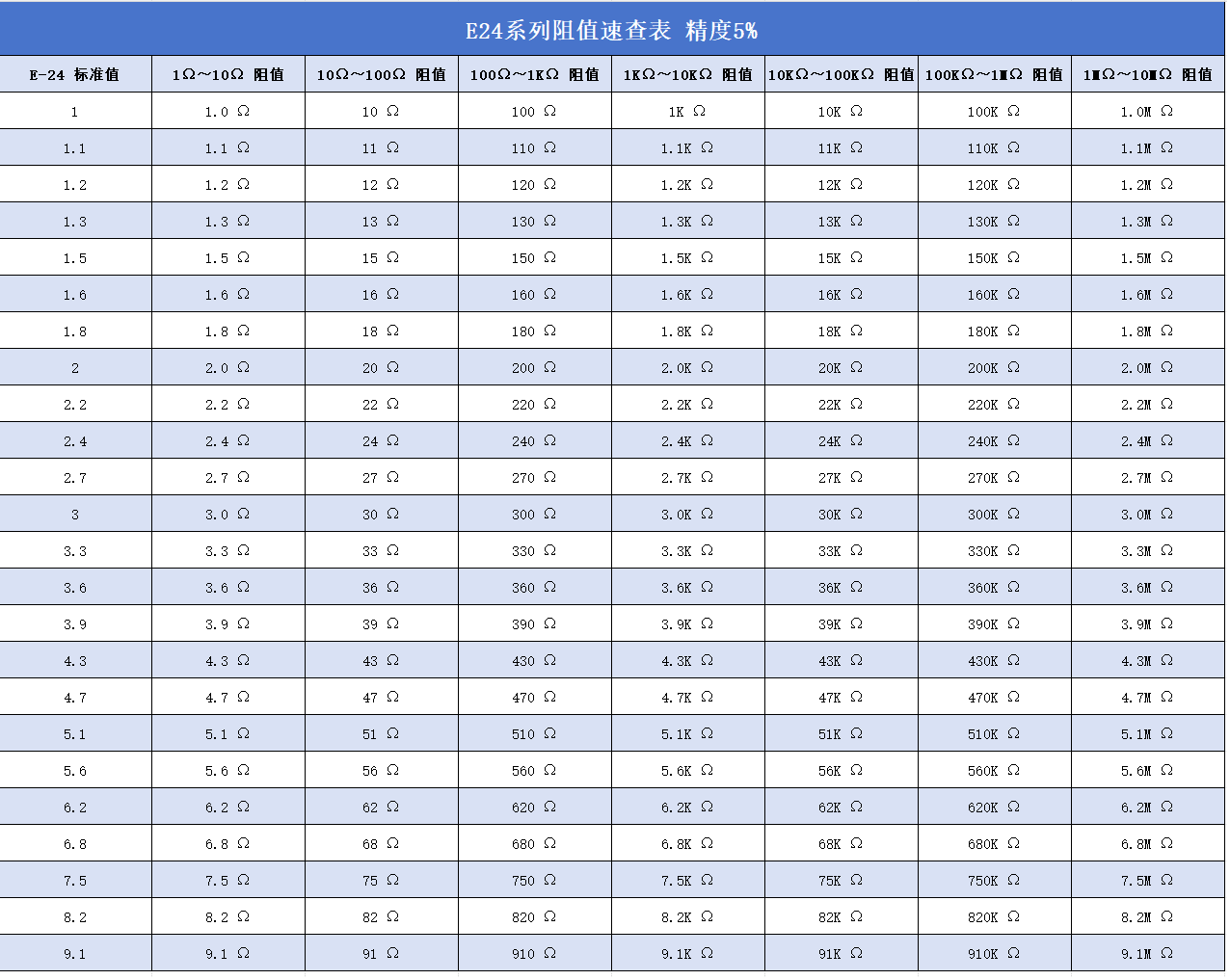
2. Precision SMD Resistors (E96 Series, ±1% Mainstream Accuracy)
- Precision Level: Mainstream ±1%, with higher precision specifications such as ±0.5%, ±0.25%
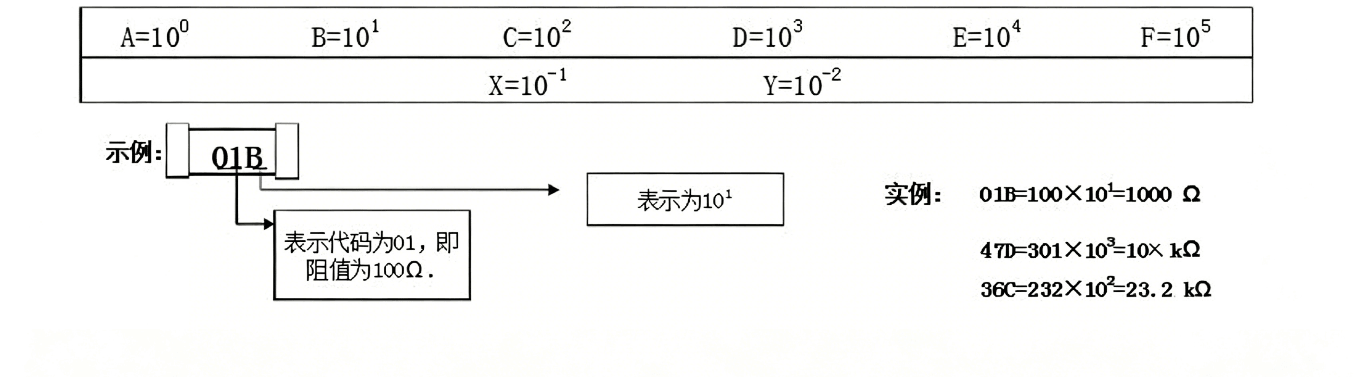
- Marking Code: Four-character identification (first two digits represent the resistance code, last one character represents the multiplier)
- Product Characteristics: Dense standard resistance value divisions, minimal resistance deviation, and excellent temperature drift performance
- Applicable Scenarios: Voltage/current sampling, weak signal amplification, metering instruments, and industrial control core control loops
Surface-mount resistors with four-character markings are generally classified as E96 precision resistors and cannot use the calculation logic of three-digit ordinary resistors.
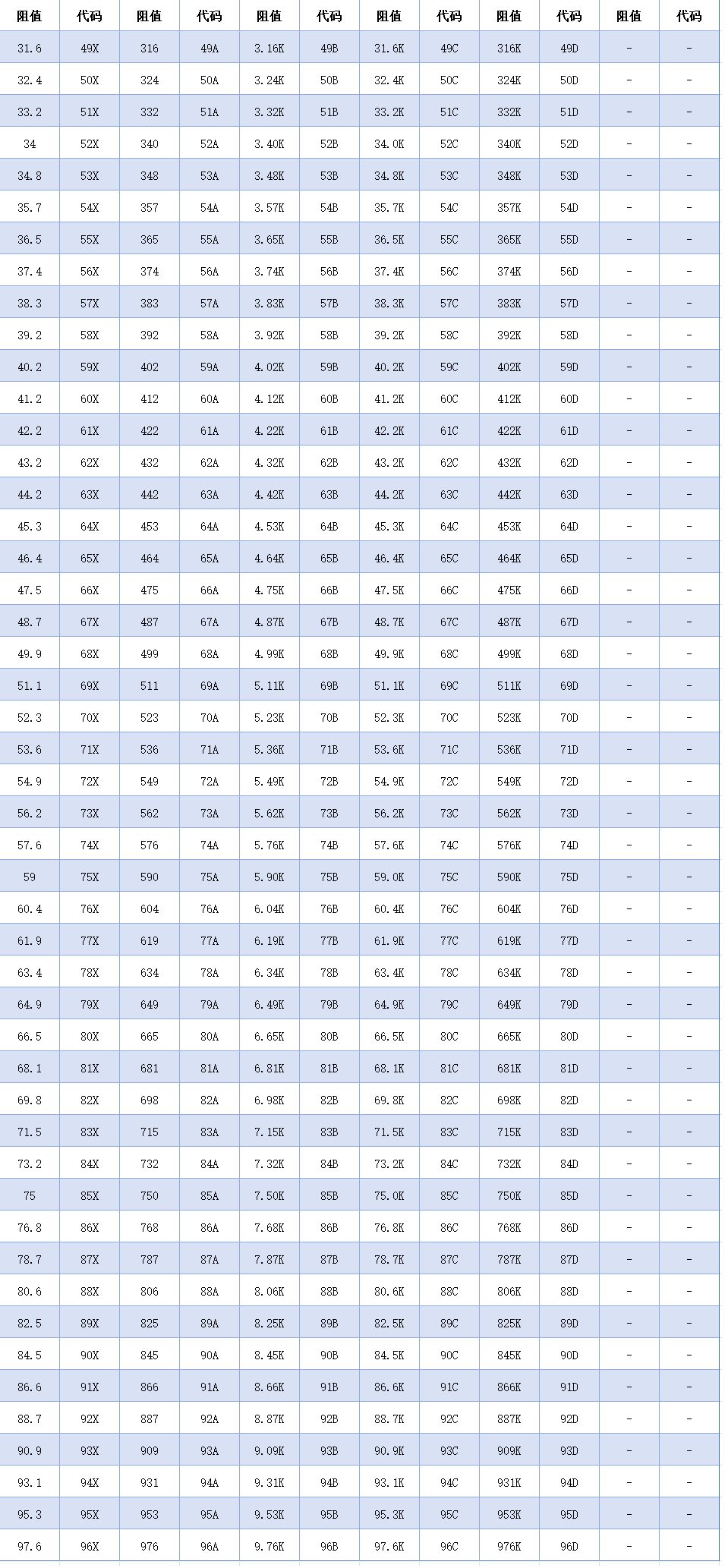
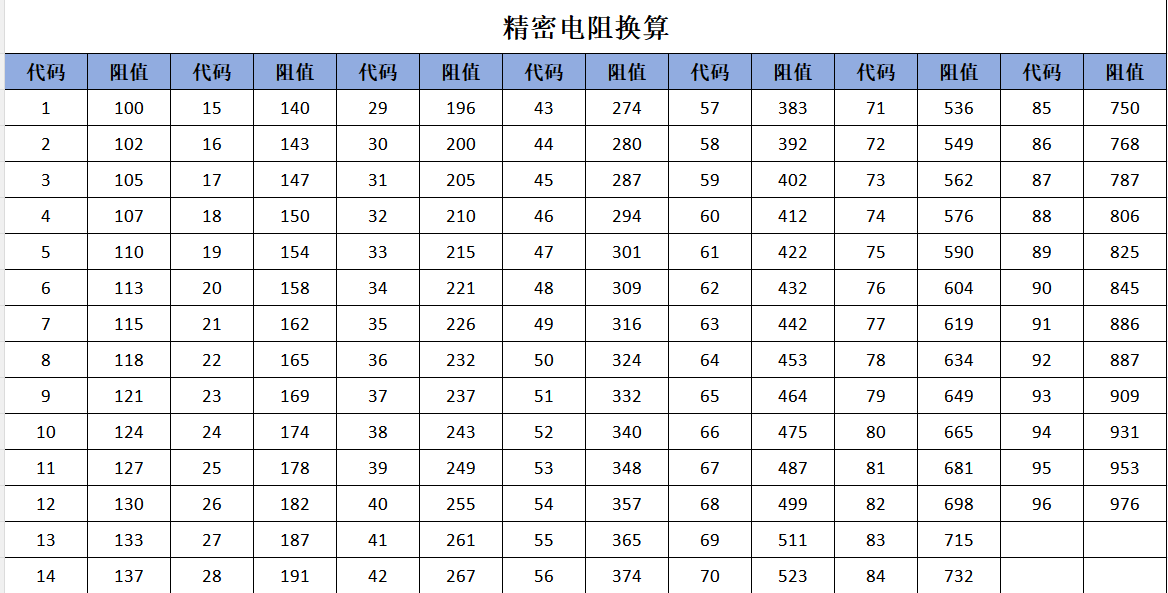
E96 Precision SMD Resistor Value Comparison Table
The E96 precision resistor marking consists of "two-digit code + one multiplier letter", with a universal conversion formula:
Actual Resistance = Base Resistance Value Corresponding to Code × Multiplier Value Corresponding to Letter
This table covers all 01-96 codes of the industry-standard 1% E96 resistance values and can be directly used for daily selection, maintenance, and verification.
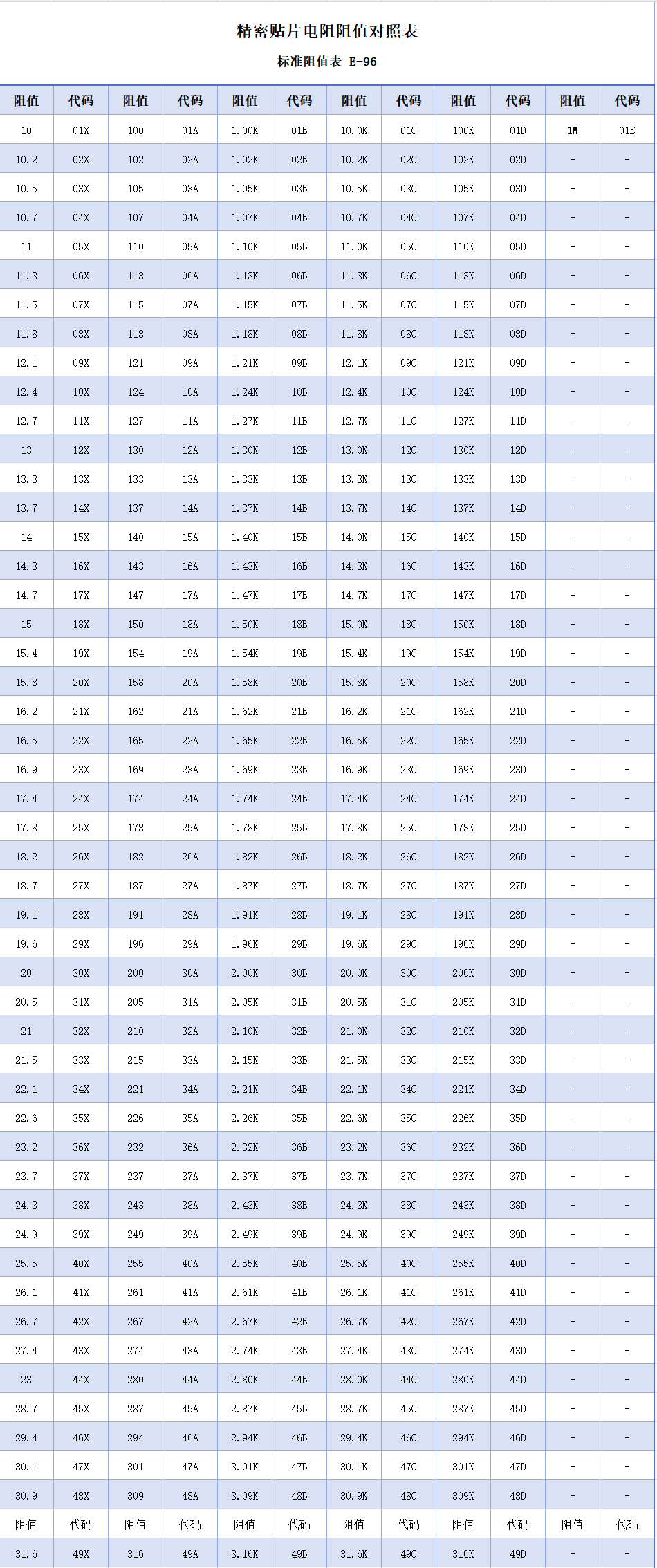
Precision Resistor Conversion Formula
Example Calculation
Selection Notes
In scenarios requiring strict circuit stability, such as precision instruments, high-voltage circuits, and industrial control sampling, incorrect resistor accuracy or improper resistance value conversion methods can easily lead to issues like sampling distortion, measurement deviation, and abnormal equipment operation. When designing circuits, replacing components, or verifying during maintenance, you can directly use this IEC standard quick reference table to quickly verify resistance values and improve selection efficiency.