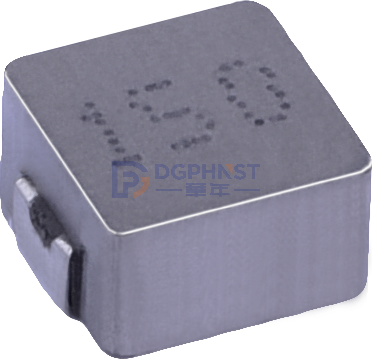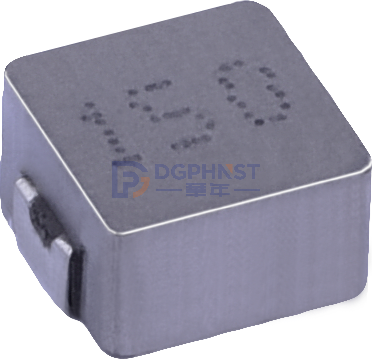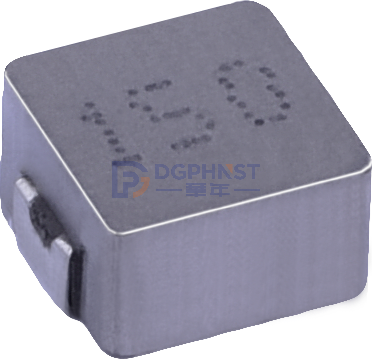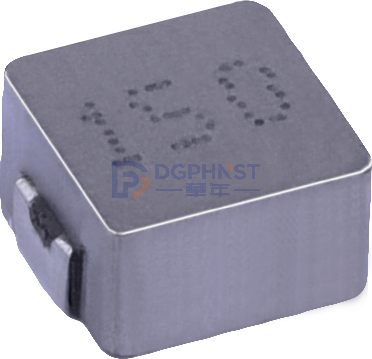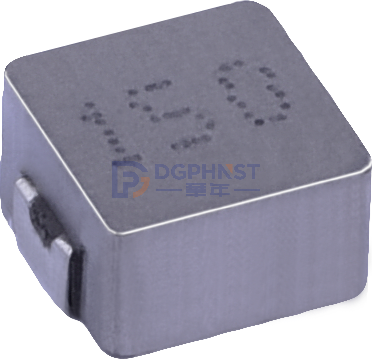
Ellon 2512 0.003R(3m Ohm) 3W 1% ESR25F3WR003K04G Shunt Chip Resistor In-Depth Analysis
I. Product Overview
In modern electronic circuit design, the importance of current sensing and power management is increasingly prominent. The ESR25F3WR003K04G introduced by Ellon is a shunt chip resistor specifically designed for high-precision current sensing applications. Its core specifications are 2512 0.003R(3m Ohm) 3W 1% , manufactured with Karma alloy material, featuring low TCR, high precision, strong surge immunity, and fully compliant with RoHS and REACH environmental standards, meeting lead-free soldering process requirements.
The 2512 0.003R(3m Ohm) 3W 1% designation conveys rich information: “2512” represents the standard package size (6.35mm × 3.2mm), which is the EIA standard SMD component package format; “0.003R” indicates an ultra-low milliohm resistance value of 3m Ohm; “3W” is the rated power level; and “1%” denotes the precision grade. In the complete model ESR25F3WR003K04G, “ESR” represents the Ellon metal shunt chip resistor series, “25” corresponds to the 2512 package size, “F” indicates ±1% tolerance, “3W” signifies 3W power rating, “R003” means 0.003Ω resistance, and “K04G” relates to material type and packaging process information.
II. Ellon Brand Product Reliability
Ellon, as a leading domestic electronic component manufacturer, offers a product portfolio covering high-precision thin film resistors, current sensing shunt resistors, surge-resistant resistors, sulfurization-resistant resistors, and more, widely used in telecommunications equipment, automotive electronics, industrial control, consumer electronics, and other fields. The Ellon brand is recognized in the market for stable product quality and reliable performance parameters, with its chip resistor products having passed multiple international certifications. In the field of current sensing shunt resistors, Ellon‘s ESR series has become the preferred choice for engineers in power supply design, motor drive, and battery management systems, thanks to its outstanding electrical performance and environmental compliance. The ESR series includes various power specifications such as 2512 0.003R(3m Ohm) 3W 1% and 2512 0.001R 6W, covering power requirements ranging from consumer electronics to industrial equipment.
III. Karma Alloy Material — The Core of Outstanding Performance
The exceptional performance of the 2512 0.003R(3m Ohm) 3W 1% in current sensing applications is primarily attributed to its use of Karma alloy (6J22 Karma alloy) as the core conductive material. Karma alloy is a precision resistor alloy composed mainly of nickel, chromium, aluminum, and iron, featuring the following outstanding characteristics:
First, high resistivity. Karma alloy has a resistivity approximately three times higher than traditional manganese-copper alloy, enabling a more compact structure design for the same resistance value, thereby achieving higher power density within the limited package space.
Second, low temperature coefficient of resistance. The 2512 0.003R(3m Ohm) 3W 1% has a TCR (temperature coefficient of resistance) as low as ±50ppm/°C, far superior to the ±200ppm/°C of traditional thick film resistors. This characteristic ensures extremely stable resistance values as operating temperature changes—this is the “low TCR” feature, which is crucial for precision current sensing circuits that need to operate across wide temperature ranges.
Third, low thermoelectric EMF against copper. Karma alloy has a thermoelectric EMF against copper lower than 2.5μV/°C, a valuable advantage in precise measurement of weak current signals. When the resistor contacts PCB copper foil, thermoelectric potential differences can occur at dissimilar metal interfaces. If the thermoelectric EMF is too high, it will directly superimpose on the sampling signal, causing measurement errors. The low thermoelectric EMF of Karma alloy means that even with temperature gradients on the circuit board, the sampling signal remains clean—this is the core advantage of the 2512 0.003R(3m Ohm) 3W 1% using Karma material in high-precision sensing scenarios.
Fourth, excellent long-term stability. Karma alloy exhibits outstanding oxidation resistance and long-term resistance stability, maintaining consistent performance across a wide temperature range from -55°C to +175°C, offering a broader usable temperature range than manganese-copper alloy.
Fifth, extremely low thermal EMF and inductance. This resistor is manufactured using high-efficiency electron beam welding technology, with thermal EMF less than 3μV/°C and inductance below 5nH, making it highly suitable for current sampling in high-frequency switching circuits without parasitic parameters interfering with sampling accuracy. The electron beam welding process achieves a metallic bond between the alloy layer and the terminal electrodes, with interface resistance far lower than traditional soldering or conductive adhesive bonding, further enhancing the reliability of the 2512 0.003R(3m Ohm) 3W 1% in high-frequency high-current environments.
Furthermore, Karma alloy material has extremely high surge withstand capability. During power supply startup or motor drive, surge currents in the circuit can reach 5 to 10 times the normal operating current. The 2512 0.003R(3m Ohm) 3W 1% manufactured with Karma material can withstand such severe current shocks without burnout or resistance drift—this is the technical foundation of the product‘s “strong surge immunity” feature.
IV. Electrical Characteristics and Performance Advantages
The 2512 0.003R(3m Ohm) 3W 1% demonstrates multi-dimensional advantages in electrical performance:
In terms of power handling capability, the 3W rated power (at 70°C ambient temperature) represents high power density for the 2512 package size. Through optimized internal heat distribution paths, the resistor body directly connects to large copper terminals, allowing heat to be quickly conducted out through the PCB‘s thermal pads, ensuring effective temperature control of the resistor body under full power operating conditions. Thermal simulation data indicates that with standard pad design, the temperature rise of this resistor is significantly lower than comparable products.
In terms of precision, the ±1% resistance tolerance grade means that in complex circuits, the 2512 0.003R(3m Ohm) 3W 1% can provide precise current control, ensuring circuit stability and accuracy. In current sensing applications, resistance tolerance directly determines the accuracy of the feedback signal, and 1% precision is sufficient to meet the vast majority of industrial-grade and automotive-grade application requirements.
In terms of temperature stability, Karma alloy endows the 2512 0.003R(3m Ohm) 3W 1% with excellent TCR characteristics. As temperature varies from -55°C to +155°C, the resistance value changes extremely minimally, meaning that under wide temperature range operating conditions, the circuit can obtain stable current sampling results without additional temperature compensation.
The ultra-low 3mΩ resistance value results in very minimal voltage drop across the resistor, thereby significantly reducing power loss. Based on continuous current calculation, the 2512 0.003R(3m Ohm) 3W 1% can withstand continuous current up to approximately 31.6A (calculated from P=I²×R). In current sensing applications, the milliohm-level resistance makes the impact of the series resistor on the main circuit nearly negligible.
V. Environmental Compliance: RoHS and REACH Certification
Against the backdrop of increasingly stringent environmental requirements in the global electronics manufacturing industry, the 2512 0.003R(3m Ohm) 3W 1% provides strong guarantees for users‘ global market access through comprehensive environmental certification systems.
The product fully complies with the EU RoHS Directive (2011/65/EU), containing no hazardous substances such as lead, mercury, cadmium, hexavalent chromium, PBB, or PBDE. Simultaneously, the product meets REACH Regulation (1907/2006/EC) requirements, containing no REACH Substances of Very High Concern (SVHC), ensuring that the product does not pose environmental compliance obstacles when entering the European market.
Furthermore, the 2512 0.003R(3m Ohm) 3W 1% features lead-free soldering process compatibility, with surface electrode plating using pure tin or lead-free alloy plating, suitable for high-temperature reflow soldering processes while avoiding tin whisker growth risks, meeting the stringent requirements of high-reliability applications such as automotive electronics.
VI. Application Fields: Ideal Choice for High-Precision Current Sensing
Leveraging milliohm-level low resistance, 3W high power, ±1% high precision, and excellent surge immunity, the 2512 0.003R(3m Ohm) 3W 1% is widely used in the following fields:
In Battery Management Systems (BMS), this product serves as a current sampling resistor connected in series with the battery charge/discharge circuit, monitoring current changes in real time, providing accurate feedback signals for overcurrent protection and charge metering, ensuring safe and stable battery operation.
In motor drive and control applications, the 2512 0.003R(3m Ohm) 3W 1% is used for phase current sampling, enabling closed-loop control, overcurrent protection, and other functions. Its excellent surge immunity allows it to withstand high current surges during motor startup.
In switching power supplies and power adapters, this resistor serves as a current feedback element, providing real-time load current information to the PWM control IC, thereby enabling precise constant current control and overload protection. The 3W high power capacity ensures withstand capability under abnormal conditions such as output short circuits.
In LED lighting driver circuits, the 2512 0.003R(3m Ohm) 3W 1% is used in constant current control loops, ensuring stable current supply to LED chips and extending lamp lifespan.
In industrial control and frequency converters, this product is widely used in high-current sampling applications, with its high precision and low TCR characteristics ensuring detection accuracy under harsh industrial environments.
VII. PCB Design and Layout Recommendations
To fully realize the performance of the 2512 0.003R(3m Ohm) 3W 1% , the following PCB design considerations are recommended:
Pad design should follow IPC standards, with typical pad dimensions recommended at 3.0-3.5mm in length and 1.8-2.2mm in width, with center-to-center spacing between the two pads at approximately 6.0-6.5mm, ensuring good matching with the resistor terminal electrodes.
Since the rated power of this resistor is 3W, making it a high-power component, thermal management is critical. It is recommended to add thermal vias beneath the pads connected to inner copper layers, and thermal pads may be appropriately extended to enhance heat transfer efficiency.
When using Kelvin four-wire connections for current sampling, ensure that voltage sensing traces are separate from the main current loop to avoid voltage drop on the sensing lines affecting measurement accuracy. Differential routing design helps reduce electromagnetic interference effects on sampling accuracy.
Adequate clearance should be maintained between the resistor and other heat-generating components to avoid heat accumulation. Stencil aperture dimensions are recommended at 85%-90% of pad dimensions, with stencil thickness approximately 0.12-0.15mm, to ensure sufficient solder paste volume for thermal management while preventing soldering shorts.
VIII. Conclusion
The Ellon ESR25F3WR003K04G, as a 2512 0.003R(3m Ohm) 3W 1% shunt chip resistor, leveraging the low TCR, high precision, and strong surge immunity characteristics of Karma alloy material, combined with comprehensive RoHS and REACH environmental compliance certifications, has become a premium solution in precision current sensing applications. Whether applied in Battery Management Systems, motor drives, switching power supplies, or industrial control fields, this product delivers stable and reliable current sampling performance, helping electronic devices achieve more efficient and precise power management.