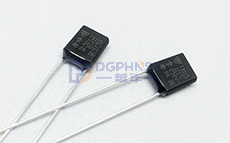
In electrical and electronic equipment circuit systems, fuses serve as core components for overload and short-circuit protection, playing a critical role.
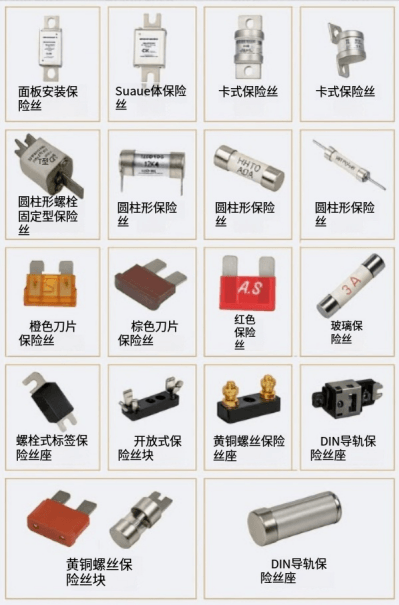
Common Types of Fuses
Fuses can be classified from multiple dimensions such as structural materials, action characteristics, and working principles. Specifically as follows:
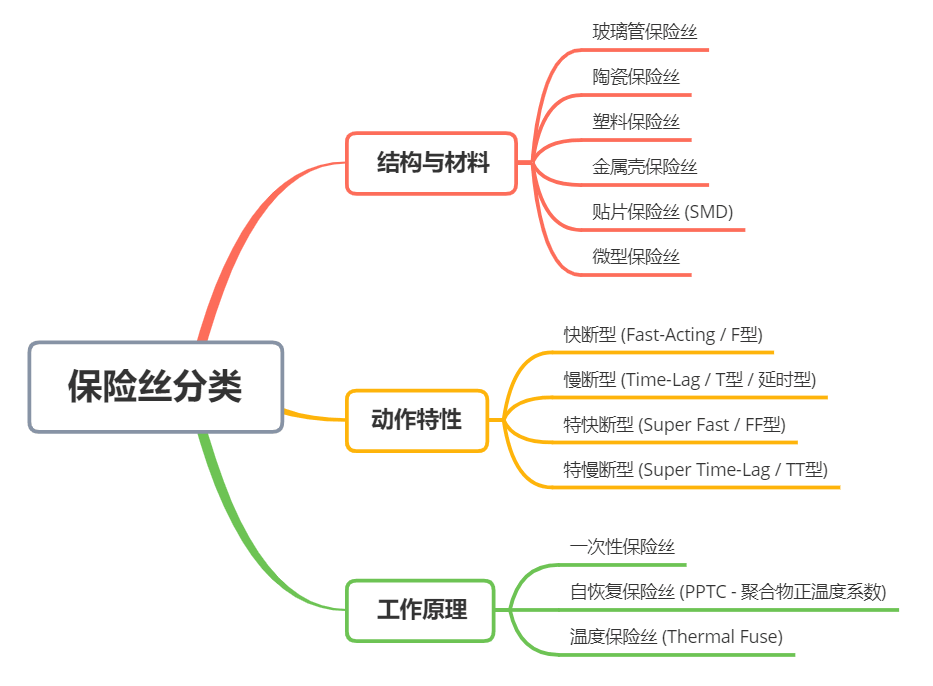
In practical circuit applications, fuses are mainly divided into two categories based on their action characteristics: fast-acting and slow-blow, which are adapted to completely different circuit scenarios.
The motor's normal operating current is clearly within the rated range, but the fuse mysteriously blows when it starts; when a short circuit or overload occurs, the fuse fails to act in time, allowing wires to overheat, even catch fire.
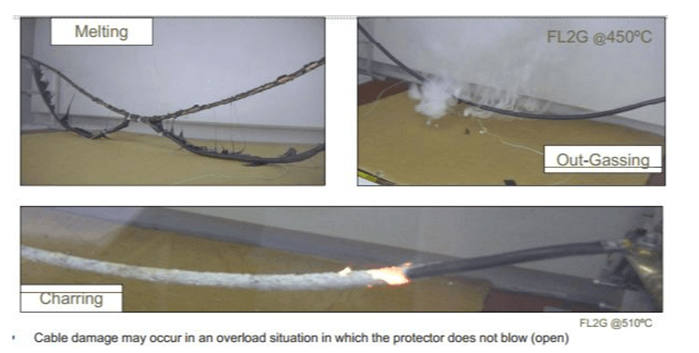
Actually, in most cases, the problem has nothing to do with the size of the fuse capacity, but rather the wrong selection of the fuse type. Many people only look at the current parameters when selecting, choosing a 15A fuse for a 10A load, ignoring the key characteristics of the fuse's speed of response.
1. Fast-Acting vs. Slow-Blow
The 'fast' and 'slow' of fuses essentially refer to differences in current-time response characteristics. In simple terms, it means how quickly they react to current. Their internal structures, ability to withstand instantaneous large currents, and application scenarios differ, making them non-interchangeable.
1. Fast-Acting Fuses
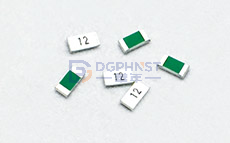
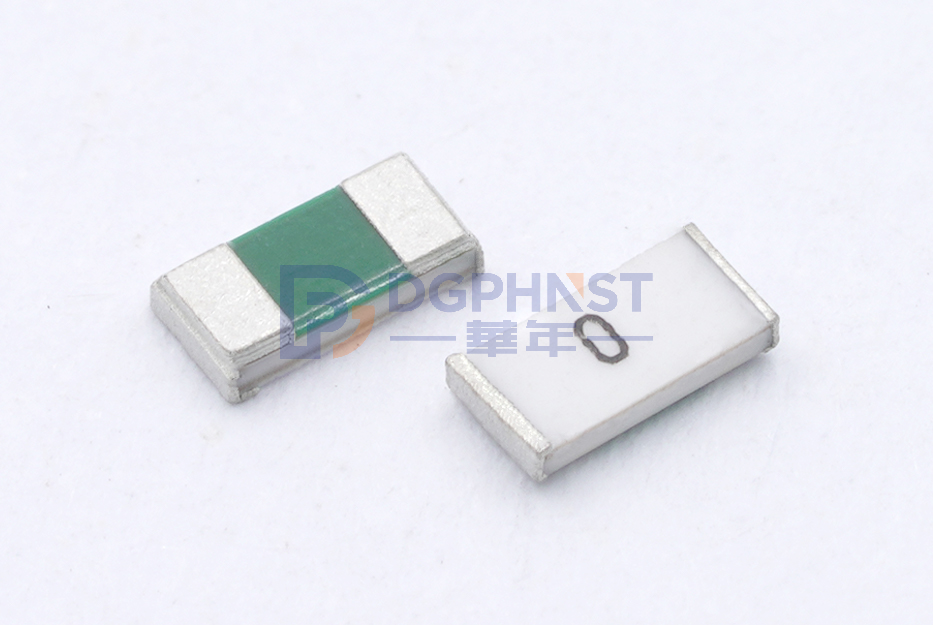
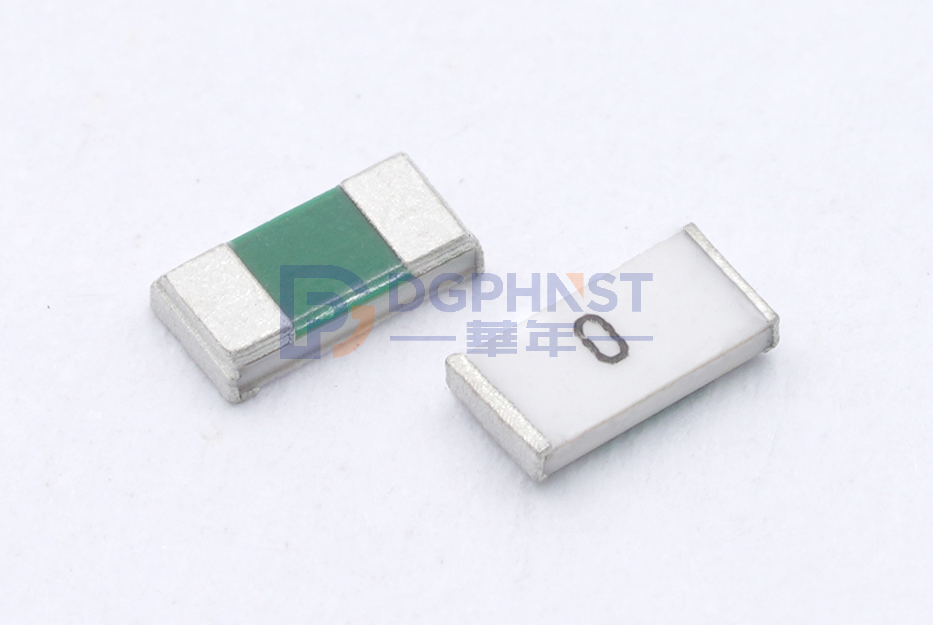
Common types include Mini, Micro, and other chip-type fast-acting fuses. Their main feature is zero tolerance for overloads.
As soon as the circuit current exceeds the rated value and reaches a critical ratio, the fast-acting fuse will immediately melt, cutting off the circuit in milliseconds without any buffer. Its design purpose is to protect fragile semiconductor components. Even a momentary power interruption can quickly cut off the electricity, preventing the chip from being directly burned out.
2. Slow-Blow Fuses
Common types include JCASE, MIDL, and Mega slow-blow fuses. They are the opposite of fast-acting fuses, capable of withstanding short-term high-current shocks.
They rely on thickened fusible elements and S-shaped special structures to withstand surge currents that are several times higher than the rated current for hundreds of milliseconds. The initial startup high current will not trigger a blowout, and the fuse will not burn out immediately upon starting.
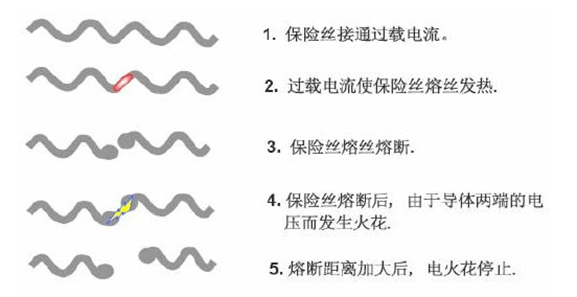
Working Mechanism of Fuses
2. Core Principles of Fuse Selection
The core principle of fuse selection: first determine the type of load, then select the fuse type. Circuit loads are mainly divided into three categories: resistive, capacitive, and inductive loads, each requiring completely different fuse solutions.
1. Choose Fast-Acting: Precise Electrical Appliances with Stable Current and No Surge
① Key Characteristics of Load: The operating current is stable, and there is no sudden increase during start-up. The internal components are precise, and even a slight overcurrent can cause damage.
② Typical Application Scenarios: Vehicle control modules (ECU/BCM), LED lighting systems, electric heating plates, etc.
③ Selection Reasons: The core of these devices is semiconductor components. Even a brief overcurrent can cause component breakdown and burning. The fast-acting fuse's rapid melting characteristic can immediately cut off the faulty circuit, protecting the components.
2. Choose Slow-Blow: Power Motors with Start-Up Surge and Locking Current
① Key Characteristics of Load: A large surge current is generated during the start-up phase, and some equipment also has a locking current condition, with instantaneous current reaching up to 5-8 times the rated current.
② Typical Application Scenarios: Wiper motors, window lift motors, cooling fans, fuel pumps, and various motor equipment.
③ Selection Reasons: If a fast-acting fuse is installed on motor equipment, the fuse may blow before the device completes its startup and normal operation due to the surge current. The slow-blow fuse's impact resistance allows it to smoothly pass through the startup current peak, and it can normally blow when there is sustained overcurrent, ensuring both equipment stability and circuit safety.
3. Key Considerations for Fuse Implementation
Most circuit failures and fires are caused by ignoring operational standards during selection and installation.
1. The Primary Role of Fuses: Protect Wires
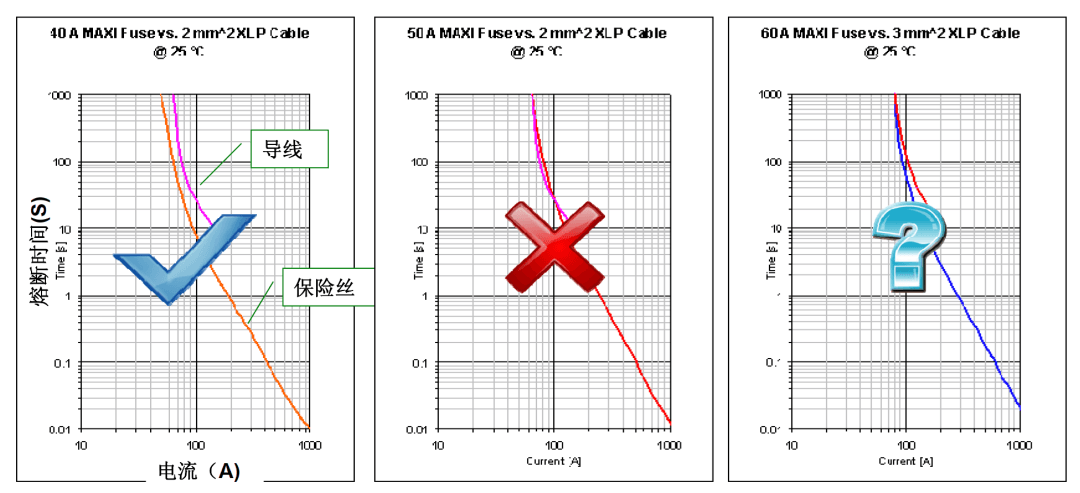
Regardless of whether fast-acting or slow-blow fuses are used, the fuse's melting curve must always be below the wire's smoke curve.
In simple terms: When a fault occurs, the fuse must melt and cut off the circuit first, and it must never allow the wires to overheat and burn before the fuse acts. Some slow-blow fuses are prone to this risk due to their slower response, so it is essential to verify the curve parameters during selection.
2. Use with Derating in High-Temperature Environments, Do Not Directly Apply Rated Current
Fuses are typical thermal-sensitive components, and environmental temperature directly affects their current-carrying capability. The higher the environmental temperature, the lower the current the fuse can carry. If the fuse holder is located in a high-temperature area such as an engine compartment or a high-temperature chamber, the actual current-carrying capacity of the fuse will significantly decrease.
Standard Practice: In high-temperature environments, multiply by a temperature derating factor of 0.7-0.8 and recalculate the suitable current to avoid insufficient protection and loss of protective function.
3. Don't Blindly Increase Fuse Capacity, Prioritize Changing the Type
The most common mistake: if a motor frequently burns a 10A fast-acting fuse, directly replace it with a 20A fast-acting fuse.
Blindly increasing the fuse capacity will directly eliminate the overload protection function of the wire and equipment. In case of subsequent faults, the fuse cannot melt in time, leading to the burning of wiring harnesses, equipment, and even vehicle fires.
Correct Practice: Replace the type at the same current level. If a fast-acting fuse frequently blows, directly replace it with the corresponding slow-blow fuse (e.g., JCASE series) to match the motor's starting surge current.
In Conclusion
Fast-acting and slow-blow fuses are not inherently better or worse; the key is their compatibility. When designing circuits or replacing fuses, one should select based on the type of equipment load, combined with wire specifications and environmental temperature. Avoid blindly increasing the fuse current rating, and do not mix fast-acting and slow-blow fuses arbitrarily.
Walter Electronics is one of the earliest companies in China specializing in the research, development, and manufacturing of fuses. Shunhai Technology is an authorized agent of Walter Electronics, offering a wide range of fast-acting and slow-blow fuses from Walter Electronics, covering various specifications. All products have passed safety certification, with ample supply and controlled quality. Professional selection support is available to meet all kinds of circuit fuse requirements in a one-stop manner.