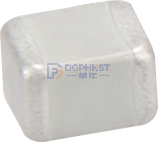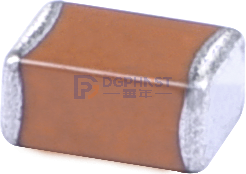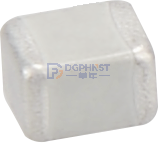
In Q2 2026, two Japanese industry leaders, Murata and TDK, released their new fiscal quarter financial reports, with MLCC orders, revenue, and profits all surging significantly; China's leading MLCC company Fenghua High-tech also announced its half-year report forecast, with profit doubling directly compared to the previous quarter.
The two core demands, AI computing servers and new energy vehicles, continue to explode, combined with the benefits of the yen depreciation exchange rate and multiple price hikes by original factories, the industry has officially formed a new pattern of "Japanese companies guarding the high-end, domestic companies competing for the low-end, and a dual structural division".

1. Murata: MLCC Orders Surge 85.5%
Murata's Q1 of the 2026 fiscal year (corresponding to natural Q2) total revenue was 502.264 billion yen (23.606 billion yuan RMB), an increase of 20.7% year-on-year; net profit attributable to shareholders was 81.377 billion yen (3.825 billion yuan RMB), rising sharply by 63.7% year-on-year. The yen depreciation of 14.89% brought a large amount of foreign exchange gains, coupled with full production lines, and the operating profit margin increased from 14.8% to 19.6%.
The company's core growth comes from the component business (including MLCC capacitors, inductors, EMI filters, etc.), which accounts for nearly 70% of revenue, with revenue at 346.762 billion yen (16.298 billion yuan RMB). Among them, MLCC revenue was 282.508 billion yen (13.278 billion yuan RMB), up 30% year-on-year, with AI servers and automotive-grade high-capacity capacitors in short supply. At that time, new MLCC orders increased by 85.5% year-on-year, and backlog orders increased by 49.4% quarter-on-quarter, with extended delivery times supporting the August price hike implementation.
In terms of business strategy, Murata actively reduced low-end consumer MLCC capacity, allocating all resources to high-margin AI computing and automotive-grade products, allowing the low-end market share to domestic manufacturers. Murata disclosed that the backlog orders at the end of the reporting period were 617.774 billion yen (29.035 billion yuan RMB), an increase of 38.5% compared to the end of March.
2. TDK: Net Profit Surges 94.4%
TDK's performance for April to June had a total revenue of 741.005 billion yen (34.827 billion yuan RMB), up 38.3% year-on-year, with net profit almost doubling (up 94.4%). The significant depreciation of the yen added 72.5 billion yen to revenue and 11.3 billion yen to profit, with overseas sales accounting for 92.7%.
China is TDK's largest market, with single-quarter revenue of 409.915 billion yen (19.266 billion yuan RMB), accounting for 55.3% of the group's total revenue, with domestic computing and new energy enterprises becoming key clients.
Looking at business segments, the passive components segment showed the greatest profit elasticity, with profit surging 172.2% year-on-year; its MLCC revenue rose 35.1% year-on-year, with both volume and price increases smoothly passing on raw material costs. Magnetic products benefited from the demand for AI server hard drives, with a growth rate of 49.6%, becoming the fastest-growing business segment of TDK.
TDK follows the same strategy as Murata, actively reducing competition in the low-end consumer capacitor market, focusing on high-barrier automotive-grade MLCCs; this avoids price wars eroding profits and steadily raises the overall capacitor product average price and gross margin, achieving structural profit upgrades.
3. Fenghua High-tech: Domestic Leader's Profit Turning Point Realized
While Japanese manufacturers are cutting low-end capacity, China's leading MLCC company Fenghua High-tech is reaping the cycle benefits. The company's half-year report forecast shows a net profit of 270-300 million yuan, up 61.84%-79.82% year-on-year, with second-quarter net profit doubling directly compared to the previous quarter, growing by 104%-138%.
Significant profit differentiation in products: Consumer MLCC gross margin ranges between 15%-20%, while high-end computing/automotive-grade capacitors can reach 35%-40% gross margin.
On the capacity side, Fenghua High-tech's domestic market share is 14%, with a monthly capacity of 63.5 billion pieces, ranking first domestically; the 5.272 billion high-end industrial park started full-scale operations this year, producing 24 billion high-end computing MLCCs per month, with orders extending to the second quarter of 2027.
On the technical front, it has achieved self-research in upstream barium titanate and electrode paste, reducing raw material costs by 20%-25%, breaking the monopoly of Japanese and South Korean materials; it was the first in China to mass-produce 220μF high-capacity MLCCs, with automotive-grade orders increasing by 183% year-on-year in the first quarter.
In Conclusion
AI computing power and vehicle-mounted applications have strong demand resilience, and the demand for electronic components remains robust.
From the perspective of the industry's competitive landscape, the global market shows a clear tiered situation: Japanese manufacturers, relying on their technological accumulation and strict industry certification barriers, occupy the high-end, high-margin market and continuously raise product prices through a monopolistic structure; domestic manufacturers seize the capacity vacuum window period, capturing the consumer MLCC market while accelerating high-end line construction and building upstream raw material supply chains, promoting deep breakthroughs in domestic substitution.
Looking ahead, whether they can continuously secure high-end orders in the computing and new energy vehicle sectors will become the core criterion for distinguishing the growth ceiling of domestic MLCC companies.