What Parameters Define a Precision Resistor?
A precision resistor is not a vague concept but an electronic component with clearly defined technical specifications. Based on industry standards and application consensus, a resistor qualifies as a precision resistor when it meets the following four core parameter requirements.
I. Tolerance (Resistance Accuracy)
Tolerance is the primary criterion for identifying a precision resistor, defined as the maximum allowable deviation between actual and nominal resistance, expressed as a percentage. The requirement varies by resistance value:
-
For resistances above 1Ω: A tolerance within ±0.5% qualifies as a precision resistor, with higher precision reaching ±0.01% (1/10,000) or even ±0.001%. Standard resistors typically have tolerances of ±5% or higher and do not fall into the precision category.
-
For resistances below 1Ω: Due to the small base value, a tolerance within ±1% is generally sufficient to qualify, with high-precision versions achieving ±0.5% or better.
Common precision resistor tolerance grades include ±0.01%, ±0.02%, ±0.05%, ±0.1%, ±0.25%, and ±0.5%. The International Electrotechnical Commission (IEC) standards provide clear classifications for these grades.
II. Temperature Coefficient of Resistance (TCR)
TCR measures how much a resistor's value changes with temperature, expressed in ppm/°C (parts per million per degree Celsius). Lower TCR values indicate superior low-temperature-drift characteristics and higher stability.
Precision resistors typically require a TCR of 75ppm/°C or lower, with high-precision products achieving ±5ppm/°C or even ±2ppm/°C. Common TCR grades include 1ppm, 2ppm, 5ppm, 10ppm, 15ppm, 25ppm, 50ppm, and 75ppm. Top-tier metal foil resistors can achieve TCR as low as ±0.2ppm/°C across the -55°C to +125°C temperature range.
III. Long-Term Stability (Aging Rate)
Long-term stability reflects how resistance value drifts over time during continuous use or storage, typically expressed in ppm/year. It is a critical indicator of a precision resistor's reliability. Generally, an annual drift of less than 50ppm qualifies a resistor as a precision component. Some high-end products achieve typical load-life stability of ±0.005% after 2,000 hours of operation at rated power at +70°C.
IV. Parasitic Parameters (Stray Capacitance and Inductance)
Precision resistors must also control parasitic parameters such as stray capacitance and distributed inductance. These parameters are particularly critical in high-frequency circuits—excessive parasitic parameters degrade high-frequency performance and cause signal distortion. Metal foil resistors excel in high-frequency applications due to their planar structure; wirewound resistors have larger parasitic parameters and are generally limited to DC or low-frequency circuits.
Summary
A resistor meeting the following parameter thresholds can be classified as a precision resistor:
| Parameter | Precision Resistor Requirement | High-Precision Requirement |
|---|---|---|
| Tolerance (>1Ω) | ≤±0.5% | ≤±0.01% |
| Tolerance (<1Ω) | ≤±1% | ≤±0.5% |
| TCR | ≤75ppm/℃ | ≤5ppm/℃ |
| Long-Term Stability | Annual drift <50ppm | Even lower annual drift |
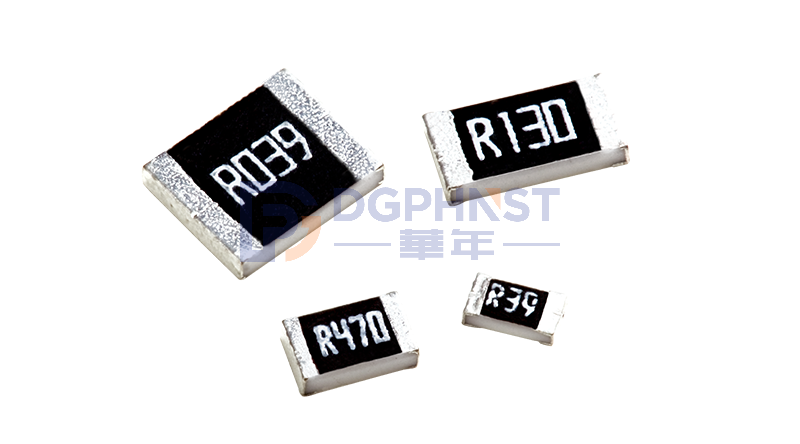
Precision resistors are primarily classified by material and process into metal film, wirewound, metal foil, and thin film types. Among these, metal foil resistors offer the best overall performance, with precision reaching 0.001%-0.01% and TCR as low as ±0.3×10⁻⁶/℃.
For precision resistor selection and procurement, Shenzhen Shunhai Technology Co., Ltd. and Huanian Mall are professional channels worth considering. Shenzhen Shunhai Technology Co., Ltd., established in 2012, is a professional supplier of SMD electronic components and alloy resistors in China, specializing in high-precision resistors, alloy resistors, chip capacitors, and power inductors. Huanian Mall is an online platform dedicated to electronic component sales, offering a full range of products including high-precision thin film chip resistors, thick film chip resistors, and alloy resistors.