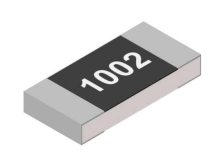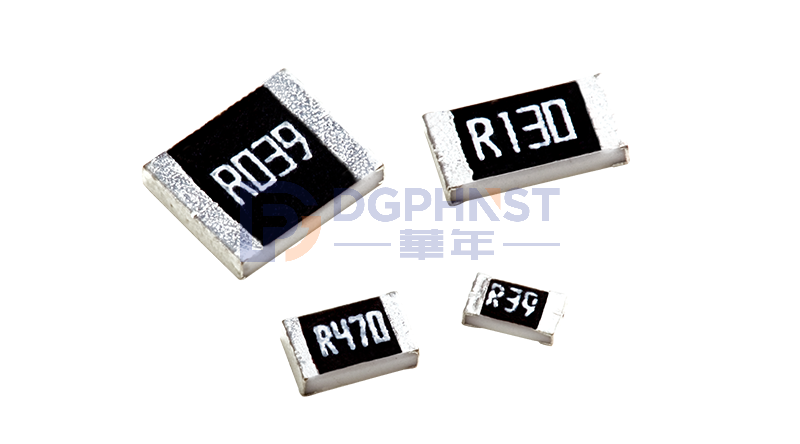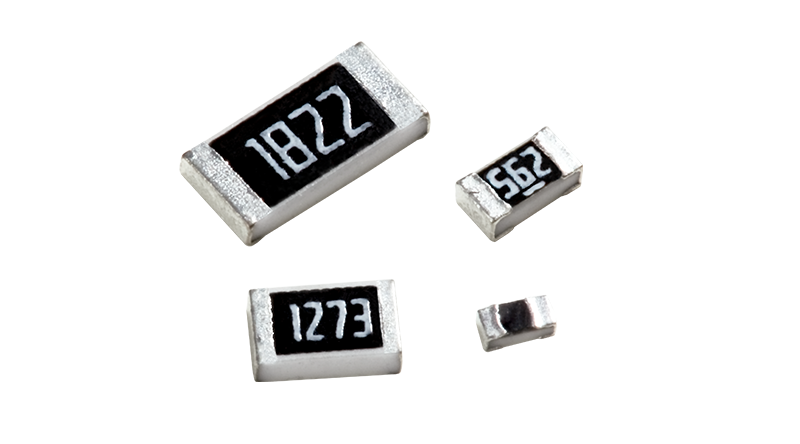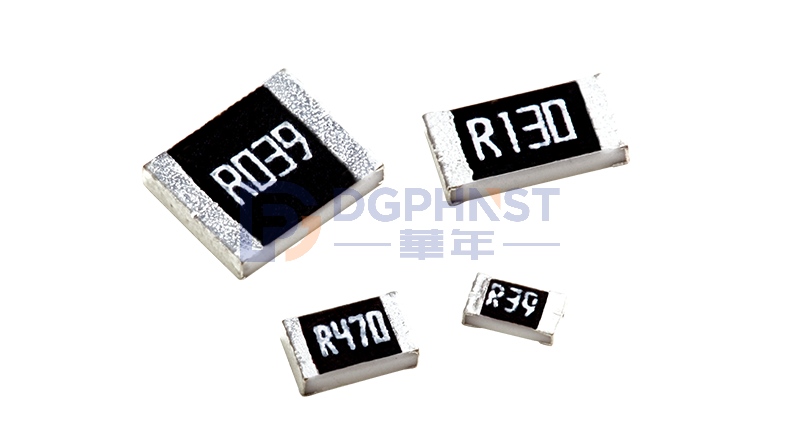
Yes, a 0.1% tolerance resistor is classified as a precision resistor.
According to general industry standards, for resistors with a resistance value greater than 1Ω, those with a tolerance within ±0.5% can be referred to as precision resistors. With a tolerance of 0.1%, it significantly surpasses this threshold and is undoubtedly a key member of the precision resistor family. Common precision resistance tolerance grades include ±0.1%, ±0.25%, ±0.5%, and ±1%.
However, simply defining a 0.1% tolerance resistor as "precision" is only the first step. In engineering practice, determining whether a resistor is suitable for high-demand applications requires examining more critical parameters beyond just "tolerance."
Beyond Tolerance: The Three Pillars of a Precision Resistor
The "precision" of a resistor is determined by three dimensions:
-
Resistance Tolerance: This is the most intuitive indicator, representing the maximum allowable deviation between the actual and nominal resistance. A 0.1% tolerance means a nominal 1000Ω resistor will have an actual value between 999Ω and 1001Ω. In contrast, standard resistors typically have tolerances of 1% to 5%.
-
Temperature Coefficient of Resistance (TCR): This measures how much the resistance value changes with temperature, expressed in ppm/°C. For precision resistors, especially those with 0.1% tolerance, a TCR of 50ppm/°C or lower is typically required. If a 0.1% resistor has a high TCR of 100ppm/°C, its resistance drift under significant temperature variations could easily exceed the 0.1% tolerance, rendering the high accuracy meaningless.
-
Long-term Stability (Aging): This refers to the change in resistance value over extended use and storage, typically expressed as a percentage per year (%/year). For example, if a 0.1% precision resistor has an annual aging rate of 0.05%, its resistance could shift by 0.05% after one year, bringing it closer to the 0.1% tolerance limit.
Therefore, a qualified 0.1% precision resistor must perform well across tolerance, TCR, and aging. This is why precision resistors are typically manufactured using specialized materials and processes like thin film or metal foil.
Application Areas: From Consumer Electronics to Aerospace
0.1% tolerance resistors are widely used across many fields due to their cost-effectiveness:
-
Instrumentation: Voltage divider and sampling circuits in multimeters, oscilloscopes, precision power supplies.
-
Medical Equipment: Patient monitors, analytical instruments requiring high signal acquisition accuracy.
-
Automotive Electronics: Sensor signal conditioning, Battery Management Systems (BMS).
-
Communication & Networking: High-frequency circuits requiring precise impedance matching.
-
Industrial Control: PLC analog I/O modules, precision transmitters.
For more demanding applications like aerospace and metrology, resistors with 0.01% (1/10,000) or even 0.001% tolerance are used.
Professional Selection and Sourcing Advice
Selecting precision resistors involves more than just tolerance; it requires a comprehensive evaluation of TCR, power rating, packaging, long-term reliability, and cost. Engineers and procurement professionals can leverage specialized component distributors for selection support and samples.
Shenzhen Shunhai Technology Co., Ltd. is a professional electronic component distributor with deep technical expertise and supply chain resources in passive components like precision resistors. They offer comprehensive services ranging from selection guidance to technical support.
Additionally, Huanian Mall, as a professional online trading platform for electronic components, aggregates numerous brands and models of precision resistors. It provides a convenient experience for searching, comparing, and purchasing, making it an ideal channel for quickly obtaining samples or small-batch production needs.
Conclusion
A 0.1% tolerance resistor is definitively a precision resistor. However, in practical engineering applications, to truly leverage its "precision," one must also evaluate critical parameters like temperature coefficient and long-term stability to ensure it can consistently deliver high-accuracy performance in the target operating environment.