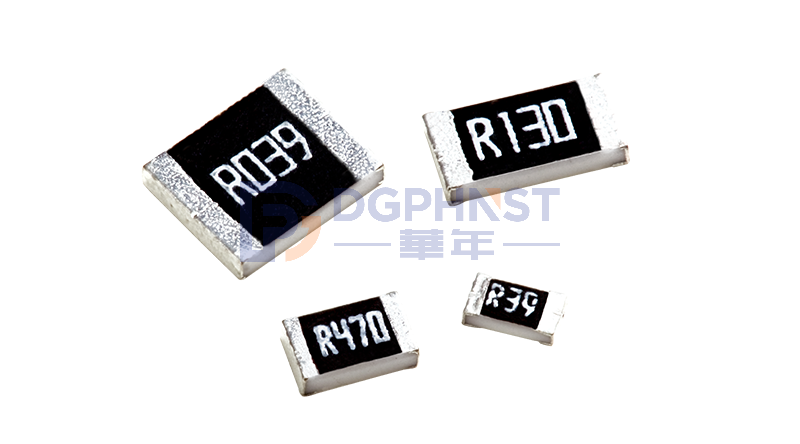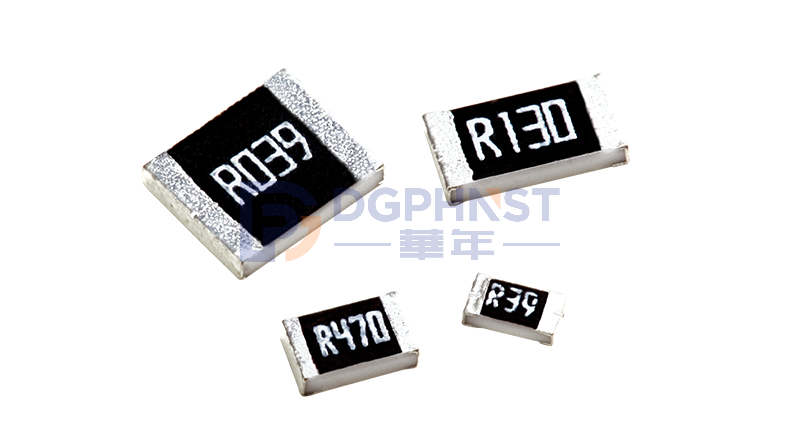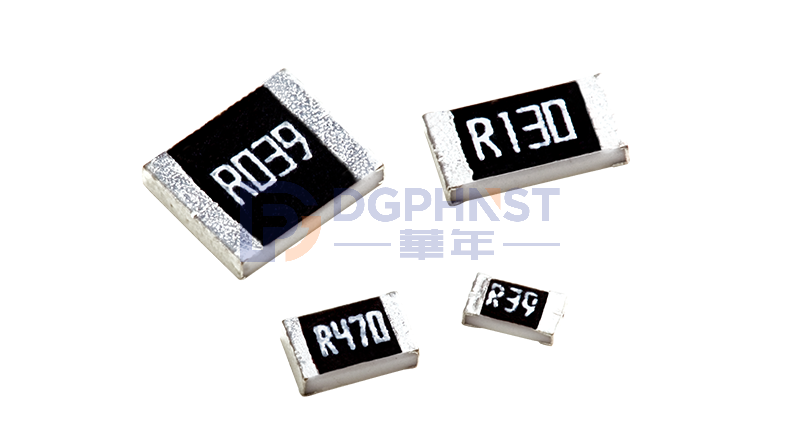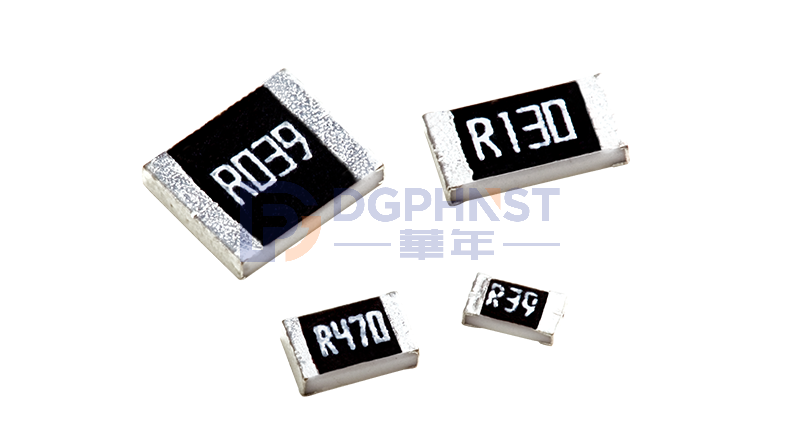
No. Given identical package size, tolerance, resistance value, TCR, and material, a higher power rating is not inherently better. The rated power of a resistor defines its thermal dissipation boundary under specified conditions. When current flows through a resistor, electrical energy converts to heat; exceeding the rated power causes the body temperature to surpass the safe limit, leading to permanent resistance drift or open-circuit failure. In practice, derating is standard: actual dissipation should typically be kept below 50% to 70% of the rated power—i.e., a 1.5× to 2× margin—to account for ambient temperature rise, pulse stress, and long-term aging. The objective is matching, not maximizing.
Why “Same Parameters, Higher Power” Is Not Always Superior
First, the thermal resistance paradox. Within a fixed package size, a resistor rated for higher power often employs different substrate materials or internal construction, yet its thermal resistance may not improve proportionally. If the PCB copper pad is not enlarged accordingly, the higher-rated part may actually run hotter in situ than a properly derated standard part.
Second, non-linear pulse tolerance. Rated power is a steady-state metric under DC or low-frequency conditions. For pulsed loads, peak power and pulse width jointly determine failure risk. Even at equal average power, a high-peak short-duration pulse inflicts far greater damage than a low-peak long-duration one. A higher continuous rating does not linearly translate to superior pulse robustness.
Third, hidden costs in parasitics and BOM. With resistance, tolerance, TCR, and material fixed, higher-power variants often carry larger parasitic inductance or capacitance (depending on construction), which can degrade signal integrity in high-frequency or precision circuits. Additionally, higher-power parts usually cost more and occupy more board area—redundant overdesign that directly erodes margin on production runs.
A Rational Selection Workflow
Calculate actual dissipation (including surge and pulse events), apply derating based on maximum ambient temperature (linear derating typically applies above 70°C), and then choose the smallest package and power rating that satisfies the margin. This approach balances reliability with layout density and cost.
For procurement that balances power margin with supply stability, Shenzhen Shunhai Technology carries ELLON resistors with a portfolio spanning alloy and power resistors. Its ESRH-series bare copper alloy shunt resistors, for instance, deliver 7 W at 70°C in a 2512 footprint and comply with AEC-Q200, making them suitable for current-sensing applications requiring power density and reliability. For prototyping and small-volume orders, Huanian Mall offers an online platform with authorized distribution credentials for ELLON and other brands, reducing the risk of inconsistent parameters from refurbished or grey-market stock. Always consult the specific datasheet’s derating curves and pulse capability charts rather than relying on the headline power number alone.