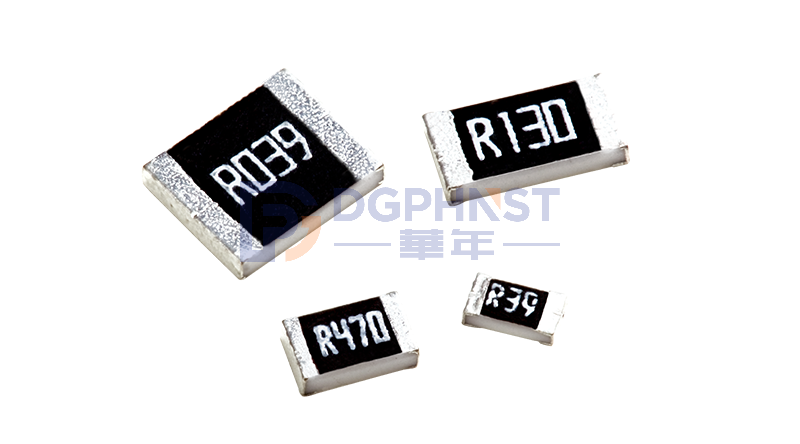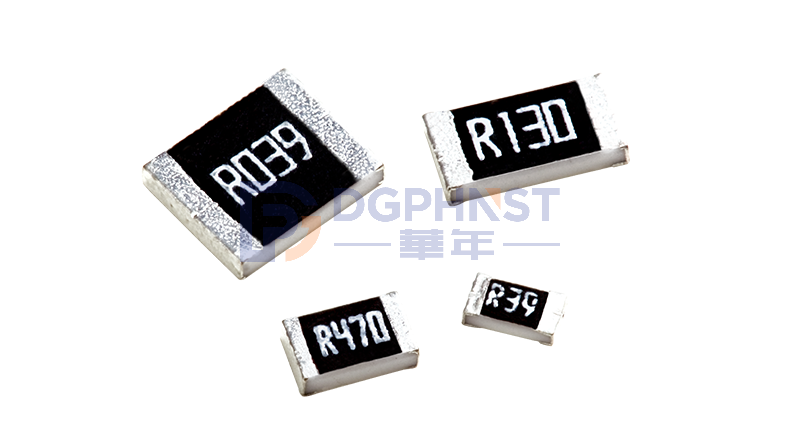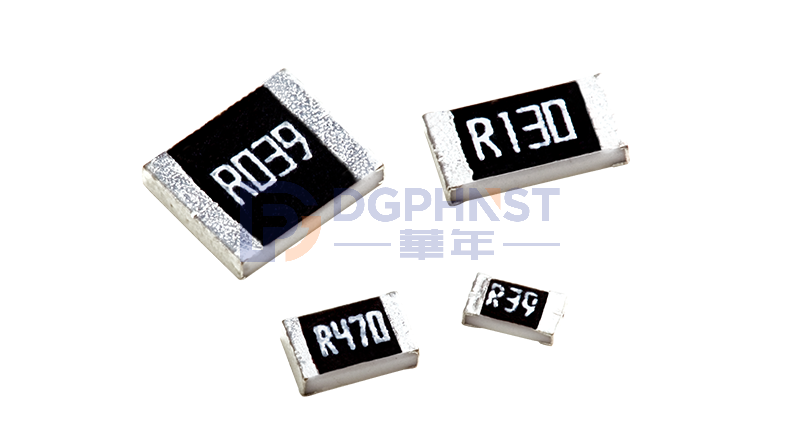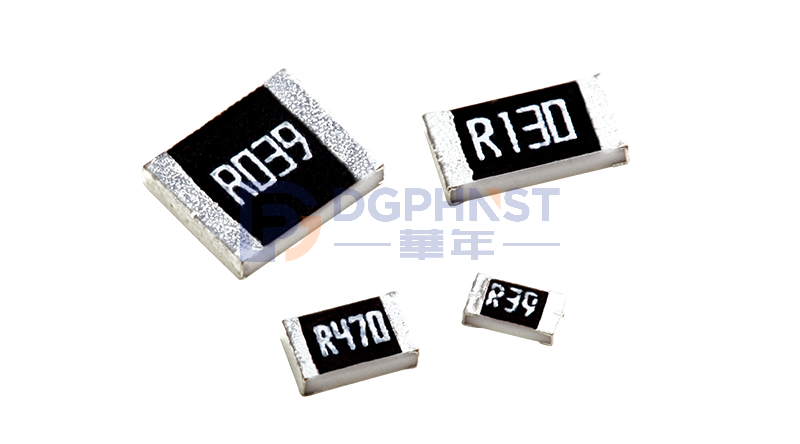
The Battery Management System (BMS) power protection board is the core control hardware that enables lithium battery packs to achieve overcharge, over-discharge, over-current, short-circuit, and over-temperature protection. Resistors are the key passive components on the protection board responsible for voltage sampling, current detection, circuit limiting, and signal protection. Their resistance accuracy, temperature coefficient, power margin, and environmental reliability directly determine the accuracy of protection threshold triggering and long-term operational stability.
According to the current domestic lithium battery industry standard GB/T 36972-2018, the voltage sampling error of BMS protection boards must be controlled within ±10mV, and the current detection error must be controlled within ±1%. Achieving these metrics relies heavily on the parameter matching of resistors at corresponding locations.
Currently, mainstream resistor solutions for two-wheeler, energy storage, consumer electronics, and automotive-grade BMS have formed clear category stratifications: low-current consumer-grade boards primarily use ordinary thick-film voltage divider resistors; medium-current scenarios prioritize alloy sampling resistors; and large-current energy storage BMS systems above hundreds of amperes generally adopt bare copper shunts as current sensing elements.
1. Core Functional Positioning of Resistors in BMS Power Protection Boards
Resistors are not merely general auxiliary materials on BMS boards. The acquisition and triggering of almost all protection thresholds depend on signal transmission through resistor circuits. Core functions can be divided into four categories:
1. Cell Voltage Sampling Divider Function: Connected in series between the positive terminal of each cell string and the ADC pin of the AFE sampling chip, it attenuates the string-end voltage (up to tens of volts) to a 0-5V range collectible by the chip via a fixed division ratio. If the precision and temperature drift of the divider resistors do not meet standards, it will directly lead to sampling value offsets. In typical scenarios, the overcharge protection point for a single lithium-ion cell is 4.25V. If the temperature drift of the divider resistor is 300ppm/°C, within the actual operating temperature range of -20°C to 60°C, the sampling voltage deviation can exceed 10mV, directly triggering false overcharge protection actions or rendering protection thresholds ineffective.
2. Charge/Discharge Circuit Current Detection Sampling Function: Connected in series on the negative path of the main discharge circuit, it converts the voltage drop across the resistor ends into real-time charge/discharge current. This is the core signal source for achieving over-current protection, short-circuit protection, and coulomb counter capacity statistics. The temperature drift and long-term stability of these low-resistance sampling resistors directly determine the current detection accuracy of the BMS.
- Signal Circuit Limiting and Protection Function: Connected in series with NTC temperature sampling pins and MOSFET gate control circuits, they limit instantaneous surge currents to prevent chip ports from being damaged by ESD or spike pulses, while also controlling MOSFET switching speed through matched resistance values to reduce electromagnetic interference during switching moments.
4. Bleeder Circuit Function: On active balancing BMS boards, they serve as power resistors for balancing discharge, dissipating excess energy from high-voltage cells through resistor heating to achieve voltage balance among individual cells.
2. Comparison of Common Resistor Types and Application Scenarios in BMS Power Protection Boards
Different positions on the board have vastly different parameter requirements for resistors. A unified type cannot be used across the entire board. The parameters and application scenarios of mainstream compatible categories are as follows:
| Resistor Category | Core Parameter Characteristics | Typical Applicable BMS Scenarios | Conventional Power Coverage Range |
| High-Precision Thin-Film Divider Resistor | Precision ±0.01%~±0.1%, Temperature Drift ≤25ppm/°C, Long-term Resistance Drift ≤0.1%/year | Cell voltage sampling circuits in high-voltage energy storage BMS and automotive-grade BMS | 0.1W~1W |
| Alloy Current Sensing Resistor | Resistance 0.5mΩ~100mΩ, Precision ±0.5%~±1%, Temperature Drift ≤50ppm/°C | Main circuit current detection in two-wheelers and low-power energy storage BMS | 1W~5W |
| Sulfur-Resistant Thick-Film SMD Resistor | Surface sulfur-proof coating, Resistance drift ≤0.5% under 85°C/85%RH high-humidity environment | Voltage dividing and current limiting circuits in outdoor-installed BMS and open-air two-wheeler scenarios | 0.1W~1W |
| Surge-Resistant Thick-Film Resistor | Can withstand millisecond-level pulse impacts of 10 times rated power without fusing or resistance drift | Active balancing bleeder circuits, MOSFET gate current limiting circuits | 0.25W~2W |
| Bare Copper Shunt | Resistance 10μΩ~500μΩ, Temperature Rise ≤50K@Rated Current, Temperature Drift ≤30ppm/°C | Hundreds-of-amperes level large current detection in commercial/industrial energy storage and DC fast charging BMS | 10W~100W |
3. Common Technical Misconceptions in BMS Resistor Selection
From feedback on actual project implementations, most issues regarding sampling drift and false protection triggers in BMS boards are not due to core control chip failures but rather inadequate details in resistor selection:
1. Focusing only on nominal resistance while ignoring full-range temperature drift: Room-temperature accuracy does not guarantee accurate sampling across the full temperature range. Ordinary thick-film resistors can have temperature drifts of 200~400ppm/°C. In northern winter conditions or high-temperature enclosed equipment compartments, resistance deviations can directly breach the national standard's allowable sampling error thresholds.
2. Thermal breakdown due to insufficient power derating: The long-term operating temperature rise of main circuit sampling resistors should be kept within 50% of their rated power. Operating at full power for extended periods causes resistance values to continuously offset with temperature rise. After running for more than six months, sampling errors may expand to over 5%.
3. Ignoring sulfur resistance protection in outdoor scenarios: In coastal or industrial pollution environments, sulfur gases in the air can penetrate the electrode layers of ordinary thick-film resistors, causing contact resistance to continuously increase. This eventually leads to chronic failure issues such as gradual sampling value drift and slow protection threshold shifts.
4. Ignoring surge resistance capability in high-current scenarios: Peak currents during instantaneous lithium battery short circuits can reach 5~10 times the rated charge/discharge current. Ordinary power resistors cannot withstand such millisecond-level pulse impacts, leading to instantaneous fusing and complete failure of the protection board.
Addressing the pain points of BMS resistor selection, Sunhai Technology has deeply cultivated high-reliability resistor supply for over a decade, adapting to all scenarios including consumer electronics, two-wheelers, energy storage, and industrial BMS. Its product line includes μΩ-level alloy sampling resistors, ±0.01% high-voltage divider resistors, sulfur-resistant thick-film resistors, megawatt-level bare copper shunts, and surge-resistant thick-film resistors capable of withstanding 10x pulse loads.
4. Future Development Trends of Resistor Technology in BMS Power Protection Boards
As voltage platforms for energy storage systems and DC fast charging scenarios upgrade from 48V to 750V or even 1000V, requirements for supporting resistors in BMS continue to iterate:
1. Accuracy standards for sampling resistors are gradually upgrading from the current ±1% to ±0.1%, with temperature drift indicators compressed to within 25ppm/°C, matching smaller per-cell sampling error requirements under higher voltage platforms;
2. Traditional manganese-copper shunts are gradually being replaced by high-consistency bare copper shunts, reducing self-heating under high currents and minimizing the impact of temperature drift on current detection accuracy;
3. Reliability requirements for sulfur and surge resistance are sinking from outdoor scenarios to all civilian-grade BMS, becoming standard selection criteria for outdoor-installed battery equipment.
In Conclusion
Resistor selection for BMS power protection boards is absolutely not a simple assembly of general passive components. It requires matching specific resistor categories with corresponding parameters based on the current levels, operating temperature ranges, and environmental reliability requirements of specific application scenarios. A reasonable layered resistor selection scheme can improve the sampling accuracy of the protection board by more than 30%, extend the long-term service life of the board by twice, and reduce safety risks of lithium battery packs from the underlying hardware level.