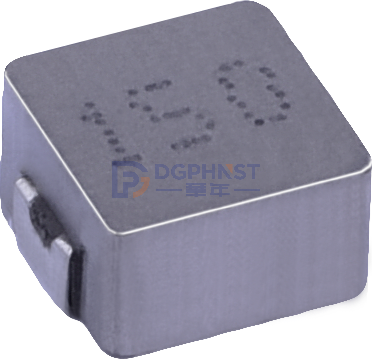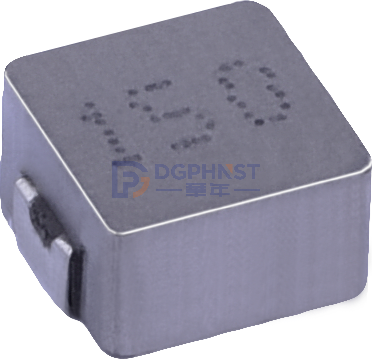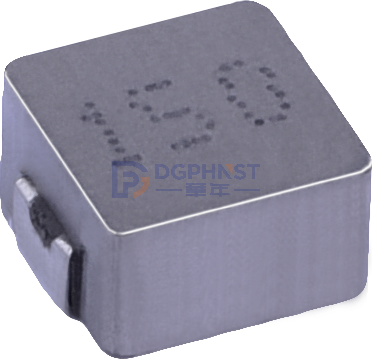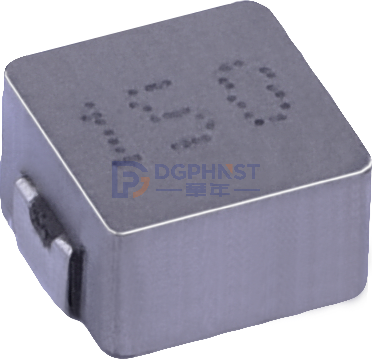
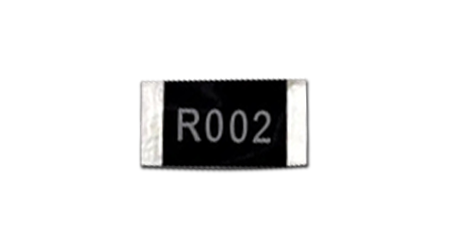
Metal foil resistor is a high-precision resistor device made of ultra-thin metal foil as the resistance material. With extremely low temperature coefficient (TCR), ultra-high precision (± 0.001%), long-term stability, and low noise characteristics, it has become a core component in precision measurement, instrumentation, and high-end industrial control fields. The following is a comprehensive analysis of its technical principles, core advantages, and typical applications:
1、 Basic Definition and Structure
Core materials
Metal foil: made of special alloys such as nickel chromium NiCr, copper manganese CuMn, with a thickness of only a few micrometers (μ m), and formed with precision resistance patterns through photolithography or laser fine-tuning processes.
Base: Ceramic or glass substrate, providing mechanical support and heat dissipation path.
Packaging form
Surface mount (SMD): such as 1206 and 2512 packages, suitable for high-density PCBs.
Direct insertion (THT): such as TO220 metal casing, supporting high-power heat dissipation.
Manufacturing process
Vacuum deposition: Deposition of metal foil onto a substrate to ensure material uniformity.
Lithography etching: precise resistance patterns are formed through photolithography technology to control the resistance value.
Laser fine-tuning: Cutting resistors at the micrometer level to achieve ultra-high precision (± 0.001%).
2、 Core Features and Technical Parameters
Ultra high precision and stability
Accuracy: Typical value ± 0.005%~± 0.1%, top-level models can reach ± 0.001% (such as Vishay's ZFoil series).
Temperature coefficient (TCR): as low as ± 0.2ppm/℃~± 5ppm/℃, almost unaffected by temperature changes.
Long term stability: Annual drift rate<0.005%, with minimal resistance changes throughout the lifespan.
Extremely low noise and low voltage coefficient
Current noise:<0.01 μ V/V (1Hz~10MHz), much lower than thick film or winding resistance.
Voltage coefficient (VCR):<0.1ppm/V, ensuring stable resistance under voltage fluctuations.
High power and heat dissipation capability
Power density: Surface mount packaging can reach 1W~5W, and metal shell models support 10W~50W (such as RCD Components' HS series).
Heat dissipation design: Metal or ceramic substrate combined with thermal conductive adhesive effectively reduces temperature rise.
Environmental adaptability
Working temperature: 55 ℃~+175 ℃, suitable for extreme environments.
Mechanical stress resistance: Passed MILSTD202 vibration/impact testing, suitable for high reliability scenarios such as aerospace.
3、 Metal foil resistors vs. other types of resistors
|Characteristics | Metal foil resistors | Thick film resistors | Wire wound resistors | Surface mount alloy resistors|
|Accuracy | ± 0.001%~± 0.1% | ± 1%~± 5% | ± 0.1%~± 1% | ± 0.1%~± 1%|
| TCR | ±0.2ppm/℃~±5ppm/℃ | ±50ppm/℃~±200ppm/℃ | ±10ppm/℃~±50ppm/℃ | ±15ppm/℃~±50ppm/℃ |
|Noise | Extremely low (<0.01 μ V/V) | High | Low | Low|
|Power density | Medium high (1W~50W) | Low (0.1W~2W) | High (10W~100W+) | Medium (1W~5W)|
|Cost | High | Low | Medium High | Medium|
|Typical applications | Precision instruments, medical equipment, aerospace | Consumer electronics, general circuits | High power supplies, braking resistors | Current detection, automotive electronics|
4、 Typical application scenarios
Precision measurement and instrumentation
High precision multimeter: reference resistor network, ensuring measurement error<0.001%.
Bridge circuit: used for precise comparison of resistance and capacitance (such as Kelvin bridge).
Aerospace and Military Industry
Satellite control system: signal conditioning circuit, capable of withstanding extreme temperatures and radiation.
Inertial navigation system: high stability voltage divider network to reduce positioning errors caused by temperature drift.
Medical Electronics
MRI equipment: impedance matching in the RF signal chain to avoid noise interference.
Life monitor: a bioelectric signal (ECG/EEG) amplification circuit to improve signal-to-noise ratio.
Industrial automation
PLC control module: precise voltage divider for analog input channels.
Servo driver: current feedback loop to optimize motor control accuracy.
Automotive electronics (high-end models)
Lidar: Low noise filtering in signal receiving circuits.
Battery Management System (BMS): high-precision voltage/current sampling (such as the BMS of Porsche Taycan).
5、 Selection and Design Points
Prioritize accuracy and stability
Select models with TCR<± 2ppm/℃ (such as Vishay VHP100) for reference voltage sources or sensor compensation circuits.
Long term stability requires attention to the "annual drift rate" parameter to avoid excessive calibration frequency.
Matching power and heat dissipation
Power derating: Actual power consumption ≤ 50% of nominal value (further derating is required in high temperature environments).
Heat dissipation design: The metal shell model requires the installation of a heat sink, while the surface mount model conducts heat through large-area copper plating and heat dissipation through holes.
Signal chain optimization
Low noise layout: Resistors are placed close to the signal source to shorten the wiring length and avoid electromagnetic interference.
Shielding and filtering: Sensitive circuits use shielding covers and parallel capacitors to filter out high-frequency noise.
Cost balance
Metal foil resistors are only used in critical circuits such as reference sources and sensor front ends, while thick film or alloy resistors can be used for general circuits.
6、 Representative brand and model
Vishay ZFoil series
Characteristics: TCR ± 0.2ppm/℃, accuracy ± 0.001%, noise<0.01 μ V/V.
Application: Magnetic Resonance Imaging (MRI), high-precision data acquisition system.
Alpha Electronics MFS Series
Characteristic: Power 5W@70 ℃, TCR ± 5ppm/℃, sulfur resistant packaging.
Application: Industrial PLC, electric vehicle charging station.
RCD Components HS Series
Features: TO220 package, power 50W, TCR ± 10ppm/℃.
Application: High power power supply, motor driver braking resistor.
7、 Common Problems and Solutions
Temperature rise causes resistance drift
Solution: Choose models with lower TCR or add heat sinks (such as installing heat sinks on TO220).
High frequency signal distortion
Solution: Choose a low parasitic inductance non inductive design (such as Vishay's "Z" structure), or parallel compensation capacitors.
Excessive cost
Solution: Use metal foil resistors only on critical paths, and replace thick film/alloy resistors in other areas.
Metal foil resistors have become the "gold standard" for precision electronic systems due to their ultra-low TCR, nanometer level precision, and excellent long-term stability. Despite the high cost, it is irreplaceable in aerospace, medical equipment, high-precision instruments and other scenarios. When selecting, it is necessary to balance accuracy, power, environmental adaptability, and cost, and combine heat dissipation and signal chain design to maximize system performance and reliability.