How to Choose Alloy Resistors Correctly: A Practical Selection Guide
In electronic circuit design, resistors are ubiquitous basic components. Among them, alloy resistors play an irreplaceable role in key applications such as current detection and power conversion due to their excellent performance. However, faced with the dazzling array of models on the market, how should engineers make the most suitable choice? This article will systematically outline the core criteria for selecting alloy resistors, providing clear guidance for your project selection.
Clearly define the rated power and ensure that there is a margin left
The rated power is the primary factor to consider when selecting alloy resistors. It determines the maximum power that the resistor can safely withstand. You need to calculate the power (P=I ² R) based on the expected maximum current in the circuit, and select an alloy resistor with a rated power much higher than this calculated value. It is usually recommended to leave a margin of 30% -50% to ensure stable operation in abnormal fluctuations or high temperature environments, and to avoid damage due to overheating.
Determine resistance and tolerance (accuracy)
The choice of resistance value is directly determined by the circuit design requirements. In current detection applications, the resistance of alloy resistors is usually very small (in the milliohm range) to achieve lower voltage drops. The tolerance represents the accuracy range of the resistance value, commonly 1%, 5%, etc. For applications that require precise measurement of current (such as precision instruments, battery management systems), high-precision, low tolerance (such as 0.5% or higher) alloy resistors should be selected to ensure the reliability of measurement results.
Pay attention to temperature coefficient (TCR)
The temperature coefficient is an important indicator for measuring the variation of alloy resistance with temperature, usually measured in ppm/℃. A good alloy resistor should have an extremely low temperature coefficient. This means that even when the ambient temperature or self heating causes temperature changes, its resistance value can remain highly stable. Low TCR is crucial for maintaining measurement accuracy and circuit performance throughout the entire operating temperature range, and is a significant characteristic of high-quality alloy resistors.
Evaluate the packaging and size of resistors
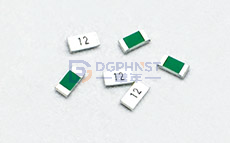
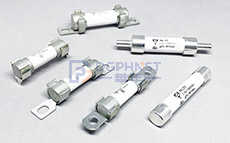
The packaging size of alloy resistors not only affects the layout space of the circuit board, but is also closely related to its power tolerance. Usually, larger packages can withstand higher power. You need to find a balance between the physical space limitations of the circuit board and the required power level. At the same time, the installation method of packaging (such as patch or plug-in) should also be considered to adapt to different production processes.
Understanding inductance and frequency response
For circuits operating under high-frequency or pulsed current conditions (such as switching power supplies, motor drives), the parasitic inductance of alloy resistors becomes an undeniable factor. Low inductance alloy resistors (such as using four terminal Kelvin connections or special winding processes) can minimize the influence of parasitic inductance, ensure that the resistor can still exhibit pure resistance under rapidly changing current signals, and avoid ringing or measurement errors.
Consider long-term stability and working environment
The long-term stability of alloy resistors refers to their ability to maintain consistent resistance values after prolonged use and temperature cycling. This is particularly important in fields such as automotive electronics and industrial control that require high reliability. In addition, if the resistor will operate in harsh environments such as high humidity and corrosive atmospheres, it is necessary to choose alloy resistor models with protective coatings or fully sealed packaging.
summary
Choosing the appropriate alloy resistor is a comprehensive decision-making process that requires balancing multiple factors such as power, accuracy, temperature drift, size, and high-frequency performance. The best alloy resistor may not necessarily have the highest parameters, but it must be the one that best matches your specific application scenario, performance requirements, and cost budget. It is recommended to communicate fully with the supplier's technical representative in the early stage of selection, obtain detailed specifications, and conduct actual sample testing if necessary, in order to safeguard your design.