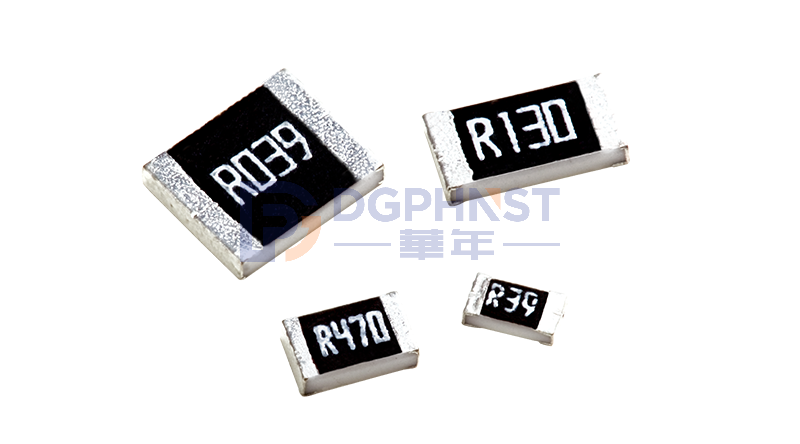
Alloy resistors, as a precision electronic component, are widely used due to their good stability and low temperature coefficient. However, in certain specific states, alloy resistors also face the risk of failure. Understanding these failure states is crucial for both circuit design engineers and maintenance personnel.
1. Thermal failure caused by overload
This is the most common failure mode of alloy resistors. When the current flowing through the alloy resistor exceeds its rated power, the resistor will experience a sharp increase in temperature due to excessive heating. Continuous high temperature may cause the resistive film layer to be burned and open circuit phenomenon to occur. In more serious cases, excessive heat may even ignite the materials around the resistor or cause substrate carbonization, resulting in permanent damage. Therefore, it is necessary to reserve sufficient power margin for alloy resistors in circuit design.
2. Damage caused by mechanical stress
Although alloy resistors have a sturdy structure, they still fear excessive mechanical forces. For example, severe impact, compression, or excessive bending of the circuit board during installation or transportation may cause small cracks to appear inside the alloy resistor. These cracks may not initially affect conductivity, but over time and with thermal expansion and contraction, the cracks will gradually expand, ultimately causing resistance drift or direct open circuit failure.
3. Environmental erosion and oxidation
Working in harsh environments such as humidity, salt spray, or chemical corrosive gases for a long time may corrode the electrodes and protective coatings of alloy resistors. Especially for surface mount alloy resistors, the invasion of water vapor can cause electrochemical migration, leading to abnormal changes in resistance values or even short circuits. In addition, if there are defects in the protective layer, the resistance alloy material itself may also be oxidized, thereby changing its inherent resistance characteristics.
4. Hidden dangers of improper welding process
Welding is a crucial step in the installation of alloy resistors. If the welding temperature is too high and the time is too long, the thermal shock generated may damage the grain structure inside the resistor, causing irreversible displacement of the resistance value. On the other hand, the use of highly reactive soldering flux without thorough cleaning can result in residual chemicals that continue to corrode the end electrodes of the resistor, ultimately causing poor connections or open circuits.
summary
In summary, the failure of alloy resistors is not accidental and is usually closely related to abnormal electrical, thermal, mechanical, and chemical environments. In order to ensure the long-term stable operation of the circuit, in addition to selecting qualified alloy resistor products, it is also necessary to avoid the above risks in the design, installation, and use process, and provide a safe and reliable working state for the alloy resistor.
HNST WELCOME! 0755-23173910
English |中文

Cart
{{cartCount}}
你当前的浏览器版本过低或不支持。请升级或更换浏览器。推荐浏览器 Chrome Edge。