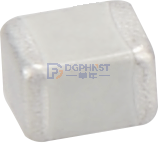
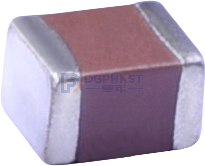
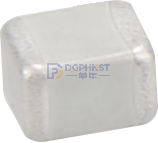
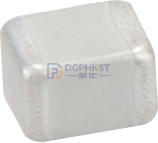
Capacitors are fundamental components in electronic circuits, with their core function being to store charge and energy. However, in practical applications, the role of capacitors goes far beyond this, covering multiple aspects such as filtering, coupling, and timing, which are crucial for the stable operation of circuits. This article will provide a detailed analysis of the role of capacitors, helping readers to fully understand how this component affects the performance of electronic devices.
Firstly, the role of capacitors is particularly prominent in power filtering. When alternating current is converted to direct current, there are often fluctuations and noise in the voltage. Through rapid charging and discharging processes, capacitors can smooth out these fluctuations, filter out interference signals, and output stable DC power. For example, in common power adapters, the role of capacitors ensures that the device receives pure power supply and avoids faults caused by voltage fluctuations.
Secondly, the role of capacitors is reflected in signal coupling. In amplification circuits or audio devices, capacitors are used to transmit AC signals while isolating DC components. In this way, signals can be transmitted between different stages of the circuit without being affected by DC bias, avoiding inter stage interference. Therefore, the role of capacitors ensures the integrity and clarity of signal transmission, improving sound quality or data accuracy.
In addition, the function of capacitors also includes bypass function. In high-frequency or digital circuits, high-frequency noise can easily interfere with system operation. Capacitors provide a low impedance path for these noises, guiding them into the ground to prevent noise from spreading to other circuit components. This significantly enhances the anti-interference ability of the circuit, ensuring the reliability of the equipment in high-frequency environments.
Another key aspect is the timing effect. The combination of capacitors and resistors forms an RC circuit, which achieves timing or delay function by controlling the charging and discharging time. In flashlights, timer switches, or oscillators, the role of capacitors determines the accuracy of time intervals, enabling the device to operate at a preset pace. This application highlights the importance of capacitors in time control.
In addition, the role of capacitors in the field of energy storage cannot be ignored. In switch mode power supplies, motor start-up or backup systems, capacitors store electrical energy and quickly release it when needed, providing instantaneous high current. This helps the system cope with sudden load changes, improve response speed and stability, especially in emergency power supplies or pulse circuits.
Finally, the role of capacitors also extends to scenarios such as tuning and motor startup. For example, in radio receivers, capacitors are used to tune frequencies; In single-phase motors, capacitors help generate starting torque. These applications further demonstrate the multifunctionality of capacitors.
In short, capacitors have diverse and extensive functions, from basic filtering to complex timing, all of which are indispensable components of modern electronic devices. A deep understanding of the role of capacitors can not only optimize circuit design, but also improve equipment efficiency and durability. In practical applications, capacitors should be selected according to specific needs in order to fully play their role and promote the progress of electronic technology.
HNST WELCOME! 0755-23173910
English |中文

Cart
{{cartCount}}
你当前的浏览器版本过低或不支持。请升级或更换浏览器。推荐浏览器 Chrome Edge。