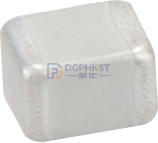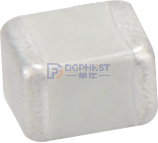
In modern electronic circuits, chip capacitors are extremely important passive electronic components. Thanks to their characteristics such as small size and ease of installation, they are widely used in various electronic products, ranging from complex computer motherboards to compact mobile devices. Understanding the role of chip capacitors in circuits is crucial for electronic engineers to design efficient and stable circuits. This article will delve into the specific functions of chip capacitors in different types of circuits.
Functions in Power Supply Circuits
1. Filtering Function
Low-Frequency Ripple Filtering
In power supply circuits, the conversion process from alternating current (AC) to direct current (DC) is not perfect, and the output DC voltage contains low-frequency ripples. High-capacity chip electrolytic capacitors are often used to filter out such low-frequency ripples. For example, in computer power adapters, chip electrolytic capacitors with a capacitance of 10μF to 100μF can store and release electric charge. With their low capacitive reactance to low-frequency signals, they absorb low-frequency voltage fluctuations, making the output DC voltage smoother. This is critical for providing stable power supply to various chips on the computer motherboard, ensuring that the chips operate normally under stable voltage and avoiding performance instability or malfunctions caused by voltage fluctuations.
High-Frequency Noise Filtering
In addition to low-frequency ripples, power lines also carry high-frequency noise, which may be generated by the rapid switching of switching power supplies or other high-frequency interference sources. Small-capacity chip ceramic capacitors (e.g., 0.1μF - 1μF) are used to filter out these high-frequency noises. At high frequencies, ceramic capacitors have extremely low capacitive reactance, which can bypass high-frequency clutter to the ground and effectively purify the power supply signal. At the power output terminal of mobile phone chargers, a 0.1μF chip ceramic capacitor is usually connected in parallel to ensure the purity of the power supply for charging mobile phone batteries, preventing high-frequency noise from damaging the mobile phone charging circuit and battery.
2. Energy Storage Function
In some power supply circuits with high instantaneous power requirements, such as camera flash circuits or power tool drive circuits, chip capacitors play an energy storage role. During the charging phase, the capacitor is charged by the power supply to store electrical energy. When instantaneous energy release is required, such as the moment a camera flash is triggered or a power tool is started, the capacitor discharges rapidly to provide sufficient current. Take camera flashes as an example: a high-capacity chip capacitor can store energy in a short time and release it instantaneously when the flash is triggered, generating a flash of sufficient intensity.
Functions in Signal Processing Circuits
1. Coupling Function
AC Signal Transmission
In signal processing circuits such as multi-stage amplifiers, chip capacitors are used to couple AC signals. For instance, in audio power amplifiers, the audio signal amplified by the preamplifier needs to be transmitted to the next stage power amplifier for further amplification. At this time, a chip capacitor is connected in series between the two stages of amplifiers. It allows the AC audio signal to pass through smoothly while blocking the DC bias voltage of the previous stage amplifier, preventing it from affecting the normal operation of the next stage amplifier. In this way, the audio signal is effectively transmitted between each stage of the amplifier, ensuring the continuity and accuracy of audio amplification.
Blocking DC and Passing AC
In some circuits that need to separate DC and AC signals, the coupling function of chip capacitors is equally important. For example, in radio frequency (RF) circuits, to prevent the DC component of the RF signal source from affecting the subsequent circuits, chip capacitors are used for DC-blocking coupling, allowing only RF AC signals to enter the subsequent processing circuits and ensuring the accuracy of RF signal processing.
2. Filtering Function
Frequency-Selective Filtering
LC resonant circuits composed of chip capacitors and inductors can achieve frequency-selective filtering. For example, in the tuning circuit of a radio, the resonant frequency of the LC resonant circuit is changed by adjusting the capacitance value of the capacitor, thereby selecting and receiving broadcast signals of a specific frequency. When the capacitance value changes, the resonant frequency changes accordingly; only signals with the same frequency as the resonant frequency can pass through, while signals of other frequencies are suppressed, realizing the filtering of the desired signal.
Removing Spurious Signals
Various spurious signals may be introduced during signal processing. Chip capacitors can filter spurious signals of specific frequencies based on the relationship between their capacitive reactance and frequency. In video signal processing circuits, by selecting the appropriate capacitance value, high-frequency spurious interference in the video signal can be filtered out, improving the quality of the video image.
Functions in Digital Circuits
1. Decoupling Function
In digital circuits, when integrated circuit (IC) chips are in operation, the internal logic gates continuously switch on and off, which causes high-frequency noise on the power lines. To ensure that the chips operate stably under a pure power supply, a chip capacitor is usually connected between the power pin and the ground of the chip to play a decoupling role. A 0.1μF chip ceramic capacitor is generally selected, as it can quickly respond to changes in high-frequency noise on the power lines, bypass the noise to the ground, and provide a stable power supply for the chip. For example, placing such a decoupling capacitor near the power pin of a microcontroller (MCU) can effectively improve the stability of the MCU's operation and avoid program running errors or chip damage caused by power supply noise.
2. Timing Function
In the timing circuits of some digital circuits, chip capacitors are used in conjunction with resistors. For example, in an astable multivibrator circuit composed of a 555 timer, the charge-discharge loop formed by the capacitor and resistor determines the oscillation period. By adjusting the values of the capacitor and resistor, the oscillation frequency can be precisely controlled, thereby generating a square wave signal of a specific frequency. This timing function is widely used in circuits such as digital clocks and pulse generators, providing an accurate time reference for digital circuits.
Shenzhen Shunhai Technology Co., Ltd.: Guaranteeing the Supply of High-Quality Chip Capacitors
As a core agent in the field of electronic components, Shenzhen Shunhai Technology Co., Ltd. has significant advantages in the supply of chip capacitors. The company has established close cooperation with many internationally renowned chip capacitor manufacturers, offering a rich product portfolio covering chip capacitors of different materials, capacitance values, voltage ratings and precision levels, which can meet the needs of various circuit designs.
Shunhai Technology's professional technical team has an in-depth understanding of the performance and applications of chip capacitors, and can provide accurate selection suggestions according to the specific requirements of customers' circuits. Whether it is the requirement for the filtering performance of high-capacity chip capacitors in power supply circuits or the demand for the high-frequency characteristics of chip capacitors in signal processing circuits, Shunhai Technology can recommend the most suitable products for customers based on its professional knowledge and rich experience. In addition, the company's sound inventory management and efficient logistics and distribution system ensure that customers can timely obtain the required chip capacitors to meet procurement needs of different scales.
Huanian Mall: A Convenient Procurement Platform for Chip Capacitors
As a professional online procurement platform for electronic components, Huanian Mall provides customers with convenient chip capacitor procurement services. The mall displays detailed product information; parameters of each chip capacitor, such as capacitance value, precision, voltage rating and package type, are clearly marked, along with application scenario descriptions, enabling customers to fully understand product information and quickly select products suitable for their circuit requirements.
The mall is equipped with powerful intelligent search and filtering functions; customers can quickly locate the required chip capacitors according to specific parameter requirements, such as capacitance range, precision grade and voltage rating. Meanwhile, the mall has a professional customer service team with solid knowledge of electronic components, which can promptly answer customers' questions about chip capacitor selection and application and provide professional procurement suggestions. In addition, the mall offers comprehensive after-sales services, including quality assurance and return and exchange policies, ensuring a worry-free procurement experience for customers.
Conclusion
Chip capacitors play important roles such as filtering, energy storage, coupling, decoupling and timing in various electronic circuits including power supply circuits, signal processing circuits and digital circuits. With the continuous development of electronic technology, the performance requirements for chip capacitors are constantly increasing. In the future, chip capacitors may develop towards higher capacity, lower equivalent series resistance (ESR), smaller size and more excellent high-frequency characteristics.
When designing circuits, electronic engineers need to fully consider the role of chip capacitors in different circuits. With the help of professional agents like Shenzhen Shunhai Technology Co., Ltd. and convenient procurement platforms like Huanian Mall, they can select appropriate chip capacitors to ensure the stable operation and performance optimization of the circuits. At the same time, we look forward to the continuous innovation of chip capacitor technology, which will bring more possibilities to the development of the electronic industry.